
Introduction
Vacuum deposition metallizing equipment is industrial machinery used to apply extremely thin metallic or metal-oxide films onto substrates in a low-pressure chamber, most commonly by thermal evaporation or related physical vapor deposition (PVD) methods. In plastics processing, it is widely used to create reflective, decorative, conductive, and barrier coatings on molded parts and films, especially where the appearance of chrome or polished metal is desired without the weight, cost, or corrosion risk of solid metal plating.
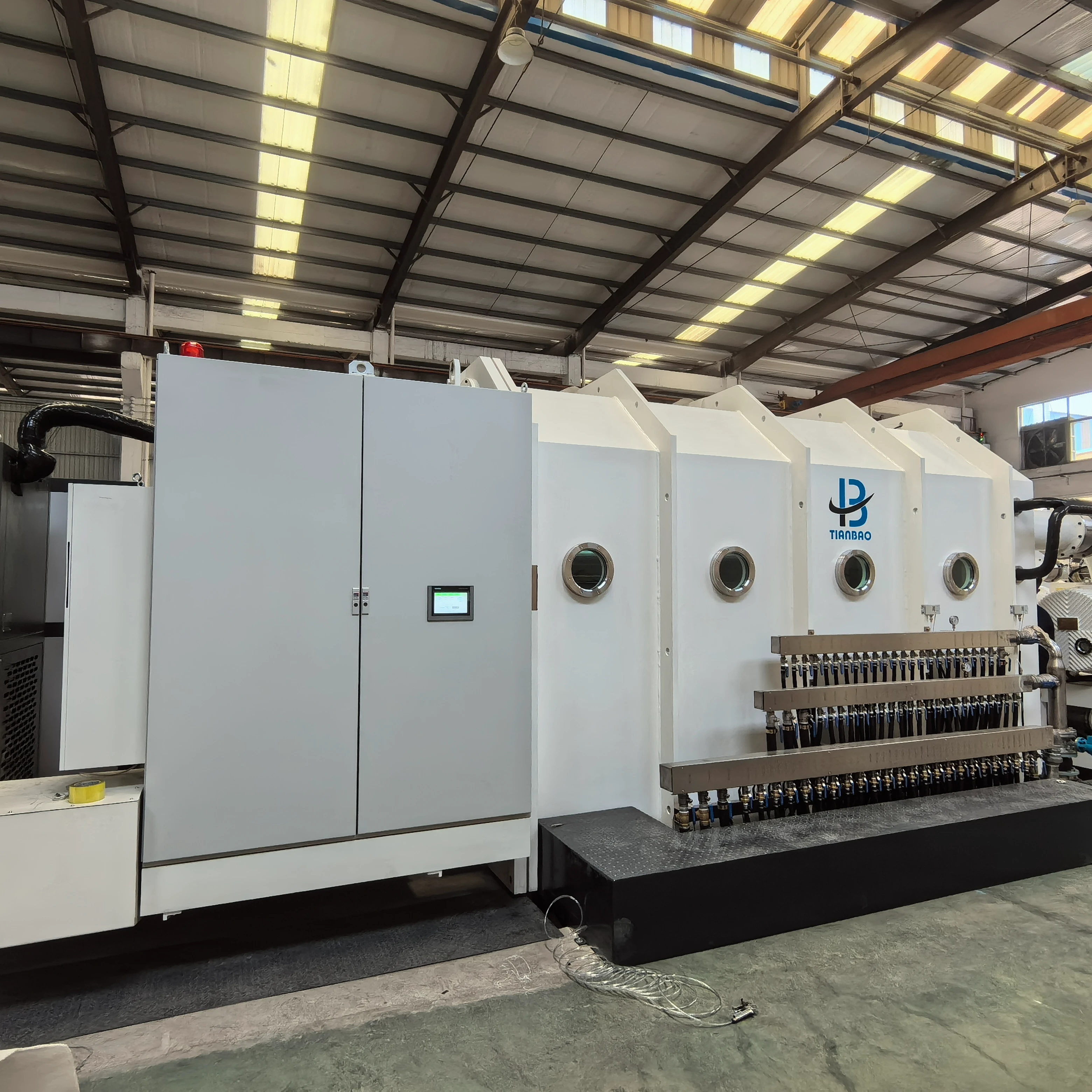
In practice, metallizing equipment ranges from batch vacuum metallizers for molded plastic components to roll-to-roll web coaters for flexible films and foils, with system layouts built around vacuum chambers, pumping units, evaporation sources, web or part handling systems, and process controls. The technology has developed from early vacuum evaporation methods into highly automated PVD systems with tighter vacuum control, better coating uniformity, and broader use in packaging, optics, automotive trim, lighting reflectors, cosmetics, and electronics.
Although the process is often associated with decorative finishes, its industrial importance is broader: it supports barrier performance in packaging, optical reflectivity, electromagnetic shielding, and selective functional coatings. Sustainability considerations are increasingly central because vacuum metallizing can reduce material consumption compared with bulk metal parts, but it also requires significant vacuum generation, thermal energy, and careful solvent or lacquer management in many workflows.
History and development
Vacuum deposition emerged from the broader development of thin-film technology and high-vacuum engineering, with early industrial use centered on the evaporation of metals in evacuated chambers to form continuous films. As plastics became a major industrial substrate, vacuum metallizing was adapted from flat technical films to molded polymer parts, requiring new fixture systems, rotation mechanisms, and adhesion-promoting basecoats.
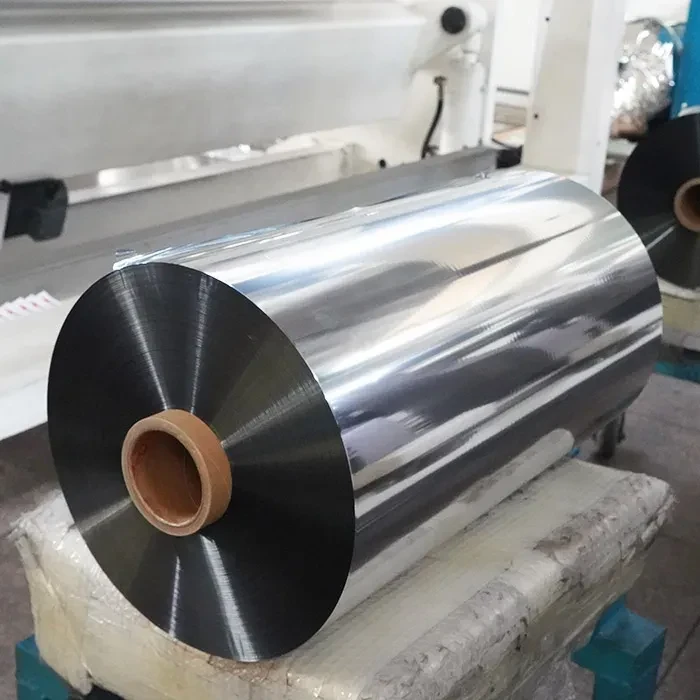
A major milestone was the commercialization of roll-to-roll vacuum metallization, which enabled continuous deposition on plastic film, paper, and metal foil for packaging and barrier applications. This development transformed metallizing from a niche decorative process into a high-throughput industrial coating method for flexible substrates.
A second milestone was the spread of decorative metallizing systems for consumer goods and automotive components, where aluminum evaporation in vacuum, followed by protective topcoats, produced chrome-like surfaces at low thickness and relatively low mass. This expanded the market beyond packaging into parts requiring visual uniformity, scratch resistance, and tighter aesthetic control.
A third milestone has been the increasing integration of automation, plasma pretreatment, inline monitoring, and hybrid PVD systems that combine evaporation with sputtering or other deposition methods for improved adhesion and broader material compatibility. These systems reflect the move from purely decorative metallizing toward multifunctional thin-film manufacturing.
Technical overview
Vacuum metallizing equipment works by lowering chamber pressure so far that evaporated atoms travel with minimal collisions and condense directly onto the substrate surface in a straight-line deposition regime. In high vacuum, the mean free path of metal atoms becomes longer than the chamber dimensions relevant to deposition, allowing efficient film formation on cooler surfaces.
Core process sequence
- The substrate is cleaned and, in many plastic applications, coated with a basecoat or primer to improve smoothness and adhesion.
- The chamber is sealed and pumped down to a high vacuum, commonly around 10^-3 to 10^-6 mbar depending on system design and product class.
- Metal, most often aluminum, is heated by resistive evaporation from tungsten filaments or boats, or by other PVD sources in hybrid systems.
- The vapor condenses as a thin metallic film on the moving web or rotating parts.
- A protective topcoat may be applied to improve abrasion resistance, chemical durability, and color control.
Typical engineering characteristics
| Parameter | Typical industrial range |
|---|---|
| Chamber vacuum | About \(10^{-3}\) to \(10^{-6}\) mbar, depending on system and substrate |
| Common coating metal | Aluminum, with chromium, silver, titanium, or oxides used in some variants |
| Film thickness | Often in the submicron to low-micron range; decorative coatings are commonly very thin |
| Rotor / web motion | Planetary rotation for parts; continuous winding for films |
| Deposition method | Thermal evaporation most common; sputtering and hybrid PVD also used |
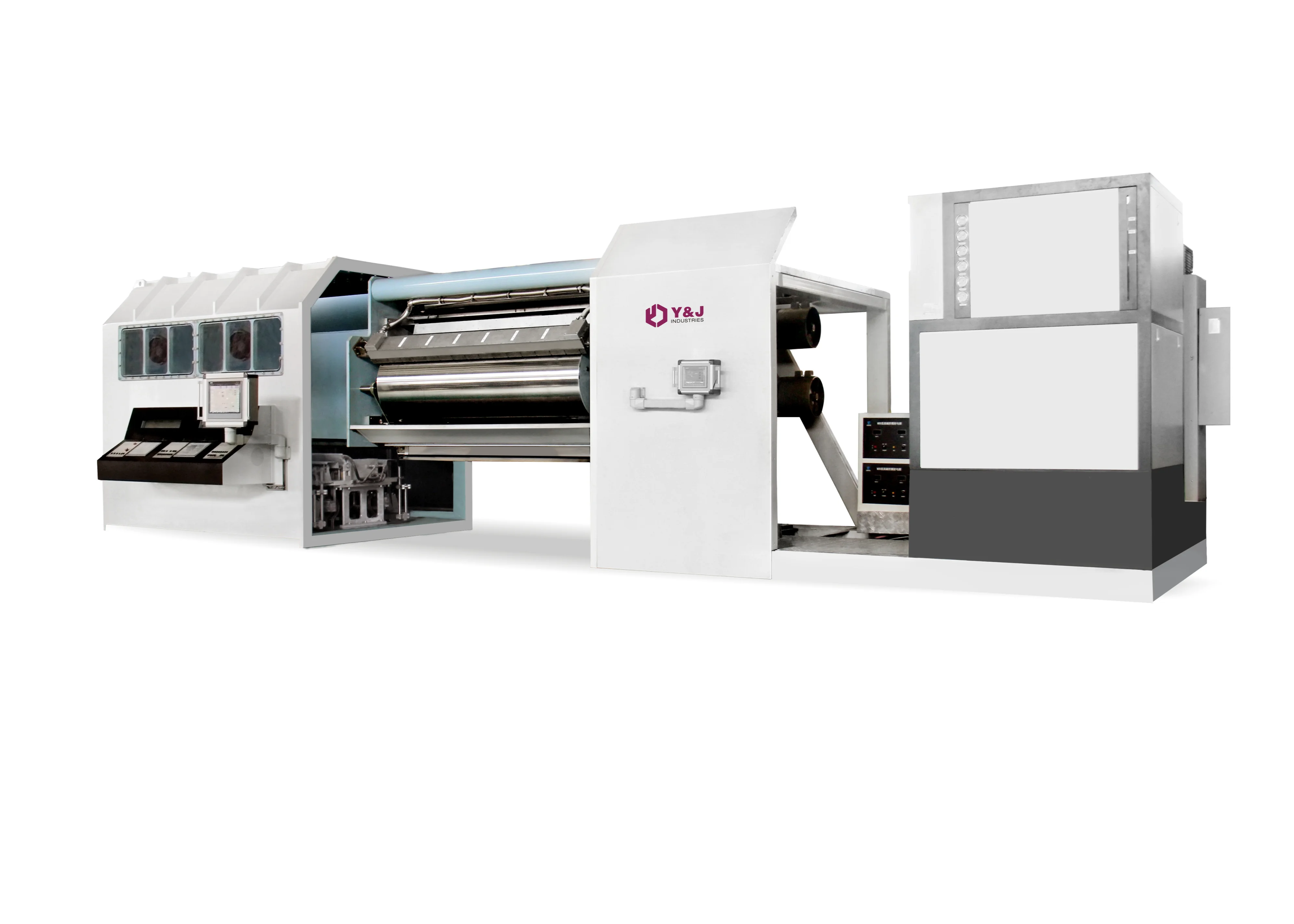
For molded plastic parts, the substrate is often mounted on rotating fixtures or planetary racks to even out line-of-sight deposition on three-dimensional shapes. For web systems, the substrate passes through a winding chamber and a deposition chamber, often over a chilled drum or support roll to manage temperature and film stability.
Performance notes
- Flake or film appearance is highly dependent on basecoat smoothness, vacuum quality, source geometry, and part rotation.
- Residual contamination from moisture, mold release, or poorly cured primers can sharply reduce adhesion and visual uniformity.
- Deposition rate is governed by source temperature, chamber pressure, source-to-substrate distance, and web speed or cycle time.
- Pump-down time is often the longest part of a batch cycle, especially for molded parts with large chamber volumes and loaded fixtures.
Types and variations
By machine architecture
| Type | Main substrate form | Typical use |
|---|---|---|
| Batch metallizers | Molded parts, housings, trim, small components | Decorative chrome-like finishes, functional coatings |
| Roll-to-roll metallizers | Plastic film, paper, foil | Packaging, barrier films, reflective webs |
| Vertical metallizing plants | Parts or web configurations with vertical loading | Higher throughput layouts and space-efficient plant design |
| Hybrid PVD systems | Plastics, glass, metal, technical substrates | Decorative plus functional coatings, including sputtering or ion-assisted variants |
By deposition method
- Thermal evaporation equipment: The most common class for aluminum metallizing of plastics and films.
- Electron-beam systems: Used where higher-energy evaporation or different materials are needed, especially in advanced thin-film work.
- Sputtering systems: Selected when denser films, better adhesion, or different materials are required, including transparent conductive or technical coatings.
- Hybrid deposition systems: Combine evaporation, sputtering, plasma treatment, or PECVD-like features for broader process windows.
By product function
- Decorative metallizers for chrome-like aesthetics on consumer goods and automotive trim.
- Barrier metallizers for packaging films, where a thin metal layer helps reduce moisture and gas transmission.
- Functional metallizers for reflectors, conductive layers, and selective technical films.
Applications and uses
Vacuum deposition metallizing equipment is used wherever a very thin metallic layer can deliver optical, barrier, or functional value.
- Packaging: Metallized films are used for snack packaging, labels, and other flexible materials requiring enhanced barrier performance and visual appeal.
- Automotive: Interior and exterior plastic trim parts use vacuum metallizing to achieve chrome-like accents and metallic effects.
- Lighting: Reflectors and mirror-like surfaces use aluminum metallization for high reflectivity.
- Cosmetics and consumer goods: Caps, closures, housings, and decorative components benefit from high-gloss metallic finishes.
- Electronics: Specialized systems deposit conductive or functional films for shielding and advanced surface engineering.
- Technical optics and mirrors: Controlled film deposition supports reflective coatings and mirror assemblies.

One poor-fit application is high-wear structural surfaces that require thick, load-bearing metal layers; vacuum metallizing produces a very thin film and is not a substitute for bulk metal or hard engineering coatings when abrasion or impact resistance dominates.
Process engineering and quality control
Quality depends on the interaction of surface preparation, vacuum integrity, source stability, and substrate motion. In many plastics workflows, a primer or basecoat is essential because the metal layer itself is extremely thin and often only weakly tolerant of surface defects.
Important control points include:
- Outgassing control: Moisture and volatile residues can impair adhesion and film continuity.
- Vacuum level stability: Poor vacuum increases scattering and non-uniformity.
- Source loading consistency: Variations in aluminum wire feed or filament condition affect coating repeatability.
- Rotation and fixturing: Part orientation and rack design strongly influence coverage on complex geometry.
- Topcoat curing: Protective overcoats determine scratch resistance, chemical durability, and final color tone.
Technological innovations and automation
Modern metallizing equipment increasingly incorporates programmable recipe control, automatic pump sequencing, temperature monitoring, and deposition-rate supervision. These features improve repeatability and reduce operator dependence, which is especially important in multi-shift production and high-value decorative parts.
Current development trends include:
- Plasma pretreatment to improve adhesion and surface activation before deposition.
- Inline and roll-to-roll automation for continuous film production and reduced handling damage.
- Hybrid PVD architectures that combine evaporation with sputtering for wider film design space.
- Digital process monitoring using vacuum sensors, thermal controls, and recipe management for tighter quality windows.
- Non-conductive metallization solutions for broader plastics and electronics applications.
Environmental and sustainability aspects
Vacuum metallizing can be materially efficient because it deposits only a very thin metal layer while achieving strong aesthetic or functional effect. Compared with solid metal parts, it can reduce mass and resource use, and in packaging it can help replace heavier barrier structures in some applications.
At the same time, the process has environmental trade-offs:
- Energy demand arises from vacuum pumping, chamber evacuation, heating of evaporation sources, and cooling systems.
- Solvent use may be significant when primers and topcoats are applied, especially in decorative plastic part workflows.
- Material recovery is limited for ultrathin coatings, so process efficiency depends on stable deposition and low reject rates.
- Circular economy compatibility is mixed: metallized plastics may improve function and reduce part mass, but multilayer coatings can complicate recycling if they interfere with reprocessing streams.
The sustainability profile is therefore process-specific rather than universally positive. Systems that reduce overspray, shorten cycle times, improve vacuum efficiency, and minimize rework generally offer the best environmental performance.
Economic and global market impact
Vacuum deposition metallizing equipment occupies an important niche in the global plastics machinery ecosystem because it bridges processing, finishing, and surface engineering. Its economic value is strongest where a thin coating can replace much more expensive alternatives such as electroplating, solid metal components, or multilayer barrier constructions.
The market is globally distributed, with suppliers offering equipment for decorative plastics, technical films, packaging, and high-vacuum PVD applications. Demand is influenced by consumer product styling, automotive design cycles, packaging conversion trends, and the broader shift toward lightweighting and multifunctional surfaces.
Current challenges and innovations
Major technical challenges include:
- Adhesion control on low-surface-energy polymers such as polypropylene and some engineering plastics.
- Uniformity on complex geometry, especially on undercuts and deep recesses in molded parts.
- Cycle-time pressure, because pump-down and venting can constrain batch productivity.
- Film durability, since the metal layer is thin and often needs a robust topcoat.
- Recyclability compatibility, particularly for coated packaging and post-consumer plastic parts.
Recent innovations address these issues through surface activation, better chamber design, hybrid deposition methods, improved fixturing, and more precise automation of pump-down and deposition cycles.
Future outlook
The future of vacuum deposition metallizing equipment is likely to be shaped by three converging priorities: functional performance, process efficiency, and materials sustainability. Decorative metallizing will remain important, but growth is expected to come increasingly from barrier films, electronics, optics, and hybrid surfaces that combine appearance with measurable performance.
Equipment development is likely to emphasize lower-energy vacuum systems, more reliable plasma pretreatment, higher automation, and greater process compatibility with recyclable polymers and mono-material packaging structures. As these changes progress, metallizing machinery will remain a critical enabling technology for high-value plastic products that depend on thin films rather than thick material substitution.
References
- •
Principles of vacuum deposition for creation of functional barrier ... [PDF]. (n.d.). https://ippta.co/wp-content/uploads/2025/06/80-88.pdfLink
- •
How PVD vacuum metallisation works. (n.d.). Elmal Sp. z o.o. https://www.elmal.pl/en/vacuum-metallisation-pvd/how-it-worksLink
- •
How vacuum metallizing equipment works — In one ... (2025, October 12). https://www.linkedin.com/pulse/how-vacuum-metallizing-equipment-works-one-4tgofLink
- •
Metallization vacuum coating machine. (2020, October 15). ULVAC (Thailand) Ltd. https://www.ulvac.co.th/en/products/equipments/metallization-coating/Link
- •
High vacuum metallizing systems PVD, PECVD, plasma ... (2023, January 1). https://www.tecnovacuum.it/ing/technologies.htmlLink
- •
Vacuum metallizing coating machine. (2022, February 17). HongFeng VAC. https://www.hfvacuum.com/pvd-coating-machines/vacuum-metallizing-coating-machine/vacuum-metallizing-coating-machine.htmlLink
- •
Home - Mustang Vac. (n.d.). https://mustangvac.com/Link
- •
How vacuum metallization works. (2026, August 30). Pengyuan New Material. https://www.pengyuanfilm.com/how-vacuum-metallization-works/Link
- •
What is the vacuum metalizing process? (2018, April 20). https://www.vacuum-metalizing.com/what-is-vacuum-metalizing/Link
- •
Home - HongFeng VAC - Customized PVD vacuum coating machines. (n.d.). https://www.hfvacuum.com/Link
- •
Evaporation (deposition). (2024, December 29). Wikipedia. https://en.wikipedia.org/wiki/Vacuum_Metal_DepositionLink
- •
High quality vacuum coating machine, PVD coating machine ... (2026, July 27). https://www.royal-source.com/Link
- •
Coating, deposition, & metallizing vacuum pumps. (2024, November 27). https://nescompany.com/coating-deposition-and-metallizing/Link
- •
Vertical vacuum metalizing machine, high capacity ... (n.d.). https://www.royal-source.com/sale-11597312-vertical-vacuum-metalizing-machine-high-capacity-aluminum-metallizing-equipment.htmlLink
- •
Vacuum deposition | Technology. (n.d.). Toray KP Films Inc. https://www.tkp.toray/en/technology/tech_001.htmlLink
- •
Inside the vacuum metallizing ecosystem: How key ... (2025, December 10). https://www.linkedin.com/pulse/inside-vacuum-metallizing-ecosystem-how-key-subsystems-agrani-punj-x6bgfLink
- •
Vacuum metalizing — Process guide. (2026, August 11). https://manufacturingprocesses.org/processes/finishing/vacuum-metalizingLink
- •
Vacuum metalizing: Process, cost & applications guide. (2026, July 4). https://www.rapid-protos.com/what-is-vacuum-metalizing/Link
- •
Vacuum coater: construction, operation, and PVD technology. (n.d.). Elmal Sp. z o.o. https://www.elmal.pl/en/vacuum-metallisation-pvd/vacuum-coatersLink
- •
VACUUM METALIZED SURFACES The process [PDF]. (n.d.). https://archive.nptel.ac.in/content/storage2/courses/107103012/module5/lec6.pdfLink
- •
Sputtering coating machine. (2021, March 1). Ningbo Danko Vacuum ... https://www.directindustry.com/prod/ningbo-danko-vacuum-technology-company/product-234878-2366692.htmlLink
- •
How the vacuum metalizing process works. (2025, November 26). Engineer Fix. https://engineerfix.com/how-the-vacuum-metalizing-process-works/Link
- •
IMT Bucharest. (2007, December 12). https://www.imt.ro/ziua_portilor_deschise_2008/servicii/Link
- •
Vacuum metalizing machines and PVD coating equipment. (2018, September 26). https://vergason.com/systems/Link
- •
All Shanghai Royal Technology Inc. products. (2025, January 1). https://www.directindustry.com/prod/shanghai-royal-technology-inc-207607.htmlLink
- •
Sungwoo International Trading LTD - 성우실업. (n.d.). http://www.sungwoo211.com/en/product_3.phpLink
- •
What is a vacuum metal deposition? (2026, April 17). https://simvaco.goldsupplier.com/blog/31879.htmlLink
- •
Vacuum deposition magnetron sputtering system. (n.d.). https://hondsonvac.com/product/vacuum-deposition-magnetron-sputtering-system/Link
- •
All about car parts vacuum metalizing machine. (2026, March 15). https://www.alibaba.com/product-insights/car-parts-vacuum-metalizing-machine.htmlLink
- •
Decorative coating machines. (n.d.). https://www.hcvactech.com/decorative-coating-machines.htmlLink
- •
Vacuum metallization: Step... (2022, January 17). https://waykenrm.com/blogs/vacuum-metalizing/Link
- •
Vacuum deposition. (2006, June 13). Wikipedia. https://en.wikipedia.org/wiki/Vacuum_metallizingLink
- •
Advances in deposition technologies and systems for molded plastic parts [PDF]. (n.d.). https://www.svc.org/clientuploads/directory/resource_library/91_069.pdfLink
- •
Vacuum metallization machine. (n.d.). https://www.alibaba.com/showroom/vacuum-metallization-machine.htmlLink
- •
Xiangtan Hondson Coating Technology Co., Ltd.: PVD coating ... (2021, January 12). https://pvdmachine.en.made-in-china.com/Link
- •
VICO VACUUM1 [PDF]. (n.d.). https://5.imimg.com/data5/SELLER/Doc/2020/9/YI/SE/VD/554057/vertical-metallizing-plant.pdfLink
- •
What is vacuum metallization? (2024, December 5). https://www.synponh.com/what-is-vacuum-metallization/Link
- •
Metallizers. (2020, June 13). Vacuum Techniques Pvt. Ltd. https://www.vtvacuumtech.com/metallizersLink
- •
huicheng vacuum technology co., ltd. (n.d.). https://www.tradeindia.com/huicheng-vacuum-technology-co-ltd-2316054/Link
- •
Vacuum coating machine, vacuum thin film deposition equipment ... (n.d.). https://www.technolpv.com/Link
- •
Understanding vacuum metalizing processes. (2022, May 2). A&A Coatings. https://www.thermalspray.com/understanding-vacuum-metalizing-processes/Link
- •
Vacuum deposition equipment. (n.d.). PREMATEC Corporation. https://prematec.co.jp/en/products/327.phpLink
- •
Vacuum metalizing services for plastics. (2019, June 25). https://www.deepcoat.com/vacuum-metallization/Link
- •
Capabilities. (n.d.). Vacuum Depositing Inc. https://www.vdi-llc.com/capabilities/Link
- •
Vacuum metalizing. (2020, December 10). Treemen Industries, Inc. https://treemen.com/vacuum-metalizing/Link
- •
Search by thin film process - Film formation equipment. (n.d.). https://www.showashinku.co.jp/corp_e/product/process/film/Link
- •
News - Types of vacuum coating equipment. (n.d.). https://www.zhenhuavac.com/news/types-of-vacuum-coating-equipment/Link
- •
Understanding vacuum coating machine Pc: Standards, properties ... (2026, March 14). https://www.alibaba.com/product-insights/vacuum-coating-machine-pc.htmlLink
- •
Vacuum deposition techniques and tables. (2025, January 1). https://www.tedpella.com/company_html/Vacuum-Deposition-Techniques-and-Tables.aspxLink
- •
Vacuum deposition - An overview. (2007, October 12). https://www.sciencedirect.com/topics/materials-science/vacuum-depositionLink
- •
Deposition methods | Vacuum deposition. (2026, July 31). https://vaccoat.com/blog/deposition/Link
- •
Vacuum deposition coating machinery & equipment. (2026, June 23). EandR. https://eandr.com/vacuum-deposition-coating-machinery/Link
- •
5. Various film deposition technologies based on the ... (n.d.). https://www.shincron.co.jp/en/technical/device5/Link
- •
CM [PDF]. (n.d.). https://apps.dtic.mil/sti/tr/pdf/ADA318685.pdfLink