

Introduction
Machinery & Equipment for Finishing, Decorating, Printing & Marking comprises the post-processing and surface-enhancement systems used to convert molded, extruded, thermoformed, or otherwise formed plastic parts into finished commercial products with functional, aesthetic, and traceability value. In plastics processing, this category spans printing, marking, decoration, coating, lamination, die-cutting, embossing, hot stamping, screen printing, pad printing, digital inkjet decoration, and laser marking, as well as the auxiliary drying, curing, handling, and quality-control units needed to integrate these steps into production lines.
The segment is technically important because surface treatment often determines brand identity, regulatory compliance, part identification, and downstream usability. It is especially relevant for packaging, consumer goods, automotive components, medical devices, electrical housings, household products, and industrial parts, where decoration must balance adhesion, abrasion resistance, chemical resistance, cycle time, and cost. Recent industrial systems increasingly combine servo-driven handling, vision inspection, UV curing, variable-data printing, and laser-based coding to improve repeatability and reduce consumable use.
Historically, the field evolved from manual hot stamping and screen printing toward semi-automatic and fully integrated inline systems. Modern platforms now include modular finishing lines with slitting, sheeting, laminating, UV curing, and hot foil units; digital printing systems for direct-to-object decoration; and laser marking platforms for permanent traceability on plastics and mixed-material assemblies. Sustainability concerns are also reshaping the segment, with growing emphasis on lower-energy curing, reduced solvent use, fewer rejected parts, and decoration methods that support recycling-friendly product design, although trade-offs remain between permanence, chemistry, and separability.
History and Development
The development of finishing, decorating, printing, and marking machinery in plastics has followed the broader industrialization of product branding and traceability.
- Screen printing and hot stamping established early industrial decoration for containers, panels, and consumer products, offering durable graphics and metallic effects before digital systems became viable for production use.
- Inline and modular finishing lines expanded in the late twentieth century, combining web handling, slitting, sheeting, laminating, die-cutting, and drying into coordinated systems for labels, films, heat-transfer webs, and packaging-related plastics.
- Laser marking and digital inkjet decoration accelerated in the 2000s and 2010s, driven by serialization requirements, variable-data coding, shorter runs, and the need for high-contrast permanent marks on plastics, glass, and metal components.
In parallel, the rise of premium packaging and decorated consumer goods pushed equipment suppliers toward higher-resolution printing, tighter registration, faster changeovers, and more integrated quality assurance. Companies active in this space include Koenig & Bauer in special printing and coding systems, KAMA in die-cutting and hot-foil finishing, and suppliers such as Deco Tech, Spinks World, and Kerajet in pad printing, screen printing, laser marking, and specialty decoration platforms.
Key Characteristics and Technical Overview
The technical requirements of finishing and decoration machinery depend on substrate geometry, polymer chemistry, ink or foil system, throughput, and permanence requirements.
| Machine class | Typical function | Common technical notes |
|---|---|---|
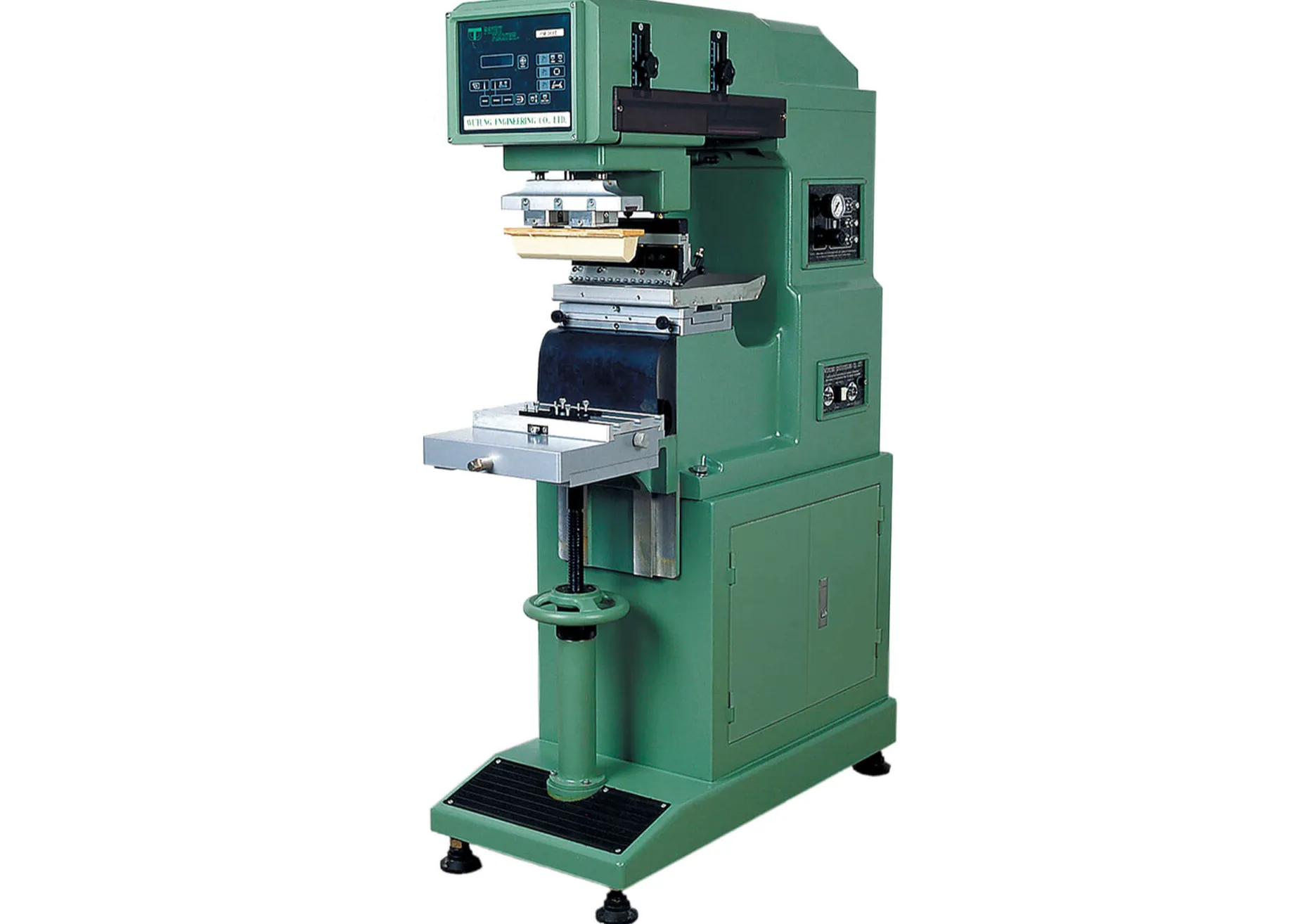
| Pad printing | Transfers graphics onto curved or irregular plastic parts | Suitable for 3D surfaces; useful for logos, symbols, and functional legends on molded parts. |
| Screen printing | Deposits thicker ink layers on flat or cylindrical parts | Used for containers, panels, labels, and large opaque graphics; supports high-opacity inks and special effects. |
| Hot stamping / foil stamping | Applies metallic or pigmented foil by heat and pressure | Common in premium packaging and consumer branding; often paired with embossing. |
| Laser marking | Produces permanent coded or decorative marks | Favored for traceability, serialization, and abrasion-resistant coding on plastics and composites. |
| UV coating / UV curing | Applies and cures protective or decorative coatings | Used to increase gloss, abrasion resistance, and chemical resistance. |
| Lamination systems | Bond films to printed or molded surfaces | Used for protection, texture, and barrier enhancement; common in sheet and roll-to-roll work. |
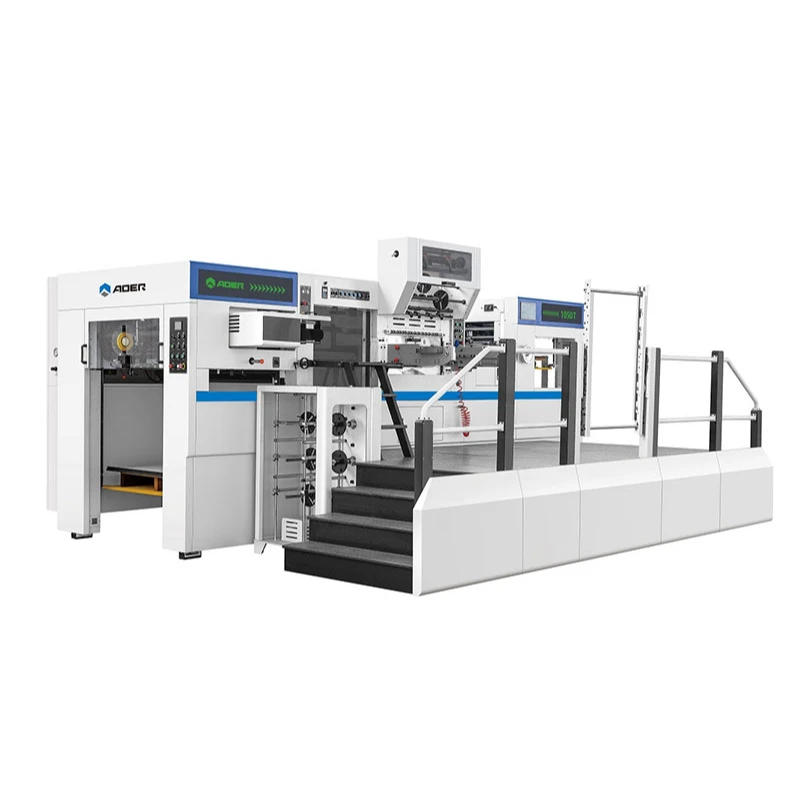
| Die-cutting and embossing | Shapes parts or adds texture and dimensional effects | Important in labels, cartons, decorative packaging, and premium printed plastics. |
Typical quantitative performance varies widely by machine type and substrate, but several benchmarks are common across the segment:
- Laser marking systems typically provide permanent marks with very low consumable use and are widely used for serialization and UDI-style traceability on plastics and other materials.
- High-speed specialty decoration systems can reach very high line speeds; for example, Kerajet’s vertical printing technology for tableware decoration is described at up to 90 m/min with resolutions up to 1200 dpi.
- Modular finishing lines for web materials may include slitting, sheeting, laminating, hot stamping, and die-cutting in one line, reducing handling losses and registration drift.
- UV curing units are selected where rapid surface fixation is needed and where solvent elimination or fast turnaround is important.
For plastic parts, process stability depends strongly on surface energy, contamination control, and pre-treatment. Flame, corona, plasma, or primer steps may be required before printing or coating on low-surface-energy polymers such as polyethylene and polypropylene. In addition, ink adhesion must be matched to the resin system, part flex, exposure to cleaners or UV, and end-use abrasion conditions. The most successful systems are therefore not standalone printers but integrated surface-decoration cells with drying or curing, material handling, inspection, and part tracking.
Types and Variations
Printing and marking systems
- Pad printing is the preferred method for irregular or curved plastic parts, such as buttons, caps, medical housings, and toys, because the silicone pad conforms to complex geometry.
- Screen printing remains important for relatively flat or mildly curved parts that require opaque, durable ink layers or special-effect graphics.
- Digital inkjet decoration is increasingly used for variable data, short runs, and rapid product changeovers, especially where conventional screens or clichés would be uneconomic.
- Laser marking is used for serial numbers, QR codes, batch codes, and permanent product identification.
Finishing and embellishment systems
- Laminators apply protective films or decorative surfaces to printed plastics and labels.
- UV coaters add gloss, tactile effects, or protection against scuffing and chemicals.
- Hot foil and hot stamping units create metallic or holographic effects used in premium packaging and anti-counterfeiting design.
- Embossing and die-cutting machines create texture, dimensional features, and final shape definition for labels, cartons, and specialty plastic applications.
Inline versus offline configurations
- Inline systems integrate printing, curing, cutting, and inspection in one production sequence, improving registration and reducing handling.
- Offline systems allow greater flexibility for mixed jobs, special substrates, or lower-volume production.
- Hybrid systems combine digital print units with conventional finishing modules to support both short-run customization and conventional throughput.
Applications and Uses
Finishing, decorating, printing, and marking machinery is used across many plastics-related sectors.
- Packaging uses screen printing, hot stamping, UV coating, and digital decoration for closures, cups, pails, lids, tubes, and containers.
- Consumer goods rely on pad printing, laser marking, and screen printing for appliances, toys, sports goods, personal-care items, and household products.
- Automotive components require durable decoration and coded identification on dashboards, knobs, switch panels, trim parts, and underhood components.
- Medical and pharmaceutical products use permanent coding, batch marking, and compliant identification on devices, dispensers, and housings.
- Electrical and industrial parts often require legends, icons, traceability marks, and abrasion-resistant labels on enclosures and control interfaces.
A less suitable application is high-volume structural plastic parts that will be hidden after assembly, where the added cost of decoration may not provide sufficient functional or commercial value unless traceability or regulatory marking is required.
Technological Innovations and Automation
Automation has become central to the segment because decoration quality depends on repeatable positioning, stable surface preparation, and controlled curing.
- Servo-driven transport and registration systems improve repeatability in multi-station lines.
- Automatic tension control is important in web-fed label, film, and transfer-print lines.
- Vision inspection and barcode verification are increasingly used to reduce rejects and confirm code legibility.
- Digital workflow integration enables quick artwork changeovers, serial number management, and reduced setup waste.
- UV-LED curing and optimized lamp systems are being adopted in some applications to reduce heat load and energy use, although compatibility depends on ink chemistry and substrate sensitivity.
Systems from suppliers such as ALS Engineering and KAMA illustrate the modular direction of the field, combining printing, hot stamping, laser units, die cutting, slitting, and handling within one automation architecture.
Environmental and Sustainability Aspects
Sustainability in this machinery segment is shaped by energy use, consumables, scrap generation, and end-of-life recyclability.
- UV and LED curing can reduce line time and may lower energy demand compared with some thermal processes, but the exact benefit depends on output, lamp type, and formulation.
- Laser marking eliminates inks, labels, and solvents in many traceability applications, reducing consumables and waste.
- Digital printing reduces setup waste for short runs because it avoids screen or plate preparation in many cases.
- Lamination, foils, and coatings can complicate recycling if they introduce multilayer structures or non-separable decorative layers.
- Adhesion-promoting pre-treatments such as plasma or corona may increase process complexity but can improve yield and reduce rework.
The central sustainability tension is that premium decoration often adds material complexity, while traceability and durability may require exactly such complexity. As a result, machine selection increasingly reflects both visual objectives and circular-economy constraints.
Economic and Global Market Impact
The market for finishing and decorating machinery is distributed across commercial printing, packaging, labels, industrial product branding, and direct-to-object decoration. Demand is supported by premium packaging, anti-counterfeiting needs, product serialization, e-commerce branding, and frequent design refresh cycles. Suppliers and dealers listed in the sector include global print-finishing vendors, industrial decoration specialists, and machine builders serving regional packaging and plastics markets.
Economically, the segment tends to reward manufacturers that can offer:
- higher throughput without sacrificing registration,
- shorter changeover time,
- lower reject rates,
- improved consumable efficiency,
- compatibility with multiple substrates, including plastics,
- and integration with data systems for production traceability.
Because many of these machines are sold as application-specific systems rather than commodity equipment, value is often determined more by process performance and service support than by machine footprint alone.
Current Challenges and Innovations
Several technical challenges continue to shape product development.
- Adhesion on low-surface-energy plastics remains a core problem, especially on PP and PE parts.
- Color consistency and registration are difficult in high-speed, multi-station operations.
- Durability requirements are increasing for scratch resistance, chemical resistance, and outdoor exposure.
- Short-run economics pressure conventional screen, pad, and foil systems when artwork changes frequently.
- Compliance demands for traceability, labeling, and safety marking continue to expand in medical, electrical, and industrial markets.
Current innovation trends include hybrid digital-conventional systems, more capable inspection software, improved low-migration inks and coatings, and tighter coupling between printing, curing, and part handling. The result is a gradual shift from isolated decoration machines toward fully controlled surface-finishing cells.
Future Outlook
The future of this machinery class is likely to be defined by three directions: digitization, sustainability, and functionalization. Digitization will continue to expand the use of variable-data printing, serialized coding, and recipe-driven changeovers. Sustainability will favor lower-consumable methods such as laser marking and more efficient curing technologies, while also pushing designers to simplify multilayer decorative structures where possible.
Functional decoration is also expected to grow, meaning that surface processes will do more than add graphics. They will increasingly provide tactile features, security elements, machine-readable codes, and integrated performance layers. In plastics processing, this will keep finishing, decorating, printing, and marking machinery closely tied to part design, material selection, and regulatory strategy rather than treating decoration as a purely cosmetic final step.
References
- •
Print Finishing Equipment Machines. (2025, August 20). MyBinding. https://www.mybinding.com/collections/finishing-equipmentLink
- •
Dealer for finishing, decorating, printing & marking equipment. (2000, January 1). Machineseeker. https://www.machineseeker-india.com/Haendler/tci-460Link
- •
Worldwide suppliers of print finishing & packaging machines. (2025, January 1). Global Print Finishing. http://www.globalprintfinishing.co.uk/Link
- •
Decoration Technology - Ferry Group. (n.d.). Ferry Group. https://ferrygrp.com/techniques/decoration-technology/Link
- •
Equipment Types | PRINTING United Alliance Directory. (n.d.). PRINTING United Alliance. https://directory.printing.org/equipment-types/Link
- •
Duplo USA Corporation - Innovative Print Finishing Solutions. (2026, July 31). Duplo USA. https://www.duplousa.com/Link
- •
Print Finishing. (2025, March 1). Endurance Machinery. https://endurancemachinery.com/en-us/collections/print-finishingLink
- •
Die cutting, embossing and finishing machines - KAMA. (2026, January 9). KAMA. https://www.kama.info/en/products/die-cutting-embossing-and-finishing-machines/Link
- •
Pad printing machines and laser marking machines ... - Spinks World. (n.d.). Spinks World. https://www.spinksworld.com/productsLink
- •
Plastics & Rubber Vietnam 2027. (2026, September 1). Expofinder. https://www.expofinder.com/en/detail/jidZt5ABLink
- •
AIGLE MACCHINE SRL. (n.d.). Machines Italia. https://machinesitalia.org/company/aigle-macchine-srlLink
- •
Products - ALS Engineering GmbH. (n.d.). ALS Engineering. http://www.als-lasercut.de/produkte_uk1.htmlLink
- •
Trableware Solutions - Kerajet. (2024, August 28). Kerajet. https://kerajet.com/en/trableware-solutions/Link
- •
Koenig & Bauer AG (ETR:SKB) Company Profile & Description. (2025, August 20). Stock Analysis. https://stockanalysis.com/quote/etr/SKB/company/Link
- •
Finishing Equipment Archives - Digital Color Depot. (2023, November 1). Digital Color Depot. https://www.digitalcolordepot.com/product-category/finishing-equipment/Link
- •
Printing & Finishing Equipment - Befitter Machinery. (n.d.). Befitter Machinery. https://www.befittermachines.com/printing-finishing-equipment.htmlLink
- •
Deco Tech: Pad Printing and Industrial Printing Equipment & Supplies. (2024, June 30). Deco Tech. https://www.decotechgroup.com/Link
- •
Finishing. (2024, January 1). PFS Graphics. https://www.pfsgraphics.com/finishing/12/1/2/Link
- •
Print Finishing Equipment. (2025, June 27). EO Johnson. https://www.eojohnson.com/finishing-equipmentLink
- •
Print Finishing Solutions – Xerox. (2000, January 1). Xerox. https://www.xerox.com/en-us/digital-printing/feeders-print-finishingLink