
Introduction
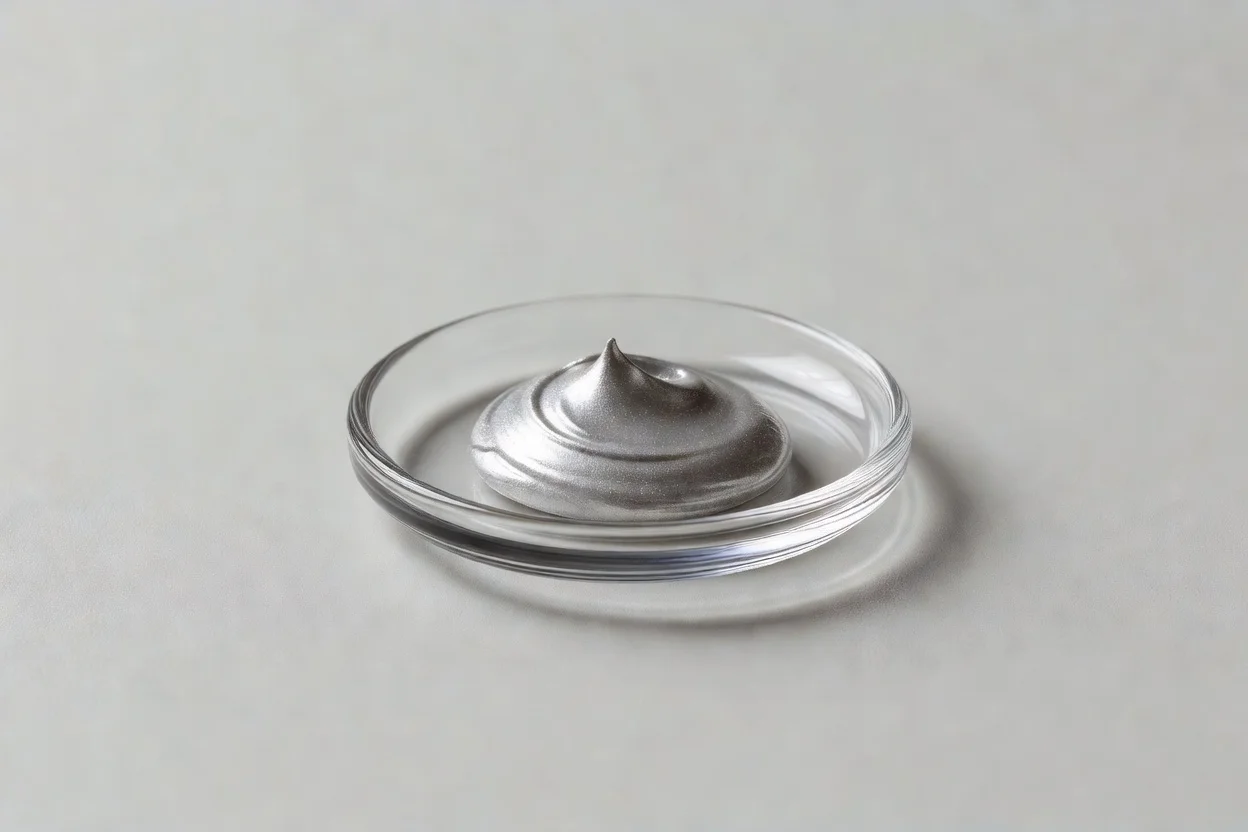
Aluminum silver paste is a metallic pigment dispersion used primarily in coatings, inks, plastics, and functional surface systems to deliver a bright silver appearance, strong hiding power, and, in some formulations, reflective or barrier-enhancing effects. It is typically made from aluminum flake pigment dispersed in an organic or waterborne medium, with surface treatments and additives chosen to control leafing behavior, compatibility, storage stability, and final appearance.
In plastics and auxiliaries contexts, aluminum silver paste matters because it bridges decoration and function: it is used in plastic coatings and molded plastic finishes, but also in automotive, packaging, appliance, and specialty industrial systems where metallic aesthetics must be balanced against corrosion resistance, processability, and environmental constraints. Its development has moved from solvent-based, highly decorative metallic pigments toward water-based and lower-VOC formulations, while newer work has focused on better dispersion, improved anti-oxidation treatment, and compatibility with increasingly demanding resin systems.
History and Development
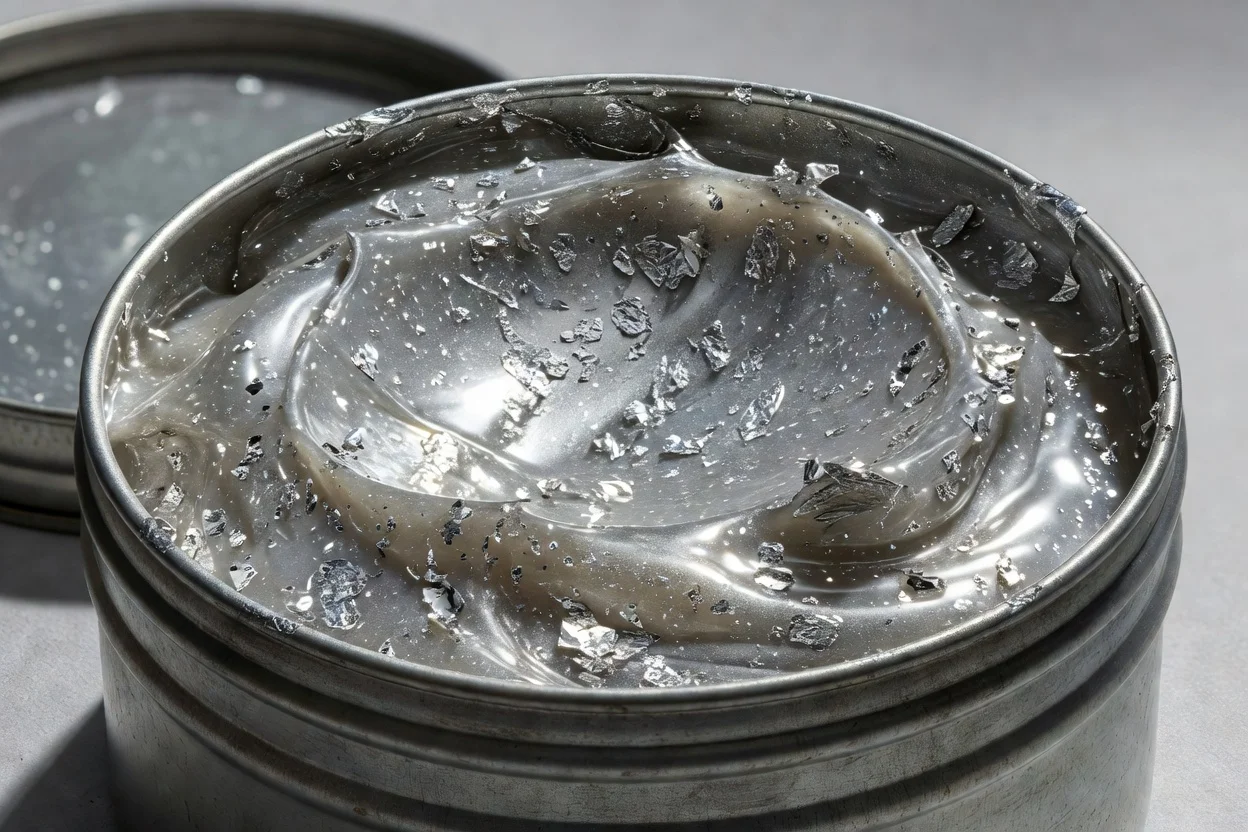
Aluminum-based metallic pigments emerged as industrial substitutes for precious-metal effects, offering a lower-cost route to metallic brilliance and a wide range of silver shades. Over time, manufacturing methods improved from basic milling of aluminum powder into paste to more controlled flake production, surface passivation, and classification by particle size, leafing behavior, and solvent system.
A key development was the differentiation between leafing and non-leafing grades. Leafing grades orient at or near the coating surface to maximize reflectivity, while non-leafing grades are distributed more uniformly through the film for better intercoat adhesion and durability. More recently, water-based aluminum silver paste has been developed to address environmental regulation and compatibility with waterborne coatings, though it requires specialized surface treatment because aluminum reacts readily with water, acid, and alkali.
Chemical Structure and Key Properties
Aluminum silver paste is not a single compound but a formulated material consisting of aluminum flakes, solvent or waterborne carrier, surface-treatment agents, and functional additives. The visual effect comes from the plate-like geometry of the flakes, which reflect light specularly and create a metallic, “silver” appearance.
Core properties
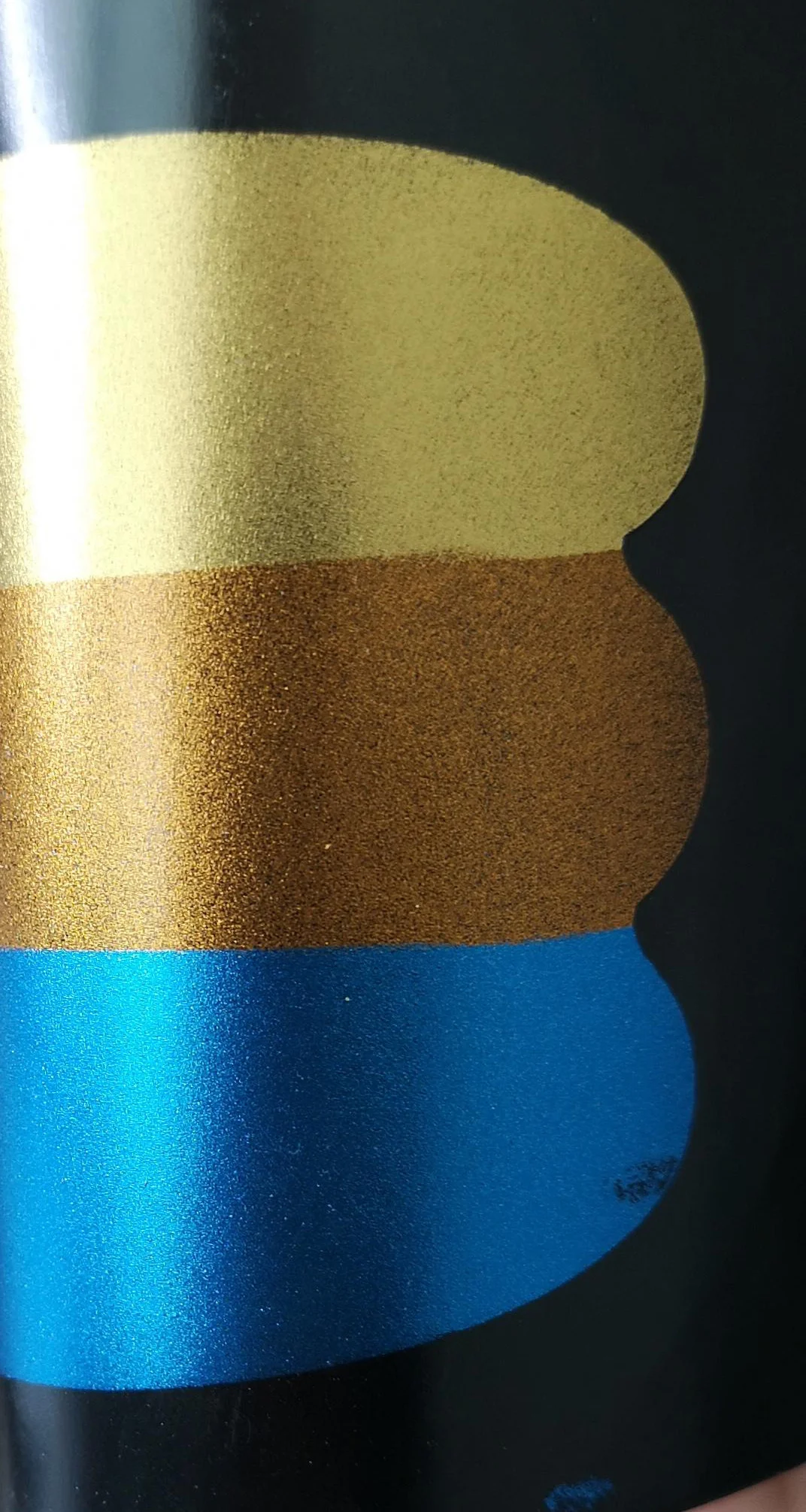
- High reflectivity: The flake morphology produces strong light reflection and metallic gloss.
- Metallic luster: Suitable for decorative finishes on plastics, automotive parts, packaging, and consumer goods.
- Barrier contribution: Properly oriented flakes can increase tortuosity for gases and moisture, improving barrier performance in coatings and films, although this is formulation-dependent and not equivalent to a dedicated barrier resin.
- Thermal and light management: Reflective surfaces can reduce solar heat gain and assist in thermal management in coated articles.
- Corrosion and oxidation resistance: Usually achieved through surface treatment and encapsulation rather than from bare aluminum alone.
Real limits and practical workarounds
- Limit: Poor stability in waterborne systems → Cause: Aluminum is reactive in water and can corrode in alkaline or acidic environments → Workaround: Use specialized silane, polymer, or inorganic surface treatments and controlled pH waterborne formulations.
- Limit: Flake orientation sensitivity → Cause: Metallic gloss depends on alignment near the surface during film formation → Workaround: Adjust binder rheology, solvent evaporation rate, and leafing/non-leafing grade selection.
- Limit: Lower functional conductivity than purpose-built conductive silver pastes → Cause: Aluminum silver paste is generally optimized for appearance, not electronic conduction → Workaround: Use conductive silver-aluminum or silver pastes where electrical performance is required.
- Limit: Compatibility issues with some polymer systems → Cause: Surface energy mismatch and sedimentation tendencies can impair dispersion → Workaround: Select compatible dispersants, coupling agents, and pretreated grades.
Typical formulation note
In a waterborne system, the aluminum flakes are commonly pretreated and then dispersed into a resin with hydrophilic functionality; patent literature describes using a comb-like polymer with anchor and hydrophilic groups to improve coating integrity and prevent flake shedding or agglomeration. In pigment technology more broadly, dispersants such as succinic-acid-type treatments and polymeric binders are used at low dosage to suppress agglomeration by steric and interfacial stabilization.
Production Processes and Raw Feedstocks
The main raw feedstock is high-purity aluminum metal, usually converted into flakes by controlled milling or related mechanical processing. Industrial production typically includes inspection of the aluminum input, size reduction, ball milling or similar flake-forming steps, classification, solvent exchange or slurry preparation, and final blending with additives.
Main process elements
- Raw aluminum selection: Purity and impurity control are important because impurities affect brightness, oxidation resistance, and batch consistency.
- Flake formation: Milling creates plate-like particles that produce the metallic effect.
- Surface treatment: Fatty acids, silanes, or polymer treatments are used to improve dispersion, reduce reactivity, and tune leafing behavior.
- Paste compounding: Aluminum flakes are dispersed into a carrier medium with wetting agents, stabilizers, and sometimes anti-settling additives.
Common classifications
| Classification | Main feature | Typical use |
|---|---|---|
| Leafing | Flakes float toward the surface | High-gloss decorative coatings and reflective finishes |
| Non-leafing | Flakes distribute throughout the film | More durable coatings and systems requiring overcoating |
| Solvent-based | Strong processing latitude and established performance | Industrial coatings, plastic coatings, inks |
| Water-based | Lower VOC profile, more environmentally favorable | Waterborne coatings, packaging, automotive refinishes, decorative paints |
Applications and End-Use Markets
Aluminum silver paste is widely used in coatings, plastic coatings, inks, reflective materials, and industrial surface finishes. In plastics, it is mainly used as a decorative and functional pigment in coated molded parts, rather than as a structural polymer ingredient.
Major end-use sectors
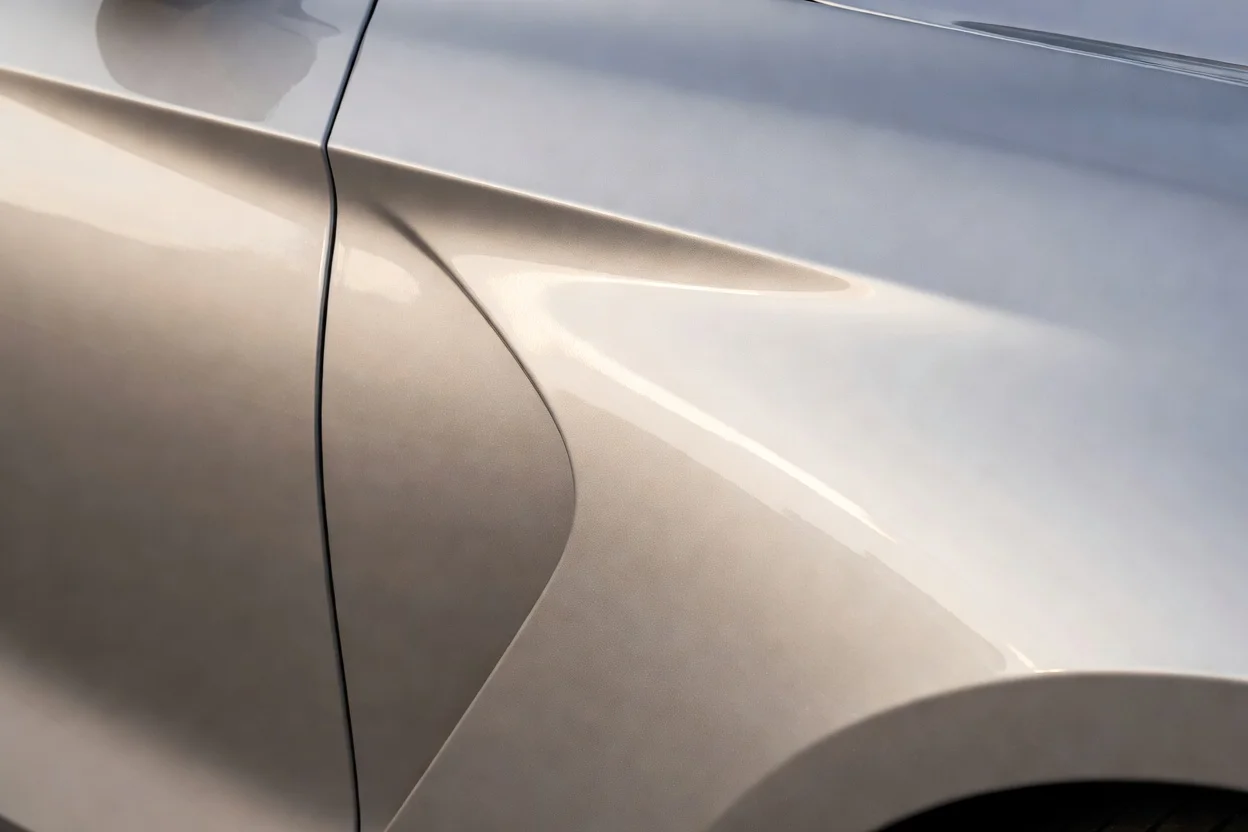
- Automotive coatings and plastics: Used for metallic body finishes, trim, wheel covers, interior parts, and plastic components requiring a premium appearance.
- Packaging and consumer goods: Applied to decorative packaging, cosmetic containers, and consumer product housings where silver metallic effects are desired.
- Appliances and electronics housings: Used in plastic coatings for refrigerators, small appliances, and electronic enclosures.
- Industrial coatings: Used on metal and plastic substrates for aesthetic and protective finishes.
- Reflective and heat-management surfaces: Used where brightness and solar reflectance are useful.
Typical grade-to-process fit
| End use | Usual paste type | Common process |
|---|---|---|
| Automotive exterior coatings | Non-leafing or balanced leafing grades | Spray coating and bake curing |
| Plastic coatings | Fine-particle, compatibility-tuned grades | Spray, roll, or dip coating on molded parts |
| Waterborne decorative paint | Water-based aluminum paste | Waterborne resin dispersion and drying |
| Packaging decoration | High-brightness metallic grades | Printing or coating on rigid and flexible substrates |
| Reflective industrial finishes | Leafing grades | Surface coating and film drying |
A notable poor-fit use is direct replacement for conductive silver pastes in electronics: aluminum silver paste can support appearance and some thermal reflectance, but it is not a substitute for high-conductivity silver pastes used in electrical circuits or die-attach applications.
Environmental and Sustainability Aspects
Sustainability is one of the most important current issues for aluminum silver paste. Conventional solvent-based products contribute VOC emissions, while aluminum itself is energy-intensive to produce, so the environmental footprint depends strongly on formulation, production route, and end-of-life recovery.
Key sustainability themes
- Waterborne substitution: Water-based aluminum silver paste reduces VOC emissions and aligns better with tightening coating regulations.
- Resource intensity: Primary aluminum production is electricity-intensive, which affects the embodied carbon of aluminum-based pigments.
- Recyclability: In most end uses, aluminum silver paste is dispersed in a coating matrix and is not practically recovered as a separate material; recyclability therefore depends more on the substrate system than on the paste itself.
- Bio-based alternatives: There is no direct bio-based equivalent that reproduces the exact metallic optical effect of aluminum flake pigments, so sustainability progress mainly comes from lower-VOC binders, improved durability, and reduced overuse.
- Durability as a sustainability factor: Better oxidation resistance, adhesion, and weatherability can extend service life and reduce recoating frequency, which partly offsets material footprint.
Economic and Global Market Impact
Aluminum silver paste is a specialty auxiliary with demand closely tied to coatings, automotive production, industrial finishing, plastic decoration, and packaging markets. Growth is influenced by consumer preference for metallic aesthetics, the expansion of waterborne coatings, and rising quality requirements in automotive and consumer electronics surfaces.
Published supplier and market-facing materials indicate broad global production across Asia, Europe, and North America, with Chinese manufacturers appearing prominently in commodity and mid-tier aluminum paste supply, while specialized coating and functional-grade suppliers serve niche high-performance markets. In higher-value segments, competition focuses less on the metal itself and more on flake morphology control, surface treatment technology, dispersion stability, and application-specific formulation support.
Current Challenges and Innovations
- Dispersion control: Keeping flakes uniformly suspended without settling remains a major formulation challenge, especially in low-VOC or waterborne systems.
- Oxidation management: Aluminum flakes can oxidize, dulling brightness and impairing storage stability; protective surface treatments are therefore essential.
- Waterborne compatibility: The move from solvent to water systems requires better corrosion inhibition and interfacial engineering.
- Performance tuning: Modern users often want a balance of gloss, flop, hiding power, and process stability rather than maximum brightness alone.
- Functional integration: Some development is aimed at combining decorative metallic effect with heat reflection, electromagnetic shielding, or improved surface durability.
Recent formulation approaches described in the literature include polymeric anchor-hydrophilic surface systems for waterborne aluminum paste and improved milling/surface-treatment protocols to enhance dispersion and suppress flake damage.
Future Outlook
Aluminum silver paste is likely to remain important in plastic coatings and other surface-finishing segments because it offers a rare combination of visual impact, process flexibility, and cost-effective metallic appearance. Future development will probably center on three directions: lower-emission waterborne grades, better long-term stability in challenging binder systems, and more precise control of optical effects such as brightness, angle-dependent color travel, and surface uniformity.
A further trend is the convergence of decorative and functional roles. In automotive and consumer products, aluminum silver paste is increasingly expected to contribute not only to appearance but also to thermal management, durability, and compatibility with modern coating lines.
References
- •
The application of aluminum silver paste in car body manufacturing. (2025, June 24). Boyan Pigment. https://www.boyanpigment.com/enhancing-automotive-performance-and-safety-the-application-of-aluminum-silver-paste-in-car-body-manufacturing/Link
- •
Classification of aluminum paste for coatings(1). (2018, August 16). Zqmetallic. https://www.zqmetallic.com/newsshow-16-58-1.htmlLink
- •
Aluminum paste production line. (2025, January 9). Boyan Pigment. https://www.boyanpigment.com/aluminum-paste-production-line/Link
- •
High-purity fine silver paste for ink and paint applications. (2013). Globaltuocai. https://www.globaltuocai.com/4um-partical-size-fine-white-aluminum-paste-pigmentLink
- •
Aluminum paste for PV manufacturing. (2023, July 12). Targray. https://www.targray.com/solar/conductive-paste/aluminum-pasteLink
- •
Aluminium paste. (n.d.). Chinabronzepowder. https://chinabronzepowder.com/aluminium-paste/Link
- •
Preparation method of aqueous aluminum silver paste. (2010, November 8). Google Patents. https://patents.google.com/patent/CN102093761A/enLink
- •
Silver paste: An overview. (n.d.). ScienceDirect. https://www.sciencedirect.com/topics/engineering/silver-pasteLink
- •
The manufacturing method of silver paste using aluminum paste. (2016, October 13). Google Patents. https://patents.google.com/patent/KR20180040936A/enLink
- •
Water-based coated aluminum silver paste. (2022, January 30). Biotio. https://biotio.en.made-in-china.com/product/pdHfzZuOLeVi/China-Water-Based-Coated-Aluminum-Silver-Paste-Coated-Silver-Paste-for-Coatings.htmlLink
- •
Effects of particle size of aluminum powder in silver/aluminum paste on n-type solar cells. (2018, July 26). AIMS Press. https://www.aimspress.com/article/doi/10.3934/matersci.2018.4.614?viewType=HTMLLink
- •
Preparation of nano silver paste and applications in electronics. (2020). PMC. https://pmc.ncbi.nlm.nih.gov/articles/PMC7022831/Link
- •
Long-time reliable direct bonding of silver flake paste on Al substrate for power electronic die-attach. (2022). ScienceDirect. https://www.sciencedirect.com/science/article/pii/S2590150822000047Link
- •
Front silver-aluminum paste for topcon solar cell. (2024, December 19). Patentscope. https://patentscope.wipo.int/search/en/WO2024254889Link
- •
Inside the aluminium paste manufacturing process. (2026, April 7). Silverocket. https://www.silverocket.com/Inside-the-Aluminium-Paste-Manufacturing-Process-From-Raw-Aluminium-to-High-Performance-Metallic-Pigment-id44901855.htmlLink
- •
Highly conductive silver pastes for automotive glass. (n.d.). Fenzigroup. https://www.fenzigroup.com/en/products/agt/silver-pastes/temperingLink
- •
Description of the aluminum silver paste properties. (2021, June 1). AbNewswire. https://www.abnewswire.com/pressreleases/description-of-the-aluminum-silver-paste-properties_545602.htmlLink
- •
Aluminum silver paste: A comprehensive overview. (2024, October 23). Chinabronzepowder. https://chinabronzepowder.com/aluminum-silver-paste-a-comprehensive-overview/Link
- •
Differences in the application of aluminum silver paste in various coatings. (2026, May 9). TFG999. https://www.tfg999.com/page6?article_id=705&_l=enLink
- •
Global color changing aluminum silver paste market. (n.d.). LinkedIn. https://www.linkedin.com/pulse/global-color-changing-aluminum-silver-paste-market-9h00eLink