
Introduction
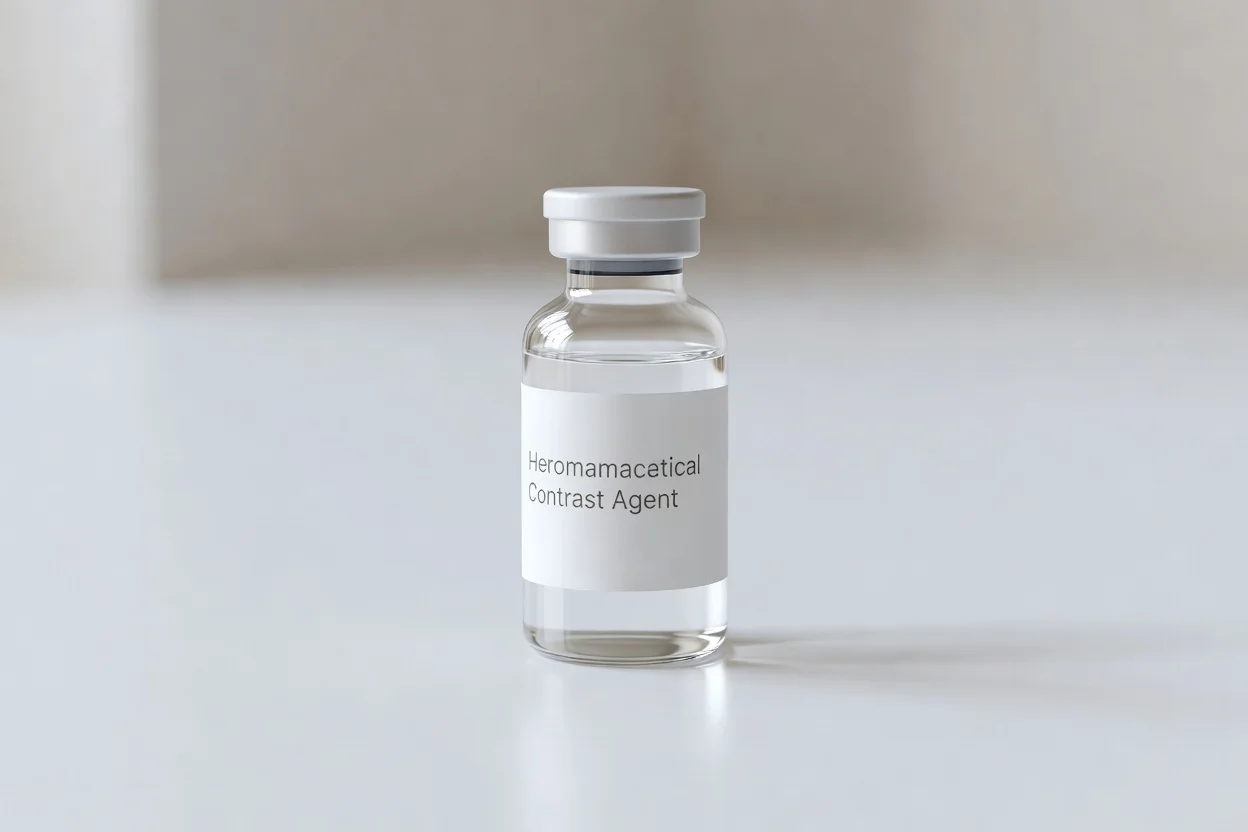
Contrast agent and photographic chemicals refers to two distinct chemical domains that are often linked only by the shared idea of improving image visibility. In medical imaging, contrast agents are substances used to increase the visibility of internal structures; in photography, photographic chemicals are the developers, fixers, and related processing agents that convert a latent image into a visible and permanent one. Because the user query combines both terms, this article treats them as a comparative topic centered on imaging chemistry rather than as a single material category.
In photography, the core chemistry has historically depended on light-sensitive silver halides, which are reduced during development to metallic silver, producing density and contrast in the final image. In medical imaging, contrast agents work differently: they alter the way X-rays, magnetic fields, or ultrasound interact with tissues so that specific structures become easier to distinguish. Although the underlying mechanisms differ, both classes of chemicals are designed to improve visual separation between structures that would otherwise be difficult to see.
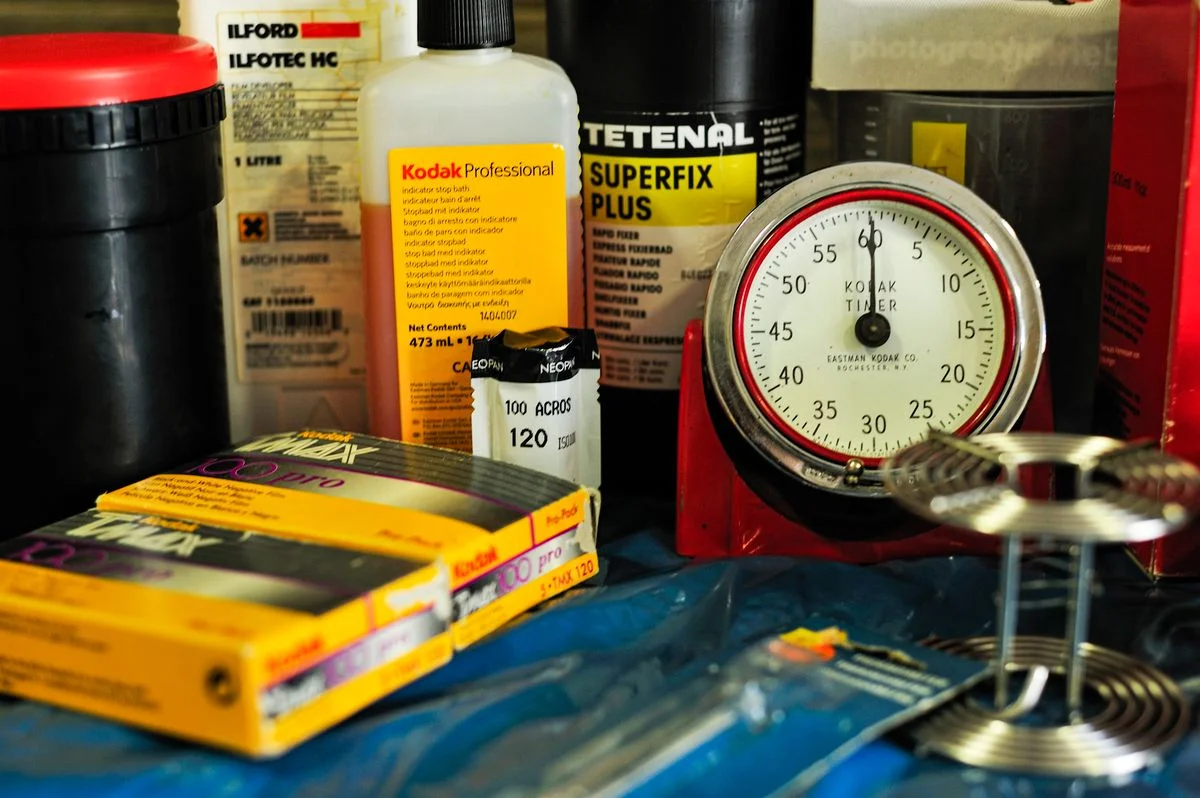
The most important photographic chemicals include developing agents such as hydroquinone, metol, and phenidone; restrainers such as potassium bromide; alkalis such as sodium carbonate or borax; preservatives such as sodium sulfite; and fixing agents such as sodium thiosulfate. Modern contrast agents in radiology are commonly iodinated compounds for X-ray imaging and barium sulfate for selected gastrointestinal examinations, while MRI uses agents that modify relaxation behavior in tissue.
Historically, photographic chemistry developed from silver-halide emulsions and wet-plate or film processing into more standardized developer-fixer systems, while medical contrast media evolved in parallel with diagnostic imaging technologies. Today, both fields face sustainability pressures: photographic chemistry has declined in volume as digital imaging expanded, while medical contrast media are scrutinized for toxicity, persistence, and waste management. Future development in both areas is likely to emphasize lower-toxicity formulations, improved environmental handling, and more specialized performance tuning.
History and Development
Photography emerged from the discovery that silver salts darken under light, with silver halides becoming the dominant photosensitive materials because they could capture latent images and later be developed chemically. Early photographic processing relied on trial-and-error mixtures, but over time the field consolidated around distinct functional classes of chemicals: developing agents, accelerators, restrainers, preservatives, and fixers.
Developers such as hydroquinone and metol became widely used because they could selectively reduce exposed silver halide grains into visible metallic silver, making images appear during processing. Fixing chemistry also became standardized, with sodium thiosulfate used to dissolve unexposed silver halides and stabilize the image. These systems made black-and-white photography chemically controllable in a way that supported consistent contrast, tone, and archival permanence.
Medical contrast media developed later, as radiology evolved into a major diagnostic discipline. Iodinated agents and barium sulfate became common because high atomic number elements absorb X-rays strongly, increasing image contrast in selected tissues and cavities. MRI contrast agents later introduced a different mechanism, altering magnetic relaxation rather than X-ray attenuation.
The shift from analog photography to digital imaging reduced the industrial relevance of many traditional photographic chemicals, but these materials remain important in film photography, archival work, scientific imaging, and specialized graphic arts. In medicine, contrast agents remain central to diagnostic workflows, so demand persists despite ongoing safety and environmental debate.
Chemical Structure and Key Properties
Photographic chemicals are not a single substance class but a processing system. The image-forming chemistry begins with a silver halide emulsion, most often based on silver bromide or related silver salts dispersed in gelatin. During exposure, light creates a latent image; during development, reducing agents convert the exposed grains into metallic silver, which appears dark and increases image density and contrast.
A typical black-and-white developer contains:
- Developing agent: hydroquinone, metol, phenidone, or related reducers.
- Accelerator or alkali: sodium carbonate or borax, which raises pH and speeds reduction.
- Preservative: sodium sulfite, which slows oxidation of the developer.
- Restrainer: potassium bromide, which reduces fog by suppressing development of unexposed grains.
Contrast in photographic processing is controlled by formulation and time-temperature conditions. Hydroquinone is associated with higher contrast, while metol and phenidone are often used to preserve detail and balance tonal reproduction. Thiourea is also used in some formulations to improve contrast and reduce gray haze.
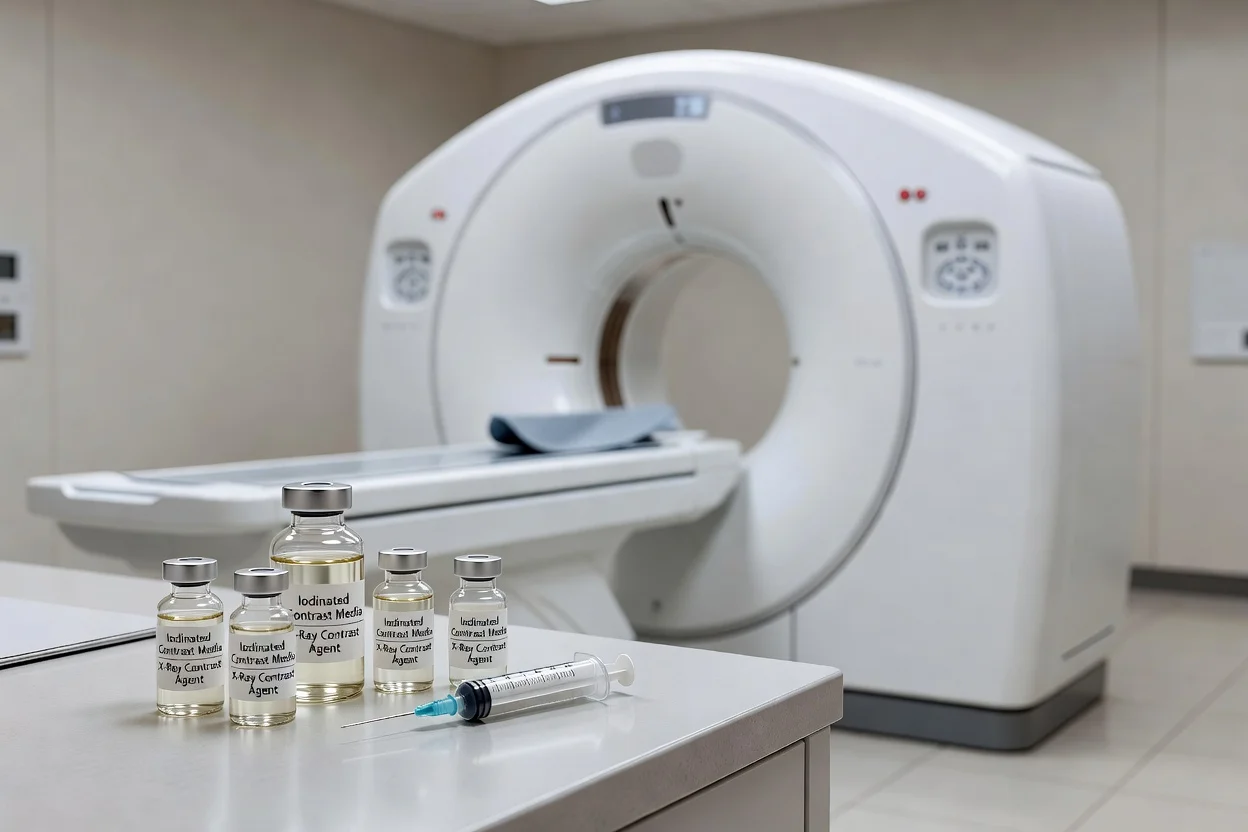
Contrast agents in medical imaging have different chemical design requirements. Iodinated contrast media are built around iodine-rich molecules that absorb X-rays efficiently, while barium sulfate is used as an insoluble radiopaque suspension. In MRI, contrast agents are typically chelates that alter relaxation times rather than directly blocking radiation.
A few real limitations are important:
- Poor O2/grease barrier in photographic emulsions → silver-halide materials do not function as packaging barriers and are chemically specialized for imaging only → use polymer films or multilayer barrier materials for packaging applications.
- Low surface energy before treatment in photo-receptive films and plastics → wetting and coating uniformity can be poor → use corona, plasma, primer layers, or surfactant-assisted coating.
- Environmental persistence of some medical contrast media → incomplete removal in wastewater and excretion by patients → use optimized dosing, recovery systems, and greener molecular designs where possible.
Production Processes and Raw Feedstocks
Photographic chemicals are produced through specialty chemical synthesis and purification, because image quality is highly sensitive to trace impurities. Developing agents such as hydroquinone and metol must be manufactured to tight purity standards so that they do not cause staining, fog, or unpredictable contrast shifts. Fixing agents such as sodium thiosulfate are commodity chemicals, but photographic grades still require consistent quality control.
The traditional photographic value chain includes:
- synthesis of silver salts and emulsion preparation,
- coating of gelatin-based layers on film or paper,
- formulation of developer, stop bath, and fixer solutions,
- processing under controlled time, temperature, and agitation.
Medical contrast agents are manufactured under pharmaceutical or medical-device standards rather than industrial chemical standards. Iodinated contrast media are typically multi-step organic syntheses that produce high-purity, low-toxicity, water-soluble compounds suitable for injection or oral administration. Barium sulfate formulations rely on controlled particle size and suspension stability, not molecular reactivity.
The raw feedstocks differ sharply by sector:
- Photography: silver compounds, gelatin, reducing agents, alkalis, sulfites, thiosulfates, acids, and preservative systems.
- Radiology: iodine-containing precursors, barium compounds, chelators, salts, and formulation excipients.
Because photographic chemicals are generally used in dilute aqueous solutions, their production economics depend on specialty chemistry, packaging, shelf stability, and contamination control rather than large-volume polymer or resin processing.
Applications and End-Use Markets
Photographic chemicals
Photographic chemicals are used primarily in film development, darkroom printing, archival restoration, scientific imaging, and some niche graphic arts applications. The chemistry is matched to the process and desired image style.
- Black-and-white film development: hydroquinone, metol, phenidone, and similar reducing agents are used to convert exposed silver halides to metallic silver.
- High-contrast processing: stronger developers or contrast-promoting formulations are used where steep tonal separation is desired.
- Low-grain or fine-detail processing: developers biased toward shadow detail and controlled activity are preferred.
- Fixing and stabilization: sodium thiosulfate removes unexposed halides and makes the image permanent.
A poor-fit use is general-purpose digital imaging: photographic chemicals do not replace electronic sensors or software-based image formation, so their market is now largely niche rather than mainstream.
Contrast agents in medical imaging
Medical contrast agents are used in:
- X-ray and CT imaging: iodinated agents enhance radiodensity.
- Fluoroscopy and angiography: iodinated media improve visualization of vessels and hollow organs.
- MRI: contrast agents modify relaxation times to sharpen anatomical and pathological differences.
- Selected gastrointestinal studies: barium sulfate is used when an insoluble positive contrast agent is needed.
In both domains, the chemical product is chosen according to performance requirements:
- photographic contrast agents and developers are selected for tonal response and fog control,
- radiographic contrast agents are selected for attenuation, biodistribution, and safety profile.
Environmental and Sustainability Aspects
Traditional photographic processing raises concerns related to silver-bearing waste, spent developer chemistry, and fixer effluents. Unfixed silver halides and dissolved silver complexes can require recovery or specialized disposal because silver is both valuable and environmentally regulated in many jurisdictions. Developer solutions also contain alkaline reducing agents and sulfites that must be managed carefully in labs and minilabs.
However, the environmental footprint of photographic chemicals has declined as film-based photography has shrunk and digital capture has displaced much of the former demand. The remaining footprint is therefore concentrated in niche film use, fine art, archival reproduction, and technical imaging rather than mass consumer photography.
Medical contrast agents present a different sustainability profile. They are used at lower volumes than industrial chemicals but are biologically active and can enter wastewater streams after excretion. This has driven interest in:
- lower-dose formulations,
- more biodegradable or more readily removable molecules,
- improved collection and treatment of hospital effluents,
- reduction of unnecessary repeat imaging through protocol optimization.
In both fields, sustainability now means more than toxicity reduction. It also includes:
- lower energy use in processing,
- reduced hazardous waste,
- longer product shelf life,
- tighter process control to minimize off-spec material.
Economic and Global Market Impact
The economics of photographic chemicals are split between a shrinking analog consumer market and a durable specialist market. Demand remains in film photography, motion-picture archiving, artistic printing, and education, but the large-scale consumer market has been structurally reduced by digital substitution. This has made the sector more dependent on a limited number of specialized producers and distributors of developers, fixers, and darkroom supplies.
By contrast, medical contrast agents remain strategically important in healthcare systems worldwide because diagnostic imaging volumes are high and continued reliance on CT, fluoroscopy, and MRI supports steady demand. The market is therefore driven less by consumer trends and more by healthcare utilization, regulatory approval, and supply reliability.
The most visible commercial distinction is this:
- photographic chemicals are a specialty niche market,
- radiological contrast agents are a clinical infrastructure market.
Current Challenges and Innovations
The main challenge for photographic chemicals is the continued decline of analog workflows. That has led to reduced scale, narrower supplier bases, and greater sensitivity to raw-material volatility. Formulators have responded with more stable concentrates, simplified kits, and products designed for easier room-temperature storage and lower odor or toxicity.
A second challenge is process consistency. Photographic image quality depends on precise control of:
- developer activity,
- pH,
- agitation,
- temperature,
- exposure time,
- fixer completeness.
Small changes can alter contrast, grain, and archival stability.
In medical imaging, the main challenge is safety and environmental stewardship. Innovation has focused on:
- lower-osmolality iodinated agents,
- improved chelation and tissue specificity in MRI agents,
- dose reduction strategies,
- better waste capture and stewardship practices.
A useful chemical example is sodium thiosulfate, typically used as the fixing agent in photographic processing; mechanistically, it complexes residual silver halide into soluble species so the image no longer darkens with light exposure. Another example is hydroquinone, a classic developer that reduces exposed silver halide to metallic silver and tends to increase image contrast when used in appropriately alkaline formulations.
Future Outlook
The future of photographic chemicals is likely to remain specialized rather than large-scale. Analog photography, archival processes, and niche artistic use will preserve demand for classic developers, fixers, and toners, but broad consumer growth is unlikely. Innovation will probably focus on cleaner chemistry, improved packaging stability, and lower-toxicity alternatives that maintain the tonal character valued by analog users.
For contrast agents in medical imaging, future growth will be tied to diagnostic imaging demand, patient safety, and regulatory pressure to reduce environmental release. The most promising directions are:
- more targeted agents with lower systemic burden,
- improved recovery and wastewater handling,
- formulations that maintain image quality at lower dose,
- optimization of imaging protocols to reduce unnecessary contrast use.
Summary
Contrast agent and photographic chemicals are related by purpose but not by chemistry: one class enhances medical image visibility, while the other class forms and stabilizes photographic images. Photographic systems rely mainly on silver-halide reduction and fixation, whereas medical contrast agents rely on X-ray attenuation or magnetic effects to improve diagnostic clarity. Both remain important specialty chemistries, but both are being reshaped by digital substitution, environmental regulation, and the search for safer, more efficient formulations.
References
- •
Role of Contrast Agents in Imaging. (2023, August 18).Link
- •
Chemistry of photography | Visual Arts | Research Starters. (2025, March 25).Link
- •
Photo Chemicals Color Developer. (2023, July 4).Link
- •
Chemistry of Photography Detailed | PDF | Imaging - Scribd. (2026, February 21).Link
- •
Essential Guide to Every Chemical Used for Photography. (2026, June 13).Link
- •
The Chemistry of Developing Photographs. (n.d.).Link
- •
Photographic developer - Wikipedia. (2003, November 25).Link
- •
Understanding Photographic Chemicals: A Comprehensive Guide. (2026, March 31).Link
- •
The Chemistry of Photography. (n.d.).Link
- •
Chemistry and the Black and White Photographic Process. (n.d.).Link
- •
Chemistry and Photographic Processes: An Overview of N. .... (2023, February 16).Link
- •
Developer Science - Photographic Memorabilia. (n.d.).Link
- •
How Chemistry Helps Make your Photos Picture Perfect. (2024, October 17).Link
- •
The chemistry of photography - John Straub's lecture notes. (n.d.).Link
- •
Photographic developer. (n.d.).Link
- •
PHOTOGRAPHIC CHEMISTRY AND PROCESSING (1). (2025, May 25).Link
- •
Chemistry And Photography. (2023, July 18).Link
- •
ELI5: How the chemicals in photo developing work. (n.d.).Link
- •
Chemical Photography. (n.d.).Link
- •
Photography. (n.d.).Link
- •
'Picture Perfect Chemistry' illuminates the science behind .... (2024, October 28).Link
- •
Photographic processing - Wikipedia. (2003, April 1).Link
- •
Ted's Photographics - The Science of Photography. (n.d.).Link
- •
Category:Photographic chemicals. (2022, January 1).Link
- •
Developer Solution Components Explained | PDF | Salt (Chemistry). (2026, April 11).Link
- •
Photographic Darkroom Chemistry. (2025, February 12).Link
- •
Sinhon thiourea | Application of thiourea in photography. (2025, March 31).Link
- •
How to Use Contrast in Photography. (2025, April 18).Link
- •
Contrast agent - Wikipedia. (2005, November 26).Link
- •
Mixing Developers. (n.d.).Link
- •
Developers, An Introduction. (n.d.).Link
- •
Chemical Film Processing Guide: Steps, Time & Temperature. (2026, July 27).Link
- •
Radiocontrast agent - Wikipedia. (2004, July 31).Link
- •
Developing Agent. (2010, January 1).Link
- •
Preservative - Photography - Integrated Publishing. (n.d.).Link
- •
Ltl. (2012, October 21).Link
- •
Contrast Photography: Enhancing Your Images with Light and Dark. (2023, October 12).Link
- •
Understanding Radiographic Chemistry - Barton Journal. (n.d.).Link
- •
Black and White Printing: Controlling print contrast with filters. (n.d.).Link
- •
Nucleating agents for graphic arts films. (1998, October 28).Link
- •
Photographic silver halide developer compositions and process for forming photographic silver images. (n.d.).Link
- •
Beginner's Guide to Choosing Chemicals for Processing .... (2017, March 30).Link
- •
X-Ray Computed Tomography Contrast Agents - PMC - NIH. (2012, December 5).Link
- •
Using Contrast In Different.... (2025, February 26).Link
- •
What is Contrast in Photography? (And How to Really Use It). (2024, September 5).Link
- •
Contrast (vision) - Wikipedia. (2006, June 18).Link
- •
What is contrast in photography? | BBC Maestro. (2025, February 19).Link
- •
Understanding Contrast in Photography. (n.d.).Link
- •
The Ultimate Guide to Contrast in Photography - - Adorama. (2022, August 10).Link
- •
What is CONTRAST in Photography: A Guide for Beginners. (2026, January 2).Link
- •
Positive vs Negative Contrast Agents in Diagnostic Imaging. (2026, April 15).Link
- •
Editing Your Photos To Have.... (n.d.).Link
- •
Contrast Photography Definition. (2026, January 19).Link
- •
What Are Contrast Agents and How Do They Help?. (2022, June 17).Link