
Introduction
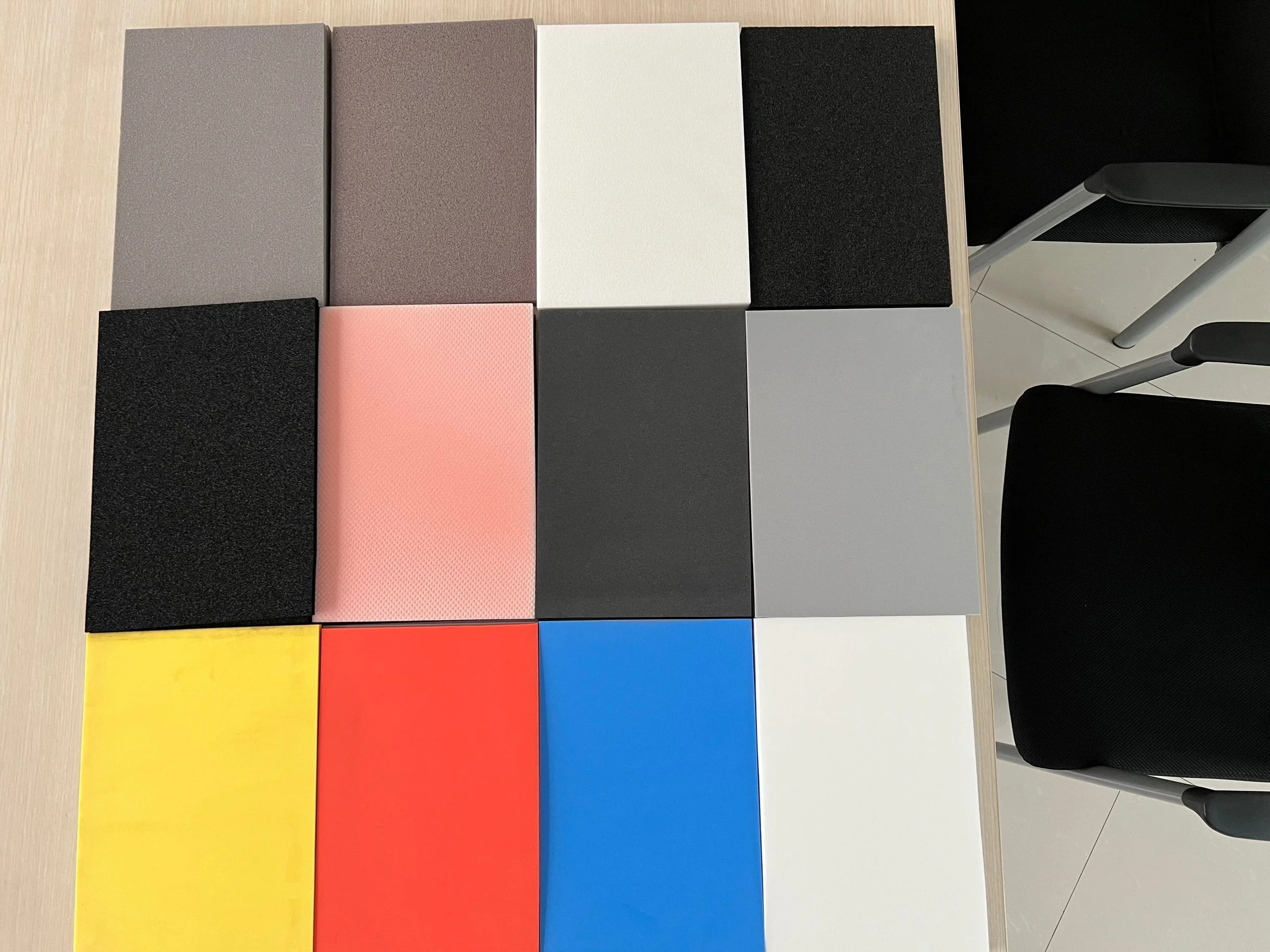
EVA foams are closed-cell foams made from ethylene-vinyl acetate copolymer and are widely used where lightweight cushioning, resilience, moisture resistance, and easy processing are required. In the plastics value chain, they sit between commodity polyolefin materials and more specialized thermoplastic elastomers, with performance strongly governed by vinyl acetate content, density, cell structure, and whether the foam is crosslinked or non-crosslinked.
EVA foam is best known in footwear midsoles and sports protection, but it also appears in packaging, medical and orthotic products, insulation, flotation goods, automotive interiors, solar encapsulants, cable applications, and thermoformed consumer goods. Its industrial importance comes from a rare combination of softness, recoverable compression, low water uptake, and broad fabrication latitude, although these same benefits are accompanied by limits in heat resistance, gas barrier performance, and end-of-life recyclability compared with some alternative materials.
History and Development
Ethylene-vinyl acetate copolymer was developed as a thermoplastic elastomeric material combining the processability of polyethylene-like resins with the softness of a rubbery phase. Foam conversion expanded its use substantially, because cell formation made it possible to lower density while preserving cushioning and impact absorption.
Commercial EVA foam grew through footwear, sports, packaging, and protective goods manufacturing, where manufacturers valued its ability to be compression molded, die cut, laminated, and thermoformed into repeatable parts. Later, crosslinking and formulation advances widened the usable temperature window and improved dimensional stability, enabling applications such as photovoltaic encapsulation, cable insulation, and technical foams.
Chemical Structure and Key Properties
EVA is a random copolymer of ethylene and vinyl acetate, and the vinyl acetate fraction largely determines softness, flexibility, adhesion, and damping behavior. Higher vinyl acetate content generally increases elasticity and softness while reducing crystallinity and stiffness, which is why different foam grades are tailored to different end uses.
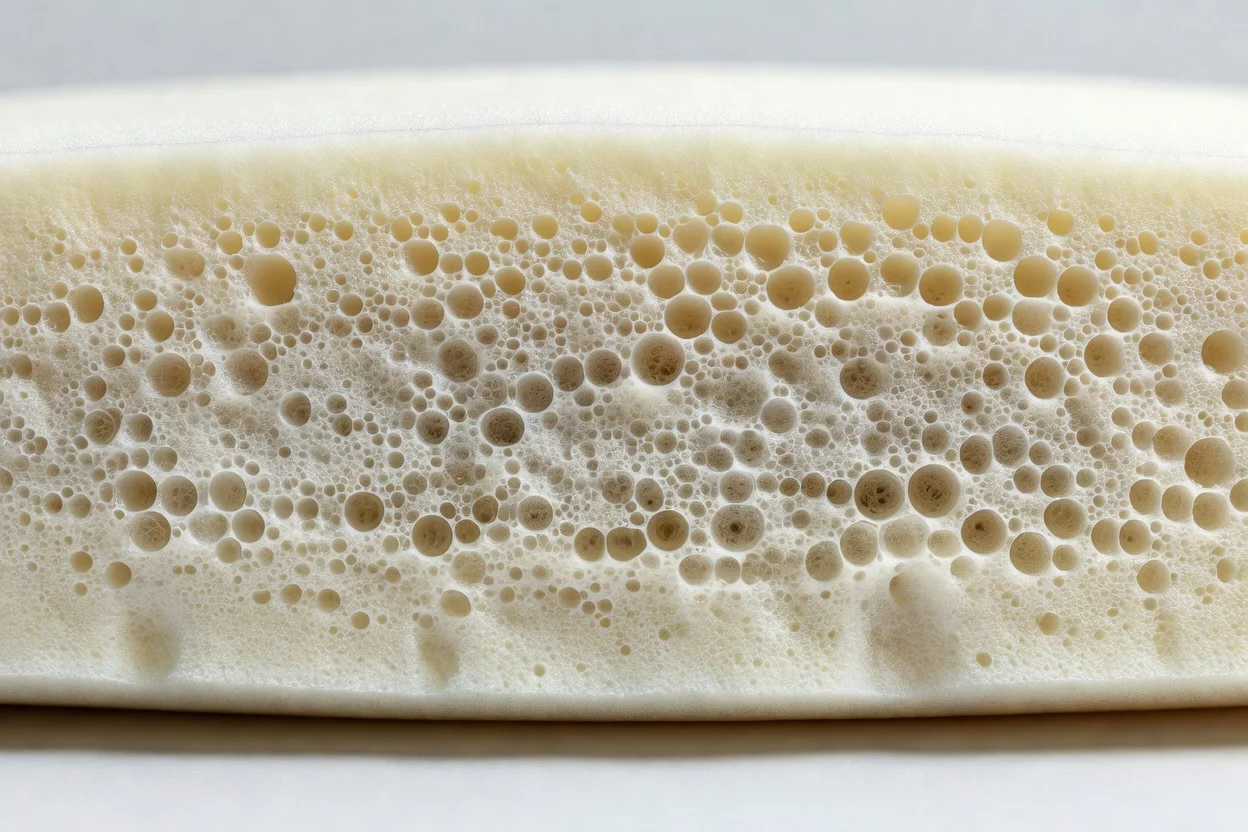
EVA foams are usually closed-cell materials, meaning the gas pockets are mostly isolated from one another. This structure is central to the material’s low water absorption, buoyancy, thermal insulation, and shock attenuation.
Key technical advantages
- Lightweight: cell formation lowers density while preserving usable strength.
- Cushioning and energy absorption: the foam dissipates impact through cell deformation and recovery.
- Moisture resistance: closed cells limit water ingress and wet-out.
- Thermoformability: the material can be heat shaped into contoured parts.
- Chemical and weather resistance: EVA often performs well in general-use environments, including many outdoor and consumer applications.
Real limits and practical workarounds
- Poor oxygen and grease barrier → the closed-cell structure and polyolefin-like backbone provide limited barrier performance for oxygen and oils → workaround: use multilayer laminates, barrier coatings, or an alternate barrier polymer where shelf-life protection is critical.
- Lower surface energy before treatment → untreated EVA is not inherently easy to bond, print, or paint → workaround: corona treatment, flame treatment, primers, or surface-compatible adhesives are commonly used.
- Heat softening or shrinkage at elevated temperatures → EVA can lose dimensional stability without formulation support → workaround: crosslinking, stabilizer packages, and grade selection for the service temperature.
Production Processes and Raw Feedstocks
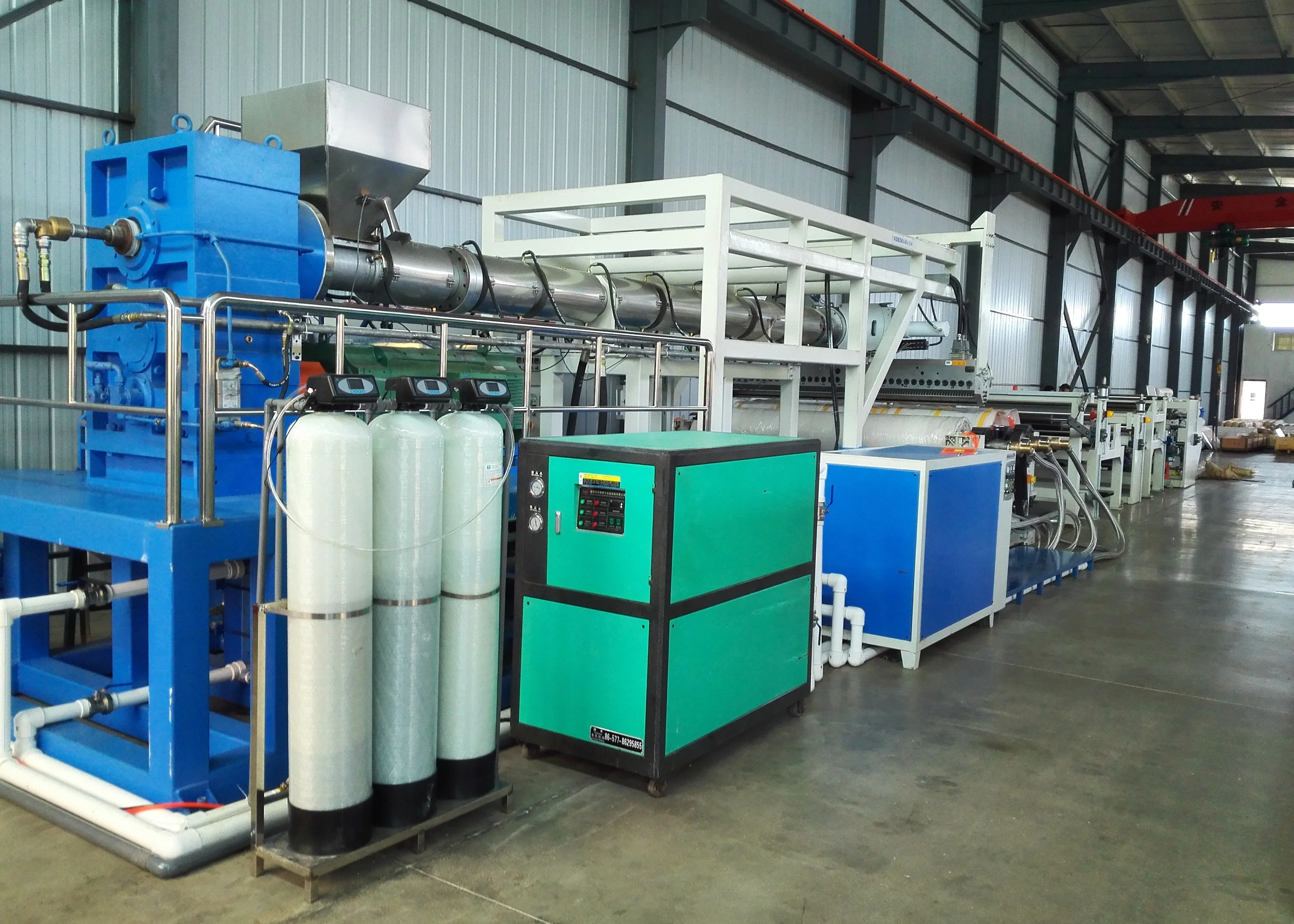
EVA resin is produced by copolymerizing ethylene with vinyl acetate, then converting the resin into foam through blowing and cell-stabilization steps. The final foam may be made by compression molding, extrusion, or sheet expansion, depending on whether the target product is a bun, sheet, roll, or shaped article.
Typical production variables include:
- Vinyl acetate content, which controls softness and resilience.
- Crosslink density, which influences heat resistance, compression set, and recovery.
- Foaming agent selection, which affects cell size, uniformity, and density range.
- Foam density and hardness, which are tuned for the final application.
In practical terms, lower-density foams are preferred for cushioning and packaging, while higher-density grades are used where structural support, abrasion resistance, or repeated loading matters.
Applications and End-Use Markets
EVA foam is used across consumer, industrial, medical, and energy-related markets because it combines comfort-grade softness with technically useful resilience.
| End-use sector | Usual EVA foam grade or form | Typical processing route | Why EVA fits |
|---|---|---|---|
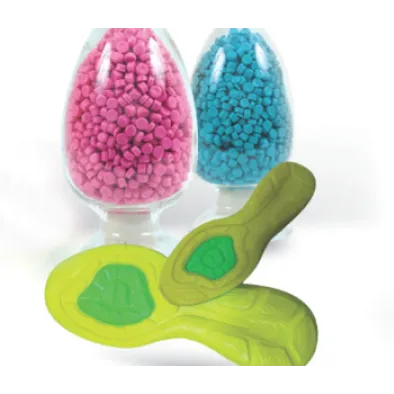
| Footwear midsoles and insoles | Medium-density, crosslinked foam | Compression molding, die cutting | Lightweight cushioning, energy return, comfort |
| Sports protection and mats | Medium- to high-density sheets | Lamination, thermoforming, cutting | Impact absorption and recoverable compression |
| Packaging inserts | Lower-density sheets and blocks | Die cutting, CNC shaping | Shock protection and low weight |
| Medical orthoses and liners | Soft, skin-contact grades | Thermoforming, skiving, lamination | Pressure distribution and low moisture uptake |
| Automotive interiors | Density-optimized foam parts | Molding, trimming, bonding | Vibration damping and trim cushioning |
| Solar encapsulation | Crosslinked encapsulant film | Lamination during module assembly | Electrical insulation and elasticity |
| Cable insulation | Stabilized technical grades | Extrusion and compounding | Flexibility and dielectric performance |
| Flotation and marine goods | Closed-cell buoyant foam | Sheet conversion, cutting | Water resistance and buoyancy |
| Construction and insulation | Higher-density sheets, tapes, underlay | Roll conversion, lamination | Sealing, damping, and thermal buffering |
| Poor-fit use: high-oxygen barrier packaging | Not ideal as a standalone barrier layer | Usually needs coextrusion or lamination | Barrier limitations restrict standalone use |
Footwear is the largest and most visible sector, where EVA’s low density, cushioning, and easy shaping make it a standard midsole and insole material. Protective sports gear and exercise mats rely on its impact damping and soft feel. In medical and orthotic uses, the material is valued for low mass, comfort, and the ability to distribute pressure over large areas.
A notable industrial use is solar photovoltaic encapsulation, where crosslinked EVA protects cells from moisture, mechanical stress, and UV exposure while retaining flexibility during module lamination and service. This is one of the clearest examples of EVA foam-related chemistry moving from comfort applications into high-value technical infrastructure.
Environmental and Sustainability Aspects
EVA foam is based on petrochemical feedstocks in most commercial production, so its upstream carbon footprint is tied to fossil-derived ethylene and vinyl acetate supply chains. The material is not biodegradable in any practical industrial sense, and its closed-cell foam form can complicate mechanical recycling, especially when it is contaminated, laminated, or crosslinked.
Recyclability is possible in some cases, but it is often limited by:
- Crosslinking, which prevents remelting into a clean, reprocessable melt.
- Additives, adhesives, and multilayer constructions, which reduce recyclate quality.
- Collection and sorting challenges, especially for footwear and mixed-material goods.
Sustainability strategies increasingly focus on:
- Reducing density while maintaining performance, which lowers material intensity.
- Designing for disassembly in footwear and consumer goods.
- Using recycled content where performance allows.
- Exploring bio-based ethylene routes and lower-carbon monomer supply.
- Substituting into applications only where EVA’s comfort and durability justify its footprint.
For some applications, EVA remains competitive because long service life, low weight, and cushioning performance can reduce overall material consumption or extend product durability. However, where barrier performance or full recyclability is paramount, alternative polymers or multilayer structures may be better choices.
Economic and Global Market Impact
According to recent industry-oriented analyses, EVA foam demand is concentrated in footwear, sports goods, packaging, medical products, and increasingly energy-related applications such as photovoltaic encapsulation. This mix makes EVA foam sensitive not only to consumer spending and footwear cycles, but also to construction, healthcare, and renewable-energy investment.
The global EVA resin market is shaped by large petrochemical producers integrated with ethylene and vinyl acetate supply, while foam conversion is fragmented across many regional fabricators and brand-suppliers. In practice, value creation is often concentrated downstream, where formulation, density control, lamination, and precision cutting determine the final performance and margin.
Current Challenges and Innovations
Current technical challenges include:
- Improving heat resistance without sacrificing softness.
- Enhancing barrier performance for packaging and technical films.
- Increasing recycled or bio-based feedstock content.
- Making crosslinked foam streams more recoverable.
- Reducing odor, volatile content, and processing emissions in consumer products.
Innovation is focused on:
- Crosslinking systems that better balance compression set and resilience.
- Microcellular foam architectures that cut weight while retaining support.
- Hybrid foams blended with other elastomers or fillers for targeted performance.
- Surface modification for better printability, adhesive bonding, and coating adhesion.
- Circular-design approaches in footwear and sports goods to improve end-of-life recovery.
A practical formulation example is a footwear midsole grade with roughly 10–25 wt% vinyl acetate, tuned to balance softness and rebound; higher VA generally increases flexibility, while crosslinking is used to keep the foam from collapsing under repeated impact. In solar encapsulation, crosslinked EVA systems are formulated for durability under heat and UV exposure, showing how the same base polymer can be engineered into very different service profiles.
Future Outlook
EVA foam is likely to remain important because it occupies a useful middle ground: softer and more resilient than many commodity foams, yet easier to process and generally less expensive than more specialized elastomers in many applications. Footwear and sports protection should remain core markets, but technical foams for medical devices, automotive comfort parts, packaging inserts, and renewable-energy components are likely to grow in importance.
The strongest long-term opportunities are in lower-carbon feedstocks, improved recyclability, and design-for-circularity. If these advances mature, EVA foams can remain a high-volume materials platform while addressing the sustainability pressures facing all polymeric foams.
Summary
EVA foams are closed-cell, thermoplastic foam materials valued for cushioning, light weight, water resistance, and easy fabrication. Their chemistry allows broad property tuning through vinyl acetate content, crosslinking, density control, and foam processing, which is why they are used from footwear and sports gear to packaging, medical, automotive, and solar applications.
Their main weaknesses are barrier limitations, temperature sensitivity, and difficult end-of-life recovery when crosslinked or heavily laminated, but ongoing innovation in formulation, recycling, and lower-carbon feedstocks continues to expand their industrial relevance.
References
- •
EVA Foam: Properties, Benefits, and Common Applications. (2024, September 30). Flexipack. https://www.flexipack.com/en/get-to-know-eva-foams/Link
- •
EVA Foam Sheets & Custom Cuts. (n.d.). Foamorder. https://www.foamorder.com/foam/closed-cell-foam/eva-foamLink
- •
Ethylene-vinyl acetate. (2005, March 3). Wikipedia. https://en.wikipedia.org/wiki/Ethylene-vinyl_acetateLink
- •
Technical Data Sheet - J&T. (n.d.). Foamparts. https://www.foamparts.com/wp-content/uploads/2018/10/va35.pdfLink
- •
EVA Foam Rolls, Sheets, Blocks. (2026, June 10). Matplusinc. https://matplusinc.com/categories/foams-rubbers/eva-foam.htmlLink
- •
EVA (ethylene vinyl acetate): Properties & Applications. (2026, May 19). Linseis. https://www.linseis.com/en/wiki/eva-ethylene-vinyl-acetate-material-science-properties-and-applications/Link
- •
What Is Ethylene Vinyl Acetate? Uses, Properties & Safety. (2026, March 25). Scienceinsights. https://scienceinsights.org/what-is-ethylene-vinyl-acetate-uses-properties-safety/Link
- •
Comprehensive Overview of Ethylene-Vinyl Acetate Foam. (2025, June 20). Evafoam. https://evafoam.org/comprehensive-overview-of-ethylene-vinyl-acetate-foam/Link
- •
What is EVA Foam and What is it Used For? (2025, October 9). Algeos. https://www.algeos.com.au/what-is-evaLink
- •
What Is EVA Foam? Properties, Structure, and Industrial Applications Explained. (2026, February 2). Foam / Alfa Chemistry. https://foamtech.alfa-chemistry.com/what-is-eva-foam-properties-structure-and-industrial-applications-explained.htmlLink
- •
What Is EVA Foam Used For? Uses & Applications Guide. (2026, January 22). Algeos. https://www.algeos.com/company-news/post/algeos-product-guides/eva-foam-usesLink
- •
Ethylene-Vinyl Acetate (EVA) Foam. (2025, August 22). Alfa Chemistry. https://foamtech.alfa-chemistry.com/ethylene-vinyl-acetate-eva-foam.htmlLink
- •
EVA Foam. (2024, May 4). Seconrubber. https://www.seconrubber.com/materials/foams-sponge/eva-foam/Link
- •
EVA Foam. (2019, May 25). FoamInsider. https://www.foaminsider.com/materials/eva-foam/Link
- •
Polymeric Foams: Fundamentals and Types of Foams (Volume 1). (2023, June 8). ACS Publications. https://pubs.acs.org/doi/10.1021/bk-2023-1439.ch010Link
- •
Ethylene Vinyl Acetate Foam: Comprehensive Analysis Of .... (n.d.). Eureka.patsnap. https://eureka.patsnap.com/materials/eva-foam-composition-processingLink
- •
The Benefits and Uses of EVA Foam. (2019, May 2). Manufacturing.net. https://www.manufacturing.net/operations/article/13250589/the-benefits-and-uses-of-eva-foamLink
- •
What is EVA Foam & What is it made of? (2026, March 18). Flextechfoam. https://www.flextechfoam.com/foam-intelligence/eva-foam-technical-brief/Link
- •
What is EVA Foam Used for? (2025, September 9). Topkingtapes. https://topkingtapes.com/blog/what-is-eva-foam-used-for/Link
- •
Comparative Study of the Foaming Behavior of Ethylene– .... (n.d.). Semanticscholar. https://pdfs.semanticscholar.org/360f/134fcbef51a7f38fa7e340bc6fa1886baa8e.pdfLink
- •
The Complete Guide to EVA Foam and Polyethylene Foam. (2025, November 17). Poly-props. https://www.poly-props.com/blog/the-complete-guide-to-eva-foam-and-polyethylene-foamLink
- •
Ethylene Vinyl Acetate Protective Foam: Advanced Material .... (n.d.). Eureka.patsnap. https://eureka.patsnap.com/materials/eva-protective-foamLink
- •
Thermal Stability And Water... (n.d.). Eureka.patsnap. https://eureka.patsnap.com/materials/closed-cell-eva-foamLink
- •
Athletic Footwear -- Running... (n.d.). Eureka.patsnap. https://eureka.patsnap.com/materials/eva-midsole-material-analysisLink
- •
Synthesis of Ethylene Vinyl Acetate polymer blended ... (2020). Academia.edu. https://www.academia.edu/49420306/Synthesis_of_Ethylene_Vinyl_Acetate_polymer_blended_foams_for_various_applications_A_mini_ReviewLink
- •
What is the Difference Between EVA Foam and Polyurethane Foam? (2025, August 6). Foam-industries. https://www.foam-industries.com/news/what-is-the-difference-between-eva-foam-and-polyurethane-foamLink
- •
Ethylene Vinyl Acetate Foam Sheet: Comprehensive Analysis Of ... (n.d.). Eureka.patsnap. https://eureka.patsnap.com/materials/eva-foam-sheet-compositionLink
- •
Foamed Ethylene Vinyl Acetate: Comprehensive Analysis Of ... (n.d.). Eureka.patsnap. https://eureka.patsnap.com/materials/foamed-ethylene-vinyl-acetateLink
- •
Ethylene Vinyl Acetate Sports Foam: Advanced Formulations ... (n.d.). Eureka.patsnap. https://eureka.patsnap.com/materials/eva-sports-foam-performanceLink
- •
Foam comprising ethylene/vinyl acetate copolymer. (2003, March 25). Google Patents. https://patents.google.com/patent/US20030220412A1/enLink
- •
Comparative Study of the Foaming Behavior of Ethylene–Vinyl ... (2024, July 27). PMC. https://pmc.ncbi.nlm.nih.gov/articles/PMC11313140/Link
- •
Mechanical Behavior of Closed-Cell Ethylene-Vinyl Acetate Foam ... (2023, December 21). PMC. https://pmc.ncbi.nlm.nih.gov/articles/PMC10780418/Link
- •
Ethylene Vinyl Acetate Foam Guide: Uses, Benefits & Insights 2026. (2025, December 30). Amazinggiantflowers. https://www.amazinggiantflowers.com/blogs/news-amazing-giant-flowers/ethylene-vinyl-acetate-foamLink
- •
Bahan Busa EVA: Panduan Lengkap Terbaik. (2017, January 17). Foamtechchina. https://www.foamtechchina.com/eva-foam-material/Link
- •
Crosslinked foam of ethylene vinyl acetate copolymer and acid copolymer. (2000, June 23). Google Patents. https://patents.google.com/patent/US6797737B1/enLink
- •
The Environmental Footprint of EVA Foam: Pros and Cons. (2024, May 24). Foamorder. https://www.foamorder.com/learning-center/foam-improvement/eva-foam-environmental-footprintLink