
Introducción
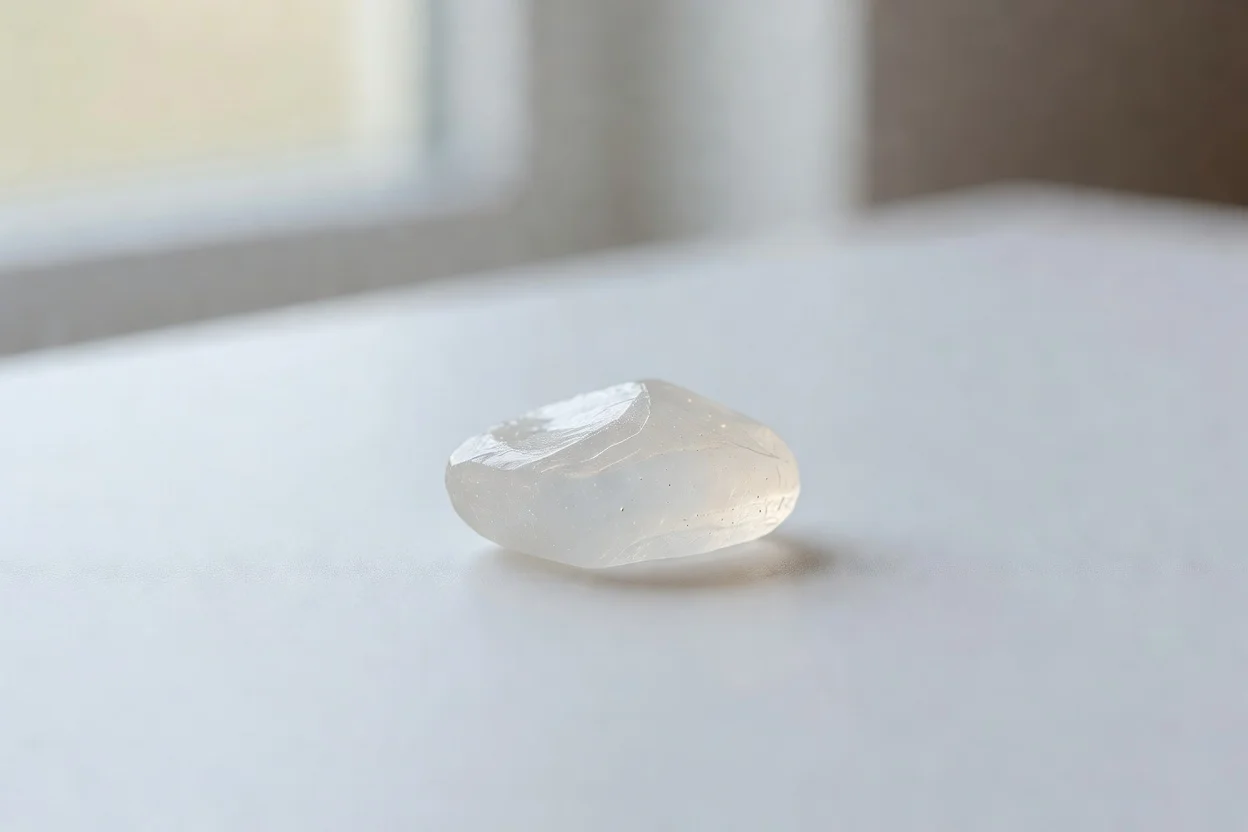
Polihidroxialcanoato (PHA) es una familia de poliésteres bio-basados y biodegradables producidos por microorganismos como materiales intracelulares de almacenamiento de carbono y energía. En plásticos y auxiliares, el PHA es significativo porque ofrece un perfil de rendimiento termoplástico que puede adaptarse desde grados rígidos hasta flexibles, al tiempo que proporciona opciones de origen no fósil y degradabilidad ambiental que son difíciles de lograr simultáneamente con polímeros convencionales.
Los PHA no son una sola resina, sino una amplia plataforma de materiales que incluye variantes de cadena corta, cadena media y copolímeros como PHB, PHBV y PHBHHx, cada una con diferente cristalinidad, rigidez, tenacidad y comportamiento de degradación. Su desarrollo ha pasado del descubrimiento microbiológico a la fermentación industrial, con el interés actual centrado en el embalaje, la agricultura, los dispositivos médicos y las aplicaciones especializadas donde la compostabilidad, la biocompatibilidad o el comportamiento controlado al final de la vida útil son ventajas estratégicas.
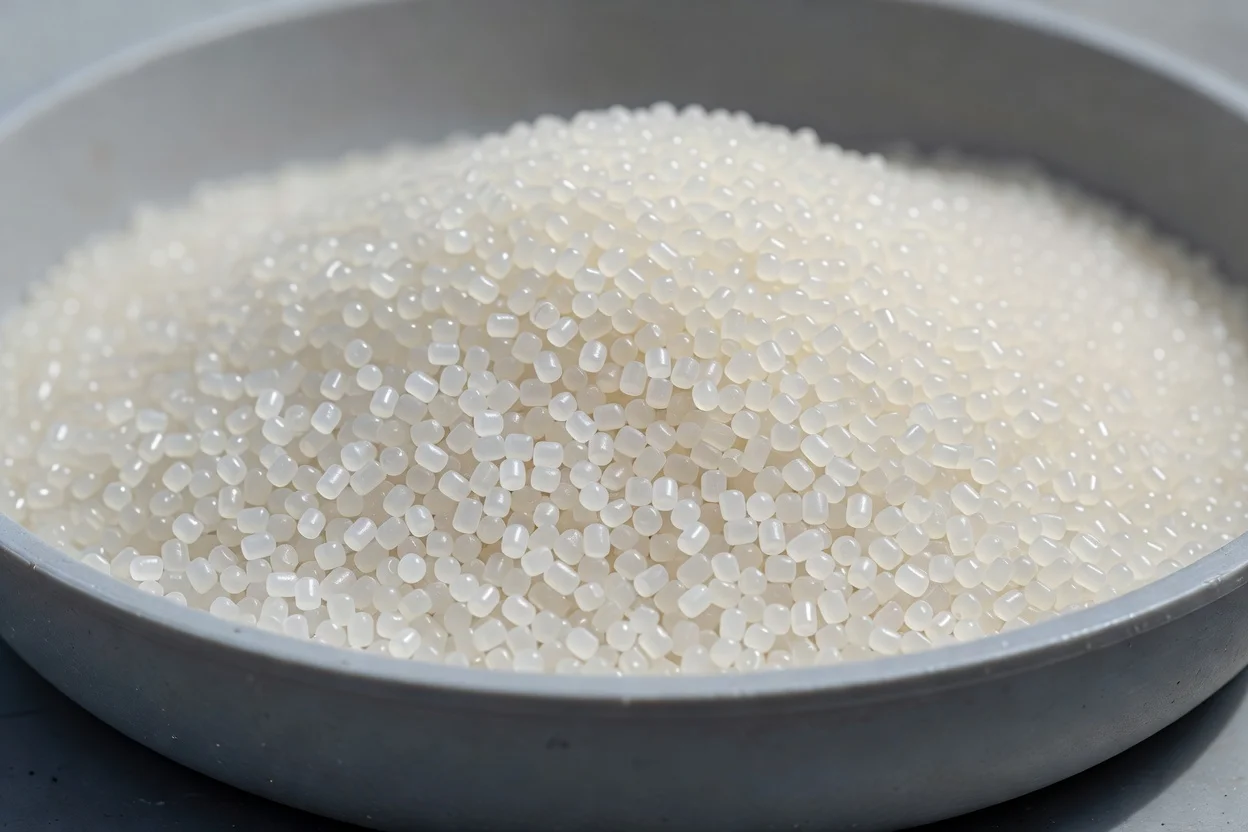
El principal equilibrio es la complejidad económica y de procesamiento: la producción de PHA aún depende de la fermentación, la preparación de materias primas, la recuperación aguas abajo y los pasos de compounding que suelen ser más caros que las rutas de polímeros petroquímicos. Por lo tanto, la innovación reciente se centra en materias primas de residuos de bajo costo, procesos de cultivos mixtos, ingeniería de cepas, reducción de solventes y biorrefinerías integradas que mejoran los rendimientos y reducen la intensidad de carbono.
Historia y desarrollo
El PHA se identificó por primera vez a principios del siglo XX cuando se observaron gránulos de polímero intracelular en bacterias, estableciendo el concepto de un material de reserva de poliéster sintetizado naturalmente. Desde entonces, el campo se ha expandido de una curiosidad científica a una clase de biopolímero comercialmente relevante, respaldada por avances en genética microbiana, ingeniería de fermentación y caracterización de polímeros.
El desarrollo ha seguido tres rutas de producción amplias: fermentación microbiana, síntesis enzimática y, en algunas vías de investigación, biosíntesis basada en plantas. Entre estas, la fermentación bacteriana sigue siendo la ruta industrial dominante porque es la más establecida para producir PHB y copolímeros relacionados a escala.
El progreso industrial ha sido moldeado por dos tendencias paralelas. Una es la mejora de cepas y vías para una mayor acumulación intracelular y una composición de monómeros más controlable; la otra es la búsqueda de fuentes de carbono más baratas y diversas, incluyendo azúcares, aceites vegetales, lípidos de desecho y residuos orgánicos. Estos desarrollos han ampliado el PHA de un biopolímero de nicho a un material de plataforma para plásticos de economía circular.
Referencias
- •
What is PHA? (n.d.). GoPHA. https://www.gopha.org/what-is-phaLink
- •
Polyhydroxyalkanoate - an overview. (2016, October 9). ScienceDirect. https://www.sciencedirect.com/topics/chemistry/polyhydroxyalkanoateLink
- •
Polyhydroxyalkanoates. (2005, June 4). Wikipedia. http://en.wikipedia.org/wiki/PolyhydroxyalkanoatesLink
- •
Waste to wealth: Polyhydroxyalkanoates (PHA) production. (2024, October 10). PMC. https://pmc.ncbi.nlm.nih.gov/articles/PMC11532435/Link
- •
Natural Polyhydroxyalkanoates—An Overview of Bacterial. (2024, May 13). PMC. https://pmc.ncbi.nlm.nih.gov/articles/PMC11124392/Link
- •
A Review on Biological Synthesis of the Biodegradable Polymers Polyhydroxyalkanoates and the Development of Multiple Applications. (2022, March 11). MDPI. https://www.mdpi.com/2073-4344/12/3/319Link
- •
What Is PHA? The Complete Guide to. (2026, March 17). PlantSwitch. https://www.plantswitch.com/blog/what-is-pha-polyhydroxyalkanoate-bioplastics-guideLink
- •
Polyhydroxyalkanoate – Wikipedia. (2004, November 25). Wikipedia. https://de.wikipedia.org/wiki/PolyhydroxyalkanoateLink
- •
Poly(hydroxyalkanoates) (PHAs): Production, Applications and End. (n.d.). A*STAR. https://oar.a-star.edu.sg/storage/2/2rj5opk2y7/pha-sustainability-and-lca.pdfLink
- •
Separation and purification technologies in polyhydroxyalkanoate (PHA) manufacturing: A review. (2025, February 12). EEER. https://www.eeer.org/journal/view.php?number=1649Link
- •
Polyhydroxyalkanoates: Medical Applications and Potential for. (2024, November 6). PMC. https://pmc.ncbi.nlm.nih.gov/articles/PMC11595952/Link
- •
Polyhydroxyalkanoate and its efficient production: an eco-friendly. (2020, November 24). PMC. https://pmc.ncbi.nlm.nih.gov/articles/PMC7686412/Link
- •
A review on polyhydroxyalkanoate (PHA) production through. (n.d.). RSC. https://pubs.rsc.org/en/content/articlepdf/2023/su/d3su00126aLink
- •
Life cycle design of polyhydroxyalkanoates (PHA) - PMC - NIH. (2025, November 21). PMC. https://pmc.ncbi.nlm.nih.gov/articles/PMC12721391/Link
- •
Emergent Approaches to Efficient and Sustainable Polyhydroxyalkanoate Production. (2021, June 7). MDPI. https://www.mdpi.com/1420-3049/26/11/3463Link
- •
Separation and purification technologies in polyhydroxyalkanoate. (n.d.). EEER. http://www.eeer.org/upload/eer-2024-710.pdfLink
- •
A review on polyhydroxyalkanoate (PHA) production through the. (2023, November 30). RSC. https://pubs.rsc.org/en/content/articlehtml/2023/su/d3su00126aLink
- •
Polyhydroxyalkanoate. (2025, January 16). ScienceDirect. https://www.sciencedirect.com/topics/engineering/polyhydroxyalkanoateLink
- •
Polyhydroxyalkanoates: Their importance and future. (n.d.). BioResources. https://bioresources.cnr.ncsu.edu/resources/polyhydroxyalkanoates-their-importance-and-future/Link
- •
Polyhydroxyalcanoate — Wikipédia. (2006, December 17). Wikipedia. https://fr.wikipedia.org/wiki/PolyhydroxyalcanoateLink
- •
Biomedical Applications of Polyhydroxyalkanoate in Tissue. (2022, May 24). PMC. https://pmc.ncbi.nlm.nih.gov/articles/PMC9182786/Link
- •
Recent advances in polyhydroxyalkanoate production from. (2025, October 17). PMC. https://pmc.ncbi.nlm.nih.gov/articles/PMC12576708/Link
- •
Polyhydroxyalkanoates (PHA) - The Ecobiomaterial Laboratory. (2020, June 30). Ecobiomaterial. https://www.ecobiomaterial.com/pha/Link
- •
Recent Advances in Polyhydroxyalkanoate Production by Mixed Aerobic Cultures: From the Substrate to the Final Product. (n.d.). Wiley. https://onlinelibrary.wiley.com/doi/10.1002/mabi.200600112Link
- •
Polyhydroxyalkanoates: opening doors for a sustainable. (2016, April 22). Nature. https://www.nature.com/articles/am201648Link
- •
Novel Production Methods of Polyhydroxyalkanoates and Their Innovative Uses in Biomedicine and Industry. (2022, November 30). MDPI. https://www.mdpi.com/1420-3049/27/23/8351Link
- •
Production, isolation, optimization, and characterization of microbial PHA from Bacillus australimaris. (2025, March 11). Nature. https://www.nature.com/articles/s41598-025-92146-xLink
- •
Polyhydroxyalkanoáty – Wikipedie. (2020, October 21). Wikipedia. https://cs.wikipedia.org/wiki/Polyhydroxyalkano%C3%A1tyLink
- •
Guide to PHA Bioplastic aka Polyhydroxyalkanoates. (2026, August 25). Good Start Packaging. https://www.goodstartpackaging.com/guide-to-pha-bioplastic-polyhydroxyalkanoates/Link
- •
Review Sustainable applications of polyhydroxyalkanoates. (2022, November 30). ScienceDirect. https://www.sciencedirect.com/science/article/abs/pii/S0141813022020293Link
- •
Biodegradable and Biocompatible Polyhydroxy-alkanoates. (2018, February 8). PMC. https://pmc.ncbi.nlm.nih.gov/articles/PMC6017587/Link
- •
Poly(lactic acid) (PLA) and polyhydroxyalkanoates (PHAs), green. (2021, May 10). PMC. https://pmc.ncbi.nlm.nih.gov/articles/PMC9033233/Link
- •
Review of technologies for PHA production. (2020, July 2). Food Packaging Forum. https://foodpackagingforum.org/news/review-of-technologies-for-pha-productionLink
- •
Microbial PolyHydroxyAlkanoate (PHA) Biopolymers—Intrinsically. (2023, July 19). PMC. https://pmc.ncbi.nlm.nih.gov/articles/PMC10376151/Link
- •
Polyhydroxyalkanoic Acid - an overview. (n.d.). ScienceDirect. https://www.sciencedirect.com/topics/medicine-and-dentistry/polyhydroxyalkanoic-acidLink
- •
Application of Polyhydroxyalkanoates in Medicine and the. (n.d.). PMC. https://pmc.ncbi.nlm.nih.gov/articles/PMC6643351/Link
- •
Polyhydroxyalkanoates. (2026, April 15). AOCS. https://www.aocs.org/resource/polyhydroxyalkanoates/Link
- •
Production of polyhydroxyalkanoate (PHA) biopolymer. (2025, April 15). PMC. https://pmc.ncbi.nlm.nih.gov/articles/PMC11998090/Link
- •
The Role of Bacterial Polyhydroalkanoate (PHA) in a. (2023, February 8). PMC. https://pmc.ncbi.nlm.nih.gov/articles/PMC9957297/Link
- •
Polyhydroxyalkanoates, bacterially synthesized polymers. (2021, September 18). PMC. https://pmc.ncbi.nlm.nih.gov/articles/PMC8502142/Link
- •
Production of polyhydroxyalkanoates (PHAs) by Bacillus. (2021, June 11). PMC. https://pmc.ncbi.nlm.nih.gov/articles/PMC8806590/Link
- •
Polyhydroxyalkanoates (PHAs): How to select the right grade? (2026, April 22). SpecialChem. https://www.specialchem.com/plastics/guide/polyhydroxyalkanoate-phaLink
- •
Polyhydroxyalkanoate - an overview. (n.d.). ScienceDirect. https://www.sciencedirect.com/topics/agricultural-and-biological-sciences/polyhydroxyalkanoateLink
- •
A Review of Polyhydroxyalkanoates: Characterization. (2024, October 8). PMC. https://pmc.ncbi.nlm.nih.gov/articles/PMC11510099/Link
- •
Polyhydroxyalkanoates for sustainable food packaging. (n.d.). ScienceDirect. https://www.sciencedirect.com/science/article/abs/pii/S0924224425004303Link
- •
The Synthesis, Characterization and Applications of. (2021, September 27). PMC. https://pmc.ncbi.nlm.nih.gov/articles/PMC8512352/Link
- •
Polyhydroxyalkanoates as biomaterials. (2017, June 27). PMC. https://pmc.ncbi.nlm.nih.gov/articles/PMC6084198/Link
- •
Biodegradability of polyhydroxyalkanoate (PHA) biopolyesters. (2025, August 11). PMC. https://pmc.ncbi.nlm.nih.gov/articles/PMC12339601/Link
- •
Polyhydroxyalkanoates production from laboratory to industrial scale: A review. (n.d.). ScienceDirect. https://www.sciencedirect.com/science/article/pii/S0141813025038073Link
- •
The production of PHA. (2025, June 5). PHA Sourcing. https://pha-sourcing.com/pha-production/Link