
簡介
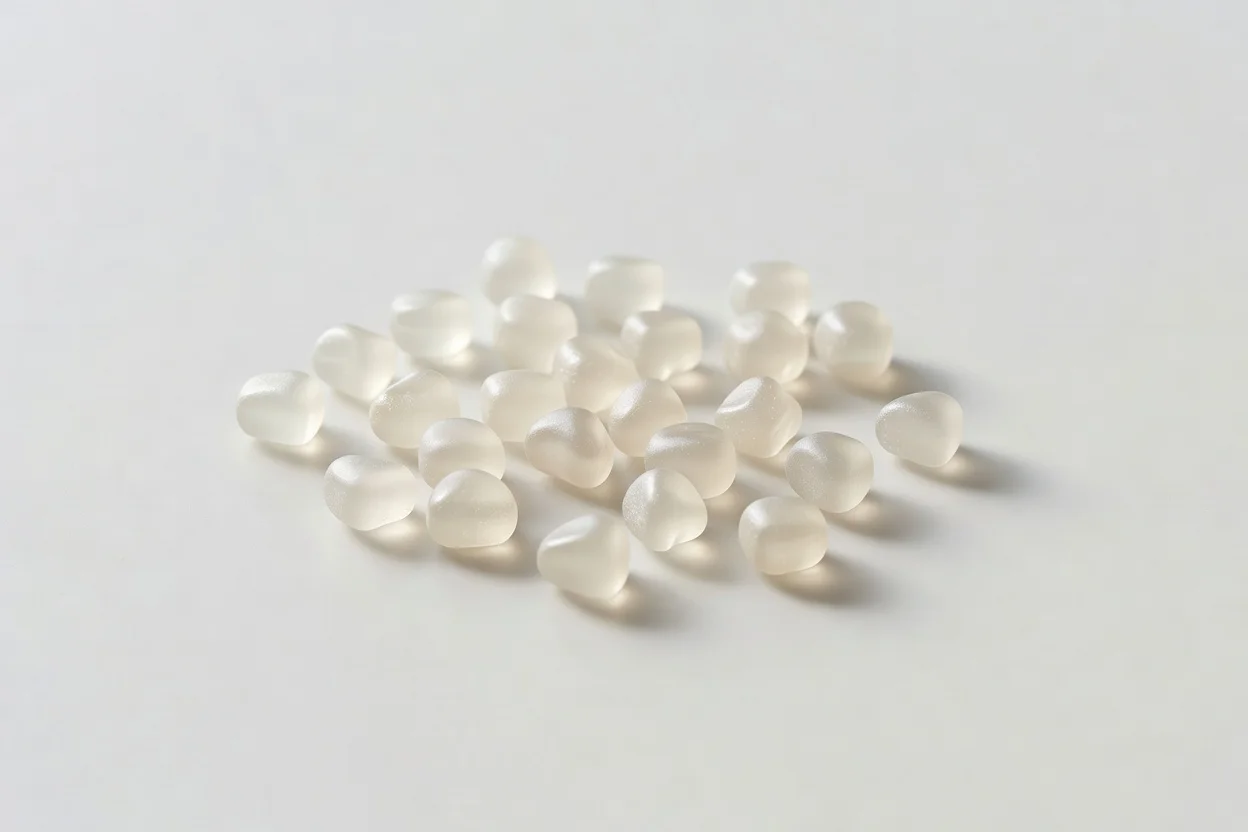
生物塑膠 是一系列廣義的塑膠材料,根據來源或標準的定義,這些材料可能是生物基、可生物降解,或兩者兼具。在產業實務中,此術語涵蓋從可再生的「drop-in」樹脂,例如生物基 PE、PP 與 PET,到可生物降解材料如 PLA、PHA、PBS 及澱粉摻合物。因此,生物塑膠最好被理解為由原料來源及/或生命終端行為所定義的類別,而非單一聚合物家族。
其重要性在於有潛力減少對化石原料的依賴、在某些應用中降低生命週期溫室氣體排放,並擴展塑膠產業的循環經濟工具。同時,生物塑膠並非萬能的永續解決方案:性能限制、較高成本、土地使用競爭、不確定的生命終端途徑,以及誤導性「可堆肥」宣稱等,仍是核心關注點。
商用生物塑膠現已應用於包裝、食品服務、農業、消費品、紡織、3D 列印及部分醫療應用,其中 PLA 與澱粉基材料主導許多短壽命市場,而生物基 drop-in 材料則支援與現有 回收系統 的相容性。主要生產商與技術開發者包括 NatureWorks(PLA)、BASF 與 Novamont(可生物降解聚酯及澱粉基系統)、Braskem(生物基聚烯烴),以及亞洲與歐洲日益成長的 PHA、PBS、纖維素衍生物與生物基中間體生產商。
歷史與發展
早期生物塑膠源自嘗試利用可再生農業資源與天然聚合物取代石油衍生塑膠。澱粉、纖維素與酪蛋白基材料屬於最早的可模塑塑膠,但逐漸被成本更低、具優異一致性與加工性的合成聚合物所取代。
現代生物塑膠因發酵、催化轉化、聚合物化學與配混技術的進步而重新獲得商業重要性。從乳酸與糖原料工業化生產 PLA、微生物 PHA 的開發,以及生物基「drop-in」聚合物的成長,標誌著從利基材料轉型為多元化商業平台。
目前的發展階段較少著重簡單替代,而更注重系統設計。生產商如今會依據使用情境,調整生物塑膠配方以符合工業堆肥、機械回收相容性、阻隔性能、耐熱性或降低碳足跡。
化學結構與關鍵特性
生物塑膠化學組成多元,其特性依聚合物家族與配方而有大幅差異。大致可分為:
- 生物基 drop-in:化學結構與傳統聚合物相似,但部分或全部來自可再生原料,例如 bio-PE、bio-PP 與 bio-PET。
- 生物基且 可生物降解聚合物:如 PLA、PHA 與 PBS。
- 化石基 可生物降解聚合物:如 PBAT,常與生物基成分摻合以提升柔韌性與可堆肥性。
關鍵特性趨勢如下:
| 材料家族 | 典型優勢 | 典型限制 | 常見角色 |
|---|---|---|---|
| PLA | 透明度、剛性、良好印刷性、相對較高的可再生含量 | 除非改質否則易脆;未經結晶或成核助劑處理時耐熱性有限 | 硬質包裝、杯子、托盤、纖維、3D 列印 |
| PHA | 在比許多其他生物塑膠更多環境中可生物降解;適用於醫療與可堆肥應用 | 成本較高;加工敏感度高;供應基礎較窄 | 包裝、農業、生物醫學物品 |
| 澱粉摻合物 | 成本潛力低、可堆肥、在適當配方中具良好生物降解特性 | 對水敏感、機械性能易變 | 袋子、鬆散填充物、短壽命包裝 |
| Bio-PE / bio-PET | 熟悉的加工性、與現有基礎設施相容性佳 | 不可生物降解;永續效益取決於原料與回收系統 | 瓶子、瓶蓋、薄膜、板條箱 |
| 纖維素衍生物 | 良好薄膜與塗層性能、部分等級具光學透明度 | 對濕度敏感;常需調整特性 | 包裝紙、塗層、特殊薄膜 |
理解生物塑膠技術限制的一個有效方式,是透過限制、其原因與因應措施之間的關係:
- 耐熱性差 → 由於部分等級(尤其是 PLA)玻璃轉移溫度低或結晶度不足 → 因應措施:成核劑、退火、共聚合或摻合。
- 脆性 → 由於多種純生物聚合物模數高且鏈移動性有限 → 因應措施:塑化劑、抗衝擊改質劑,或與柔性聚酯摻合。
- 對濕度敏感 → 由於澱粉與纖維素豐富系統的親水化學性 → 因應措施:疏水 塗層、多層結構,或相容化摻合物。
- 部分包裝用途的氧氣與香氣阻隔有限 → 由於聚合物結構與濕度影響 → 因應措施:阻隔 塗層、金屬化或多層薄膜。
- 生命終端模糊性 → 由於 生物基、可生物降解 與 可堆肥 宣稱之間的差異 → 因應措施:清楚標示、認證可堆肥性,以及與預期處置途徑相符的收集系統。
例如,PLA 常添加約 5–20% 塑化劑或抗衝擊改質劑以降低脆性並改善加工性,而澱粉摻合物則可能使用甘油或其他 塑化劑 透過減少分子間氫鍵來增加柔韌性。在每個案例中,添加劑改變的是鏈移動性與相行為,而非單純「強化」聚合物。
生產製程與原料
生物塑膠源自數種不同的生產途徑:
- 糖或澱粉水解物發酵 以製造單體,例如用於 PLA 的乳酸。
- 微生物發酵 以生產胞內聚酯,例如 PHA。
- 可再生中間體的化學轉化 以製造生物基 PET、PE、PP、PA 及新興聚酯的單體或聚合物前驅物。
- 天然聚合物的直接加工,例如澱粉與纖維素,通常透過摻合、衍生化或配混,而非單純熔融加工。
典型原料包括甘蔗、玉米、木薯、小麥、馬鈴薯澱粉、植物油、木質纖維素生物質,以及日益增加的廢棄物流,例如食物廢棄物與農業殘渣。最先進的工業系統日益致力於減少與食物供應鏈的競爭,轉向殘渣、廢棄物與非食用生物質。
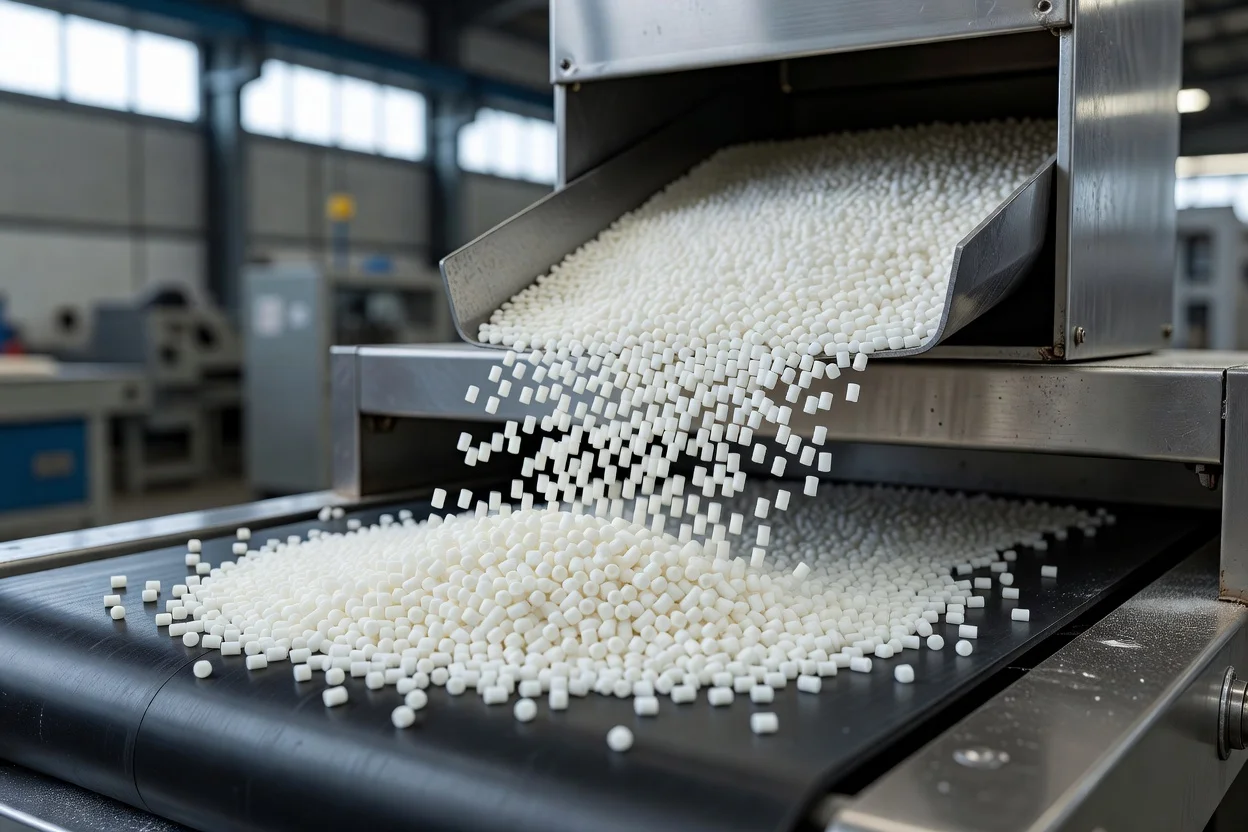
生產經濟性高度取決於原料成本、產率、純化需求、聚合效率與能源強度。對於 PLA,發酵、乳酸純化、脫水成丙交酯,以及開環聚合是關鍵的價值創造步驟。對於 PHA,生物合成步驟為核心,而下游回收常主導成本與環境負擔。
應用與終端市場
生物塑膠最廣泛使用於服務壽命短、重量輕,以及品牌或法規壓力傾向使用可再生或可堆肥材料的情境。
主要應用包括:
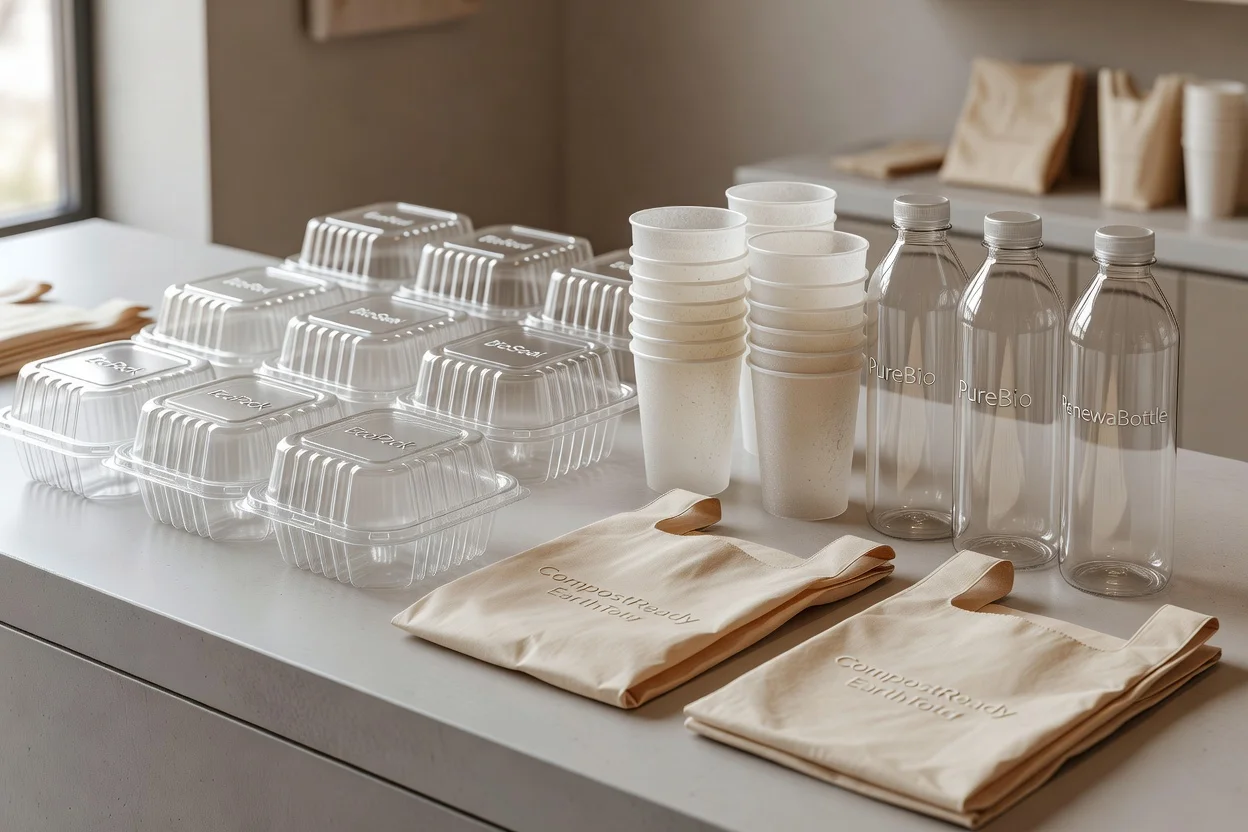
- 包裝:硬質食品容器、杯子、托盤、 clamshell、薄膜、袋裝及可堆肥袋,通常依據阻隔與耐熱需求使用 PLA、澱粉摻合物、PBAT 摻合物、纖維素薄膜或 bio-PET。
- 農業:地膜、植物盆、種子托盤及可控制降解薄膜,尤其在薄膜回收困難的場合。
- 消費品:一次性餐具、餐具、個人護理包裝,以及部分耐用商品(美觀或可再生含量重要的場合)。
- 紡織與纖維:PLA 纖維與摻合物,用於不織布、服裝與衛生用品。
- 3D 列印:PLA 是主流消費級線材,因其易列印且翹曲低。
- 醫療與生物醫學用途:選用 PHA 與 PLA 等級,用於需要生物相容性或可吸收性的場合。
一個不適合的用途是暴露於持續高溫與負荷的高溫工程零件。例如,未經改質的 PLA 通常不適合引擎蓋下汽車或熱灌裝應用。
從加工角度來看,常見的等級-製程配對為:
- 射出成型:PLA、bio-PET、選定 PHA 等級,以及經適當熱穩定化的澱粉摻合物。
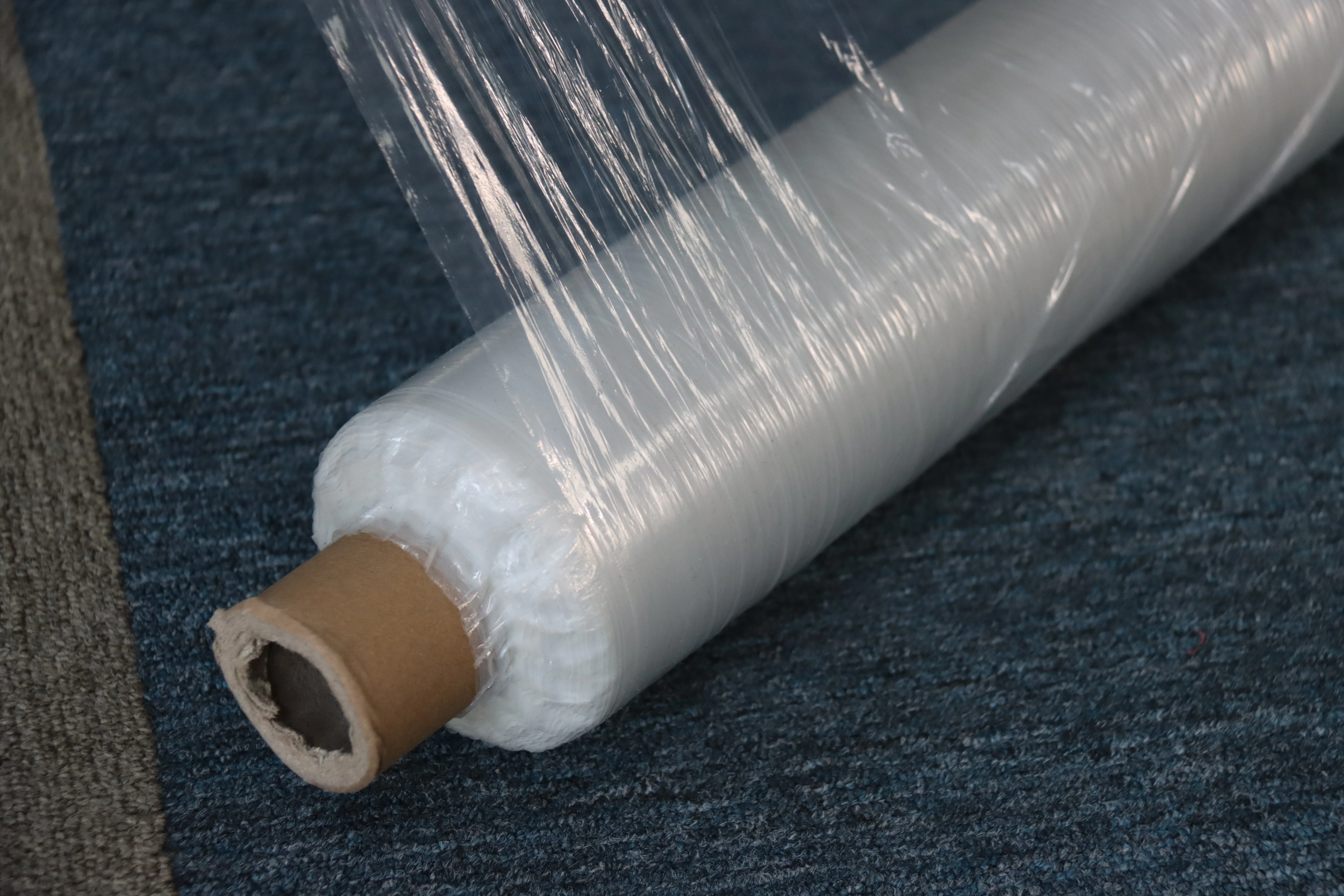
- 薄膜押出:澱粉摻合物、PBAT/PLA 摻合物、纖維素基材料,以及部分 bio-PE 與 bio-PET 等級。
- 熱成型:PLA 板材與 bio-PET 板材,用於托盤與容器。
- 纖維紡絲:PLA 與部分生物基聚酯。
- 吹膜與提袋:澱粉基與含 PBAT 的可堆肥配方。
- 瓶子製造:bio-PET 是最成熟的 drop-in 解決方案;PLA 用於利基飲料或冷灌裝情境。
環境與永續性面向
生物塑膠的永續性概況是個案特定,而非一致。許多生物塑膠可減少化石資源使用,並可能降低與傳統塑膠相比的生命週期溫室氣體排放,尤其當使用可再生原料或廢棄碳時。
同時,環境權衡也很重要:
- 土地使用與農業:作物基原料可能與食物生產競爭,並可能增加肥料、農藥與灌溉需求。
- 優養化與水資源影響:部分評估發現生物質栽培與加工帶來較高風險。
- 生命終端不確定性:可生物降解不自動等於海洋可降解、家庭可堆肥,或適合掩埋條件。
- 微塑膠與溶出疑慮:降解仍可能依材料與條件產生碎片或釋放化學物質。
- 分選與污染:若收集與標示不明確,可堆肥材料可能使回收物流複雜化。
可回收性因家族而異。Bio-PE 與 bio-PET 在化學上與現有 PE 與 PET 回收物流相容,因此可作為不需改變下游基礎設施的低碳替代品。相較之下,PLA 與澱粉摻合物等可堆肥聚合物旨在進行受控生物處理,而非傳統機械回收,除非透過專用系統管理。
因此,生物基含量與可生物降解性是不同的永續性面向。一種材料可以是生物基但不可生物降解、可生物降解但化石基,或兩者兼具。
經濟與全球市場影響
生物塑膠市場受四個主要經濟驅動因素影響:原料價格、政策支持、品牌擁有者承諾,以及處置基礎設施。包裝仍是最大需求中心,因為它在輕量化、可再生含量或認證可堆肥性方面提供明確價值主張。
全球生產相對於傳統塑膠仍屬小規模,但隨著品牌擁有者追求低碳材料,以及法規收緊廢棄物與標示要求,持續擴張。產業來源一致指出歐洲、北美、中國與東南亞是產能開發、原料轉化與配混的主要中心。
主要貢獻者包括:
- NatureWorks:全球主要 PLA 生產商,也是最知名的可再生聚酯商業平台之一。
- Braskem:已建立的 生物基聚乙烯 生產商,對現有 PE 市場的 drop-in 相容性至關重要。
- BASF 與 Novamont:在可堆肥配方、澱粉基系統與可生物降解聚酯開發方面具有重要地位。
- Danimer Scientific、TotalEnergies Corbion 與數家亞洲發酵基生產商:在 PHA 及相關可生物降解材料方面活躍。
- Eastman、Toray 與其他特用聚合物公司:在生物基或部分生物基特用聚酯與高性能樹脂方面具有相關性。
成本仍是主要障礙。生物塑膠因工廠規模較小、製程較複雜與原料波動,常比化石基聚合物有溢價。然而,價值日益透過碳減量宣稱、法規遵循、廢棄物減量功能與品牌差異化來創造,而非僅靠樹脂成本。
當前挑戰與創新
當前挑戰集中在性能、經濟性與系統整合:
- 性能差距:耐熱性、阻隔性能與對濕度敏感仍限制許多應用的替代。
- 基礎設施不匹配:可堆肥材料需要認證的收集與處理系統,否則其環境優勢會降低。
- 術語與標示混淆:「生物基」、「可生物降解」與「可堆肥」在市場上常被混淆。
- 原料永續性:第一代作物原料因土地使用與食物 vs. 材料爭議仍具爭議。
- 生命週期不確定性:生物塑膠的生命終端行為取決於厚度、配方、環境與廢棄物管理途徑。
創新正沿多個方向推進:
- 廢棄物基原料:正探索食物廢棄物、農業殘渣與木質纖維素生物質,以降低土地使用壓力。
- 先進摻合物與 相容劑:將可堆肥性與改善韌性及製程穩定性結合的配方。
- 阻隔 塗層 與多層結構:提升食品包裝的氧氣、香氣與濕度阻隔。
- 生物基高性能聚合物:包括保留機械性能同時減少化石投入的生物基工程塑膠。
- 精準生命終端設計:聚合物日益被設計為可控制堆肥、回收或拆解,而非泛化的「環保」。
參考文獻
- •
European Bioplastics. (2025, June 12). Bioplastics. https://www.european-bioplastics.org/bioplastics/Link
- •
Bioplastic. (2005, August 29). In Wikipedia. https://en.wikipedia.org/wiki/BioplasticLink
- •
Degli Esposti, M., Sessa, L., & Avella, M. (2023, December 13). What are “bioplastics”? Defining renewability, biosynthesis, and biodegradability. Polymers, 15(24), 5174. https://pmc.ncbi.nlm.nih.gov/articles/PMC10747977/Link
- •
Bioplastic. (2026, July 29). In Encyclopædia Britannica. https://www.britannica.com/technology/bioplasticLink
- •
Tabone, M. (2017, December 13). The truth about bioplastics. State of the Planet. https://news.climate.columbia.edu/2017/12/13/the-truth-about-bioplastics/Link
- •
Atiwesh, G., Mikhael, A., Parrish, C. C., Banoub, J., & Le, T.-A. T. (2021, September 3). Environmental impact of bioplastic use: A review. Heliyon, 7(9), e07918. https://pmc.ncbi.nlm.nih.gov/articles/PMC8424513/Link
- •
Bioplastics and their impact on environment. (2022, November 4). Research & Reviews: Journal of Ecology and Environmental Sciences. https://www.rroij.com/open-access/bioplastics-and-their-impact-on-environment.php?aid=92109Link
- •
Environmental performance of bioplastics: Degradation pathways, chemical leaching, and life-cycle implications. (2026, March 3). Nature Reviews Earth & Environment. https://www.nature.com/articles/s44296-026-00096-wLink
- •
What are bioplastics? Definition, applications, advantages.... (2026, January 13). Formary. https://www.formary.de/en/blog/what-are-bioplasticsLink
- •
Comprehensive analysis of bioplastics: Life cycle assessment.... (2024, September 11). Polymers, 16(18), 2619. https://pmc.ncbi.nlm.nih.gov/articles/PMC11401513/Link
- •
Bioplastics: What they are and why they're not a perfect solution. (n.d.). CBC News. https://www.cbc.ca/news/science/bioplastics-backgrounder-1.5485009Link
- •
Rudin, A., & Choi, P. (2013). Bioplastics—An overview. ScienceDirect. https://www.sciencedirect.com/topics/agricultural-and-biological-sciences/bioplasticsLink
- •
The unintended side effects of bioplastics: Carbon, land, and water footprints. (2020, July 24). One Earth, 3(1), 45–59. https://www.cell.com/one-earth/fulltext/S2590-3322(20)30305-5Link
- •
Bioplastic. (2024, November 15). In Merriam-Webster. https://www.merriam-webster.com/dictionary/bioplasticLink
- •
Bioplastics. (2025, November 7). In Merriam-Webster. https://www.merriam-webster.com/dictionary/bioplasticsLink
- •
Bioplastics offer carbon-cutting advantages but are no panacea. (2021, March 23). Proceedings of the National Academy of Sciences, 118(14), e2103183118. https://www.pnas.org/doi/10.1073/pnas.2103183118Link
- •
Bioplastics: Overview, types, production and benefits. (n.d.). APR Composites. https://aprcomposites.com.au/materials-science/polymer-chemistry/bioplastics/Link
- •
Bioplastics—An overview. (2011, October 8). ScienceDirect. https://www.sciencedirect.com/topics/engineering/bioplasticsLink
- •
Review of types and applications of bioplastics. (n.d.). IARJSET. https://iarjset.com/wp-content/uploads/2020/07/IARJSET.2020.7607.pdfLink
- •
Bioplastics explained. (n.d.). Australian Bioplastics Association. https://bioplastics.org.au/bioplastics-explained/Link
- •
Types of bioplastic. (2025, January 31). PHA Sourcing. https://pha-sourcing.com/bioplastic-types/Link
- •
Bioplastics for food packaging: Environmental impact, trends.... (2022, October 5). Polymers, 14(21), 4563. https://pmc.ncbi.nlm.nih.gov/articles/PMC9563026/Link
- •
Key types of bioplastics and their applications. (2026, February 25). EVS Institute. https://evs.institute/environmental-biotechnology/key-types-of-bioplastics-applications/Link
- •
Bioplastics: Types, properties, sustainability, and applications. (2026, April 13). SpecialChem. https://www.specialchem.com/plastics/guide/bioplastics-selectionLink
- •
Bioplastics and biopolymers. (2022, January 30). Bioplastics News. https://bioplasticsnews.com/bioplastics/Link
- •
Environmental impact of bioplastic use: A review. (n.d.). ScienceDirect. https://www.sciencedirect.com/science/article/pii/S2405844021020211Link
- •
An investigation of the environmental implications.... (n.d.). Environmental Research. https://www.sciencedirect.com/science/article/abs/pii/S0013935123025112Link
- •
Bioplastics for a circular economy. (n.d.). Nature Reviews Materials. https://pmc.ncbi.nlm.nih.gov/articles/PMC8771173/pdf/41578_2021_Article_407.pdfLink
- •
The diverse uses of bioplastics. (2022, September 8). PBPC. https://pbpc.com/diverse-uses-of-bioplastics/Link
- •
Are bioplastics the solution to the plastic pollution problem? (2023, March 22). Polymers, 15(7), 1627. https://pmc.ncbi.nlm.nih.gov/articles/PMC10032476/Link
- •
Bioplastics for a circular economy. (2022, January 20). Nature Reviews Materials, 7, 117–137. https://www.nature.com/articles/s41578-021-00407-8Link
- •
Bioplastics & sustainability. (2026, August 5). Plastics Industry Association. https://www.plasticsindustry.org/bio-page/Link
- •
Bioplastics guide: PLA, PHA & starch-based types. (2026, February 2). Salesplastics. https://salesplastics.com/bioplastics/Link
- •
Demystifying 'compostable' and 'biodegradable' plastics. (2026, June 4). Beyond Plastics. https://www.beyondplastics.org/fact-sheets/bad-news-about-bioplasticsLink
- •
Innovations in applications and prospects of bioplastics.... (2021, November 29). Polymers, 13(24), 4391. https://pmc.ncbi.nlm.nih.gov/articles/PMC8629338/Link
- •
5 types of bioplastics: Starch, cellulose, protein, and more. (2024, September 27). Green Business Benchmark. https://www.greenbusinessbenchmark.com/archive/5-bioplastic-typesLink
- •
Impact of bioplastics on environment from its production to.... (n.d.). Process Safety and Environmental Protection. https://www.sciencedirect.com/science/article/pii/S0957582024006359Link
- •
An overview of biodegradable polymers and types.... (2024, November 12). IntechOpen. https://www.intechopen.com/chapters/1201338Link
- •
Vol.:(0123456789). (n.d.). Springer. https://link.springer.com/content/pdf/10.1007/s41748-021-00208-7.pdfLink
- •
European Bioplastics. (n.d.). What are bioplastics? https://docs.european-bioplastics.org/publications/fs/EuBP_FS_What_are_bioplastics.pdfLink
- •
What are bioplastics and how are they made? (2025, November 8). UKHI. https://ukhi.com/what-are-bioplastics-and-how-are-they-made/Link
- •
Can bioplastics always offer a truly sustainable alternative to.... (2024, April 3). Polymers, 16(8), 1052. https://pmc.ncbi.nlm.nih.gov/articles/PMC10990045/Link
- •
An insight on sources and biodegradation of bioplastics. (2023, May 31). Polymers, 15(12), 2629. https://pmc.ncbi.nlm.nih.gov/articles/PMC10230146/Link
- •
Environmental impacts of biodegradable microplastics. (2024, September 27). Nature Reviews Earth & Environment. https://www.nature.com/articles/s44286-024-00127-0Link
- •
Recent advances in bioplastics: Application and biodegradation. (2020, April 15). Polymers, 12(4), 920. https://pmc.ncbi.nlm.nih.gov/articles/PMC7240402/Link
- •
Bioplastic materials. (2026, February 10). European Bioplastics. https://www.european-bioplastics.org/bioplastics/materials/Link
- •
Environmental impact and sustainability of bioplastic production from food waste. (2024, June 28). Sustainability, 16(13), 5529. https://www.mdpi.com/2071-1050/16/13/5529Link
- •
Bioplastics. (2016, August 6). Wyss Institute. https://wyss.harvard.edu/technology/bioplastic/Link