
Introduction
Measuring and testing equipment for gaseous properties comprises the instruments, analyzers, and laboratory or process systems used to determine the composition, concentration, flow, pressure, calorific value, density, moisture content, and related physical properties of gases. In plastics processing, such equipment is used both directly, in operations that rely on controlled atmospheres or gas-assisted processes, and indirectly, in material qualification, emissions monitoring, and barrier-property testing of films and packaging. Gas-measurement systems range from simple flow meters and pressure gauges to advanced analyzers based on NDIR, TDLAS, paramagnetic oxygen, thermal conductivity, and gas chromatography.
In industrial practice, gas-measurement equipment is typically divided into calibration devices, online process analyzers, and laboratory systems. This broader category has evolved from early volumetric gas meters and wet-meter laboratory apparatus into highly automated multi-parameter systems capable of real-time monitoring, remote diagnostics, and integration with plant control networks. Recent development has also been shaped by tighter emissions regulation, hydrogen and renewable-gas applications, and the need for faster, more selective measurements in both process and environmental control.
For plastics manufacturers, gaseous-property measurement supports product quality, safety, and efficiency in areas such as film permeability testing, vacuum and gas supply monitoring, inerting, foaming, waste-gas treatment, and continuous emissions monitoring. The category is therefore important not only to gas producers and utilities but also to converters, packaging laboratories, and compounders that require reliable control of process atmospheres or gas-related product performance.
History and Development
Early gas-testing practice centered on volumetric measurement, with gas commonly measured by volume rather than by weight because its volume changes with pressure and temperature. Classical equipment included wet meters, dry meters, meter provers, pressure gauges, calorimeters, and photometric apparatus for laboratory use.
A major milestone was the shift from basic metering to instrumented gas analysis, in which sensors and analyzers began to determine not just quantity but composition and quality. By the late twentieth century, analyzers based on infrared absorption, thermal conductivity, and electrochemical sensing became standard in industry and laboratory environments.
A more recent milestone has been the adoption of laser-based and continuously operated process analyzers, including TDLAS and related spectroscopic systems, which offer rapid response, reduced maintenance, and improved selectivity for difficult process streams. At the same time, gas-quality measurement has expanded beyond fossil-fuel applications to include hydrogen, renewable gases, emissions compliance, and process optimization in energy-intensive industries.
Key Characteristics and Technical Overview
Gas-property equipment is defined by the property being measured, the sampling method, and the sensor principle. The main measurable parameters include:
- Composition
- Concentration
- Flow rate
- Pressure
- Temperature
- Moisture or dew point
- Density
- Calorific value
- Wobbe index
- Permeation or transmission rate for barrier materials
The most common measurement principles include:
- NDIR (non-dispersive infrared) for gases such as CO₂, CO, CH₄, SO₂, and some hydrocarbon or process-gas applications.
- TDLAS / laser spectroscopy for fast, selective measurements, often in process gas streams with low maintenance demand.
- Paramagnetic oxygen analysis for O₂ measurement in process control and purity monitoring.
- Thermal conductivity detection (TCD) for binary or limited-component gas systems, especially hydrogen-related measurements.
- Gas chromatography (GC) for multi-component analysis and higher-resolution compositional identification.
- Electrochemical and amperometric sensing for oxygen and selected reactive gases.
Typical system architecture includes a sampling probe, filtration, flow control, pressure conditioning, analyte detection, and signal processing. In extractive systems, sample conditioning is often critical because temperature, humidity, and particulate loading can distort readings or damage sensors. Modern test benches often incorporate controlled humidity, climatic chambers, carrier-gas selection, and gas-neutralization equipment to improve repeatability and safety.
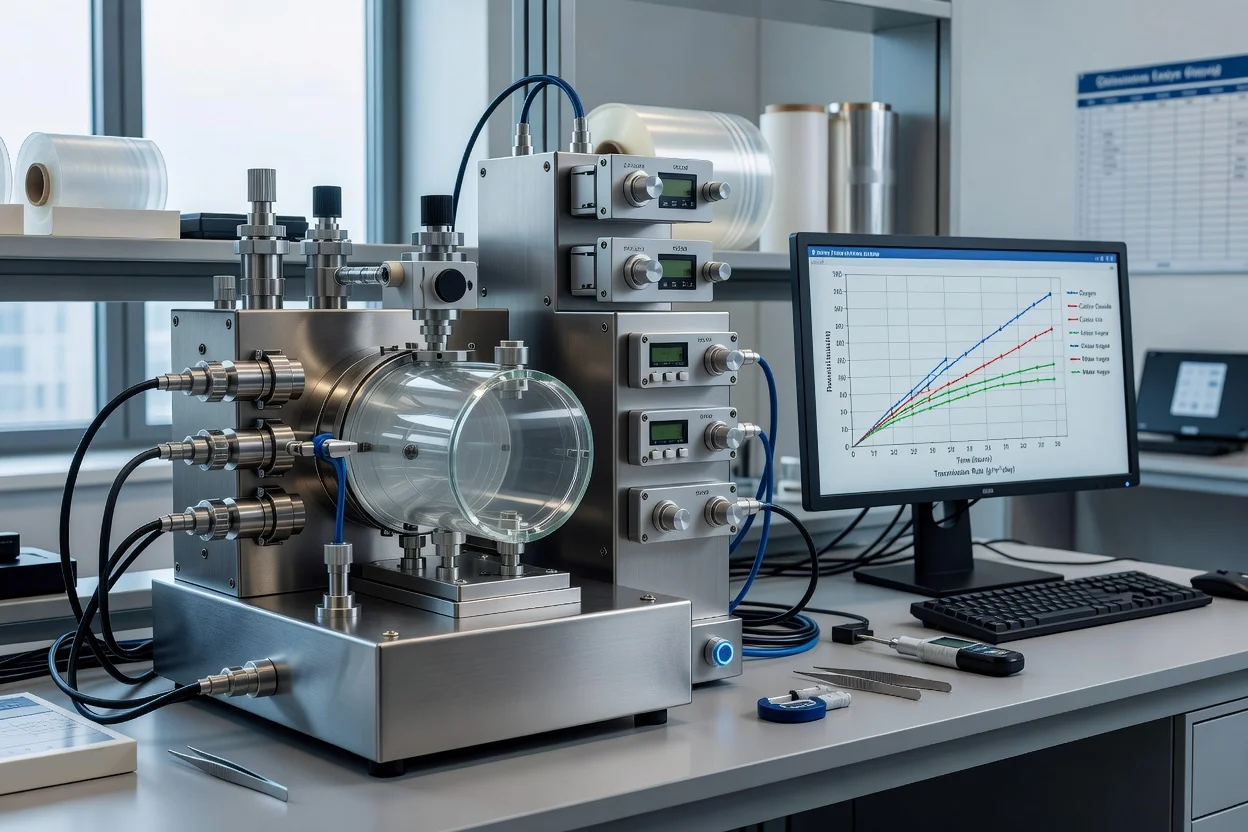
For plastics-related laboratory work, gas-transmission testing of films and laminates commonly uses differential-pressure methods to quantify permeability, solubility, diffusion, and transmission rate. Such systems are used to characterize barrier materials for food packaging, medical packaging, and technical films.
Typical performance ranges
| Equipment type | Typical use | Common technical range or characteristic |
|---|---|---|
| Wet or dry gas meters | Volumetric calibration and reference work | Laboratory wet meters are often small-capacity precision devices; historical laboratory units were commonly around one-tenth to one-twelfth cubic foot in capacity. |
| Industrial process analyzers | Continuous gas quality monitoring | Real-time measurement with response times suited to process control; multi-component measurement from ppm to percent ranges depending on sensor type. |
| GC-based analyzers | High-resolution compositional analysis | Suited to multi-component mixtures and gas-quality determination. |
| Film permeation testers | Barrier-property measurement | Used to determine transmission, diffusion, and solubility coefficients for polymer films and laminates. |
Quantitative specifications vary widely by application, but industrial systems are commonly selected for accuracy, repeatability, response time, and maintenance burden rather than by a single universal metric. In high-throughput industrial test environments, sample-conditioning systems and automated multiplexing are often decisive in practice.
Types and Variations
Gas measuring and testing equipment can be grouped into several functional classes.
Calibration and reference equipment
These systems are used to verify or calibrate other instruments. Examples include meter provers, reference gas bottles, and controlled-volume apparatus. Their role is traceability, not necessarily continuous plant monitoring.
Online process analyzers
These devices operate in-line or extractively and provide continuous readings for plant control, quality assurance, or emissions compliance. They are common in gas production, utilities, industrial furnaces, and process plants.
Portable and handheld detectors
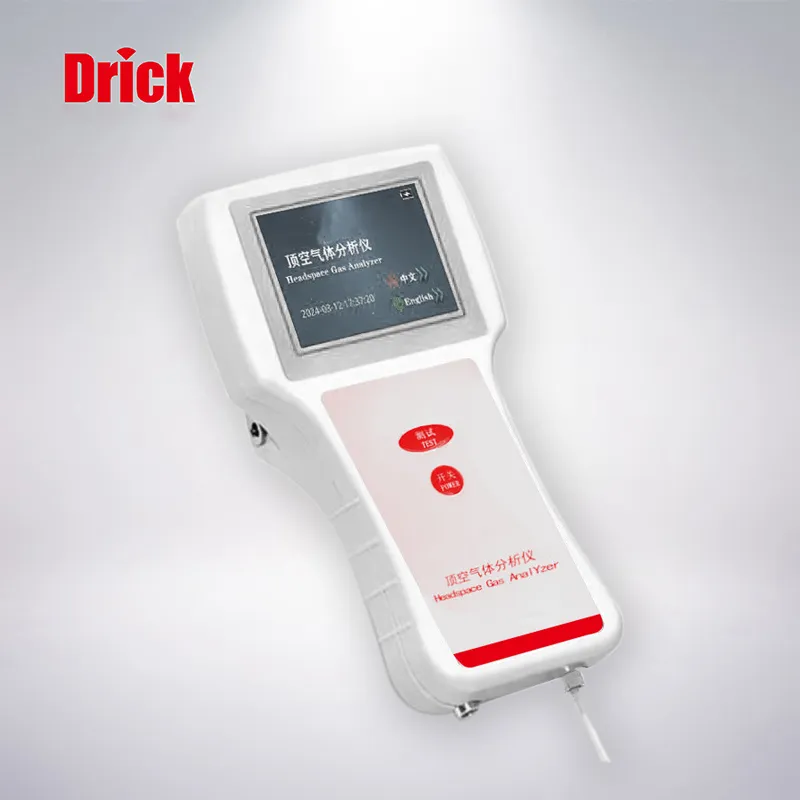
Portable devices are used for safety inspections, leak detection, confined-space work, and maintenance checks. They typically prioritize mobility, quick response, and worker protection.
Laboratory analyzers
Laboratory systems provide higher precision or more controlled testing conditions. They include bench-top GC systems, controlled-environment chambers, and specialized calibration benches for gas mixtures and material testing.
Barrier-property testers for plastics
Although not gas analyzers in the narrow sense, these are highly relevant in plastics processing because they measure how gases pass through films, foils, and multilayer structures. They are central to packaging qualification and polymer selection.
Applications and Uses
Gas-property measurement has broad industrial application, but in the plastics sector it is especially relevant in the following areas:
- Packaging film testing: Oxygen and other gas transmission measurements help determine barrier performance for food, pharmaceutical, and sensitive industrial packaging.
- Process atmosphere control: Extrusion, compounding, and thermal processing may require inerting, venting, or moisture control to maintain product consistency and protect equipment.
- Foaming and gas-injection processes: Precise control of gas composition, pressure, and flow is essential when gases are used as physical blowing agents or in gas-assisted molding.
- Emissions monitoring: Continuous gas analyzers support environmental compliance in resin production, combustion systems, dryers, and thermal treatment units.
- Quality control in utilities and plant gas supply: Calorific value, density, and Wobbe index measurements are relevant where gas quality affects burners, heaters, and thermal process stability.
- Safety monitoring: Portable detectors protect personnel from oxygen deficiency, toxic gases, or combustible atmospheres.
A poor-fit application is the use of high-end multi-component analyzers for simple, noncritical one-time leak checks; in that case, a dedicated leak detector or pressure-decay test is usually more economical and operationally appropriate.
Technological Innovations and Automation
Recent innovation has concentrated on online diagnostics, self-calibration, and multisite sample handling. Automated systems can sequentially analyze many sample points, reducing manual labor while improving data continuity.
Laser-based analyzers have expanded the range of practical in situ measurements by reducing dependence on consumable reagents and improving response time. In parallel, modern systems increasingly integrate with plant control platforms to support predictive maintenance, process optimization, and compliance reporting.
Another important development is the use of controlled test benches for comparison, qualification, and calibration. These systems often include humidity control, climate chambers, multi-gas libraries, and high-capacity flow ranges to reproduce realistic field conditions.
Environmental and Sustainability Aspects
Gas-measurement equipment supports sustainability in two ways: by reducing direct emissions and by improving process efficiency. Continuous analyzers help operators detect combustion drift, process losses, and fugitive emissions earlier than periodic sampling alone.
In plastics manufacturing, accurate gas and vapor measurement can reduce off-spec production, optimize purge and inerting gas consumption, and improve barrier-material selection, thereby lowering waste across the product life cycle. Barrier testing also contributes to lightweight packaging design, which can reduce material use while maintaining shelf-life performance.
From an equipment perspective, sustainability is influenced by sensor life, calibration gas use, energy demand, and the need for sample conditioning. Systems with minimal consumables and strong calibration stability generally have lower operational footprint.
Economic and Global Market Impact
Gas analysis is a mature but strategically important industrial segment. Demand is driven by energy infrastructure, industrial gas production, emissions regulation, hydrogen development, and the need for higher product quality in process industries.
For plastics processors and packaging converters, the economic value lies in reducing scrap, preventing quality failures, and ensuring regulatory compliance for food-contact and environmental requirements. The capital cost of advanced analyzers can be justified where continuous quality control or emissions reporting would otherwise require manual sampling or where process deviations are costly.
Global suppliers span instrumentation specialists and diversified automation firms, with strong offerings in process analyzers, gas-quality systems, and moisture measurement. Market differentiation typically depends on measurement principle, reliability in harsh environments, ease of calibration, and integration with control systems rather than on one universal device design.
Current Challenges and Innovations
The main technical challenges are selectivity, sampling integrity, drift, humidity interference, cross-sensitivity, and the complexity of measuring reactive or low-concentration gases in real industrial streams.
In plastics and process-industry environments, additional challenges include dust, condensable vapors, corrosive compounds, and variable temperatures. These conditions often require heated lines, filtration, corrosion-resistant wetted parts, or specialized sample conditioning.
Innovation is focused on:
- faster response for dynamic processes,
- broader gas libraries for renewable and hydrogen-rich mixtures,
- lower-maintenance sensor packages,
- better calibration traceability,
- and deeper integration with digital plant analytics.
Future Outlook
The future of gas-property measurement will be shaped by the transition to renewable gases, hydrogen, tighter emissions control, and greater demand for real-time process intelligence. These trends favor analyzers that can operate continuously, tolerate variable gas composition, and deliver stable measurement with minimal operator intervention.
In plastics processing, demand is likely to increase for gas-related testing of barrier materials, process-atmosphere control, and monitoring systems that support energy efficiency and circular-economy goals. Equipment that links laboratory validation with inline production control will be especially valuable because it shortens the path from material development to manufacturing scale-up.
Summary
Measuring and testing equipment for gaseous properties is a core instrumentation category spanning calibration devices, process analyzers, portable detectors, and laboratory test systems. In plastics processing, it underpins barrier testing, process control, emissions compliance, and gas-related safety, while in the wider industrial economy it supports gas quality assurance, energy management, and regulatory monitoring.
Its technical evolution has moved from volumetric meters and wet laboratory apparatus to automated, sensor-rich systems using infrared, laser, chromatographic, and thermal-conductivity methods. The sector’s future is likely to be defined by lower-maintenance automation, better selectivity in complex gas mixtures, and closer integration with digital production and sustainability systems.
References
- •
Standard methods of gas testing. (n.d.). https://www.govinfo.gov/content/pkg/GOVPUB-C13-fd10020085307dc39e157869fac55e25/pdf/GOVPUB-C13-fd10020085307dc39e157869fac55e25.pdfLink
- •
Gas analyzers & process measurement technology. (2026, September 4). https://freseniusinstruments.com/products/?lang=enLink
- •
Gas and vapor detection. (2001, December 12). https://www.thermofisher.com/search/browse/category/us/en/90150378Link
- •
Gas analysis. (2026, July 21). https://www.emerson.com/en/measurement-instrumentation/catalog/gas-analysisLink
- •
A review of gas measurement set-ups. (2022, March 27). https://pmc.ncbi.nlm.nih.gov/articles/PMC9002727/Link
- •
Gas composition analyzers & CWD calorimeters. (2025, September 30). https://union-instruments.com/en/gas-quality-analyzers/Link
- •
Gas analyzers. (2021, September 30). https://www.yokogawa.com/us/solutions/products-and-services/measurement/analyzers/gas-analyzers/Link
- •
Qualification and calibration of gas measurement equipment. (n.d.). https://ri.natrangroupe.com/wp-content/uploads/2025/02/Qualification-and-calibration-of-gas-measurement-equipment.pdfLink
- •
Gas analyzers for industrial gas production and quality control. (2026, August 30). https://new.abb.com/products/measurement-products/measurement-analytics/industrial-gasLink
- •
Analyzer gas instruments. (2005, September 1). https://www.globalspec.com/ds/66/areaspec/instrument_gas_analyzerLink
- •
Industrial process gas analyzers. (2026, June 22). https://www.mt.com/us/en/home/products/Process-Analytics/gas-analyzer.htmlLink
- •
Gas analysis equipment. (n.d.). https://www.rmg.com/en/products/gas-analysis-equipmentLink
- •
Gas analyzers. (2026, July 22). https://www.emerson.com/en/measurement-instrumentation/catalog/gas-analysis/gas-analyzersLink
- •
Process analyzers. (n.d.). https://www.bakerhughes.com/panametrics/process-analyzersLink
- •
Types of gas analyzers. (2026, May 7). https://www.nova-gas.com/gas-analyzers/Link
- •
Measuring principles: Gas analyzers. (2000, January 1). https://www.horiba.com/usa/process-and-environmental/measuring-principles/Link
- •
Gas-analyzers: All manufacturers. (2022, May 1). https://6tl.etesters.com/see/1232/gas-analyzers/Link
- •
Equipo de análisis de gas. (n.d.). https://www.rmg.com/es/la-tecnologia-de-medicion-de-gas/equipo-de-analisis-de-gasLink
- •
Gas analyzers: Highly accurate gas measurement. (2026, June 18). https://www.servomex.com/gas-analyzers/finder/Link
- •
Gas tester manufacturers, suppliers, dealers & prices. (2026, September 7). https://www.tradeindia.com/manufacturers/gas-tester.htmlLink