
Introduction
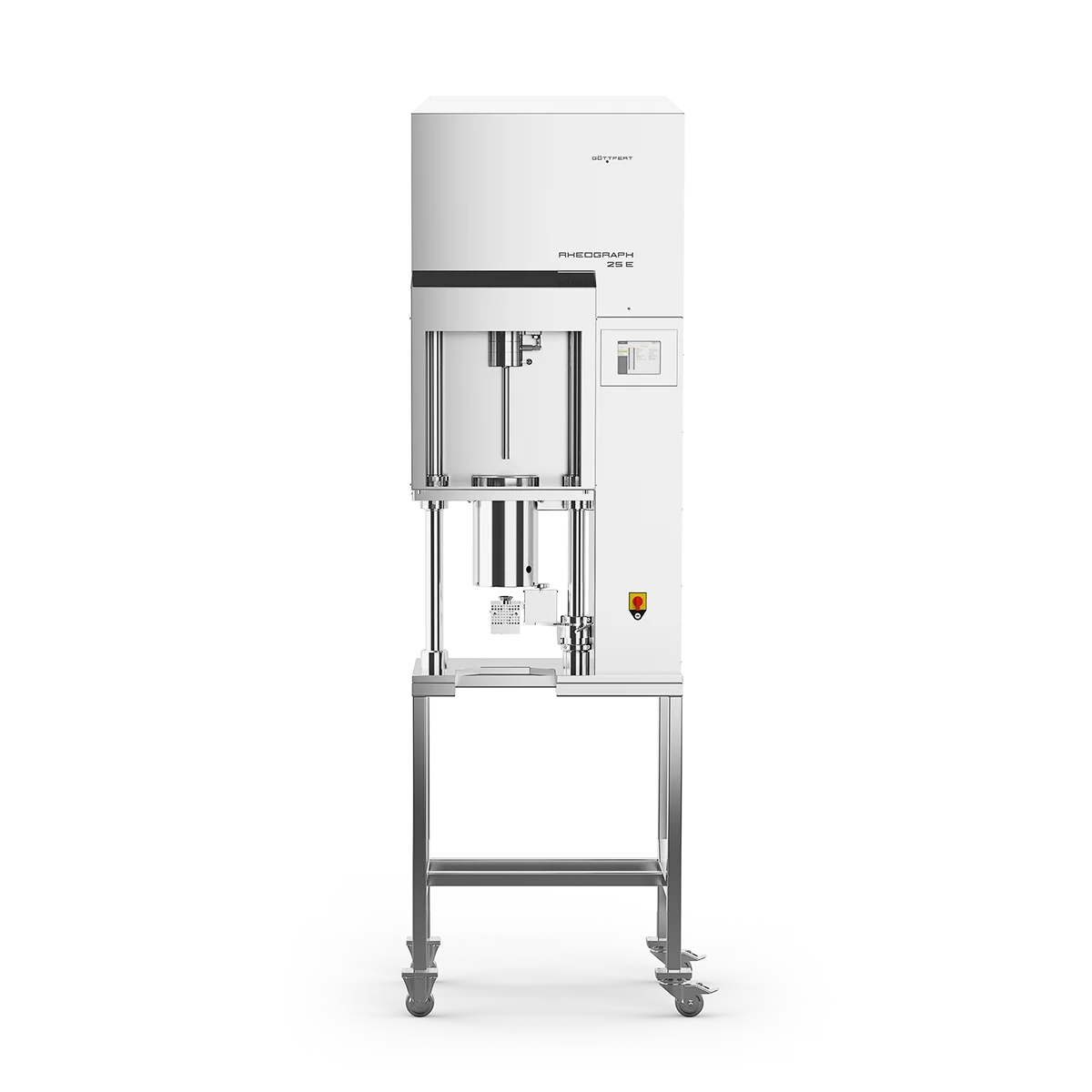
Measuring and testing equipment for rheological properties refers to the instruments used to characterize how polymers, melts, solutions, suspensions, pastes, and semi-solid materials deform and flow under applied stress or strain. In plastics processing, these measurements are essential for understanding melt behavior, predicting processability, and controlling product quality in extrusion, injection molding, blow molding, compounding, coating, and fiber production.
The core instrument is the rheometer, which measures stress, strain, torque, angular displacement, viscosity, viscoelasticity, yield behavior, and time-dependent responses such as creep, stress relaxation, and thixotropy. Related devices include viscometers for simpler viscosity measurements, capillary rheometers for high-shear melt characterization, and extensional rheometers for elongational flow behavior relevant to film blowing, fiber spinning, and foaming.
Historically, rheological testing evolved from relatively simple viscosity measurements into highly instrumented systems capable of controlled-stress, controlled-strain, oscillatory, extensional, and high-pressure capillary testing across broad temperature and pressure ranges. Today, the field is increasingly shaped by automation, software-driven data interpretation, compact QC instruments, and online process rheometry for real-time control of extrusion lines and melt pipelines.
From a plastics-industry perspective, the importance of this equipment extends beyond laboratory characterization. It directly affects formulation development, batch release, process window definition, defect reduction, recyclate qualification, and the compatibility of materials with circular-economy feedstocks. Future development is likely to focus on faster testing, better correlation with actual processing conditions, and tighter integration with digital quality systems and in-line process monitoring.
History and Development
Rheological measurement originated in classical fluid mechanics and viscometry, but modern polymer rheology became a distinct engineering discipline as synthetic polymers entered industrial production and processing in the twentieth century.
Several development milestones are especially important:
- The introduction of rotational rheometers made it possible to measure not only viscosity but also viscoelastic properties, yield behavior, and transient responses under controlled stress or strain.
- The development of high-pressure capillary rheometers enabled simulation of the high shear rates encountered in polymer processing operations such as extrusion and injection molding, where conventional viscometers are often insufficient.
- The expansion of oscillatory rheometry provided access to storage modulus, loss modulus, and relaxation behavior, making it possible to relate molecular structure, branching, crystallization, and filler effects to processing and end-use performance.
In industrial laboratories, rheometers gradually shifted from specialized research tools to standard quality-control instruments. Contemporary systems now support both routine batch verification and advanced formulation work, with instrument families explicitly marketed for QC, product development, and research use.
Technical Overview
Rheological testing equipment converts mechanical motion into quantitative measures of material response. In a rotational rheometer, the instrument typically measures torque and displacement while applying controlled stress, strain, or strain rate. In capillary systems, pressure drop and flow rate are used to determine apparent and true viscosity under processing-like conditions.
Main measurement modes
- Steady shear testing measures viscosity as a function of shear rate and is useful for identifying shear thinning, Newtonian plateaus, and processing windows.
- Oscillatory testing measures viscoelastic properties such as storage modulus \(G'\), loss modulus \(G''\), and complex viscosity, which are important for melt strength, elastic recovery, and structure development.
- Transient testing includes creep, stress relaxation, and recovery tests, which reveal time-dependent deformation and rebuilding behavior in polymers, gels, and filled systems.
- Extensional testing evaluates elongational viscosity, which is particularly relevant for film formation, foaming, and fiber spinning.
Typical instrument geometries and hardware
Common rheometer configurations include:
- Cone-and-plate systems for well-defined shear fields and small sample volumes.
- Parallel-plate systems for dispersions, gels, and materials with particulates or larger structures.
- Concentric-cylinder systems for lower-viscosity liquids and suspensions.
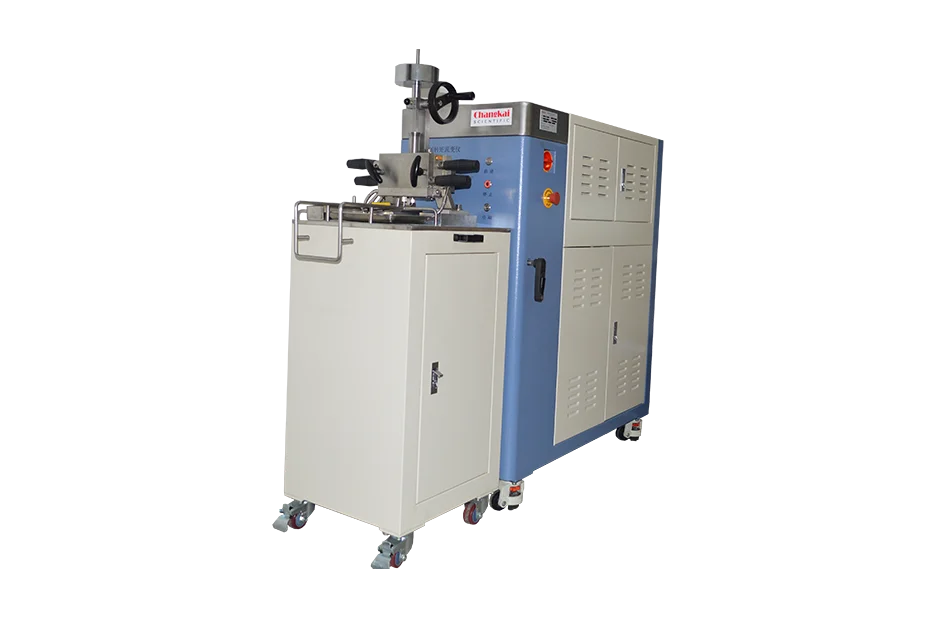
- Capillary rheometers for high-shear polymer melt testing and processing simulation.
- Extensional fixtures for measuring filament stretching or break-up behavior.
Representative performance ranges
Published laboratory and manufacturer descriptions show that modern rheological systems can operate over very wide conditions:
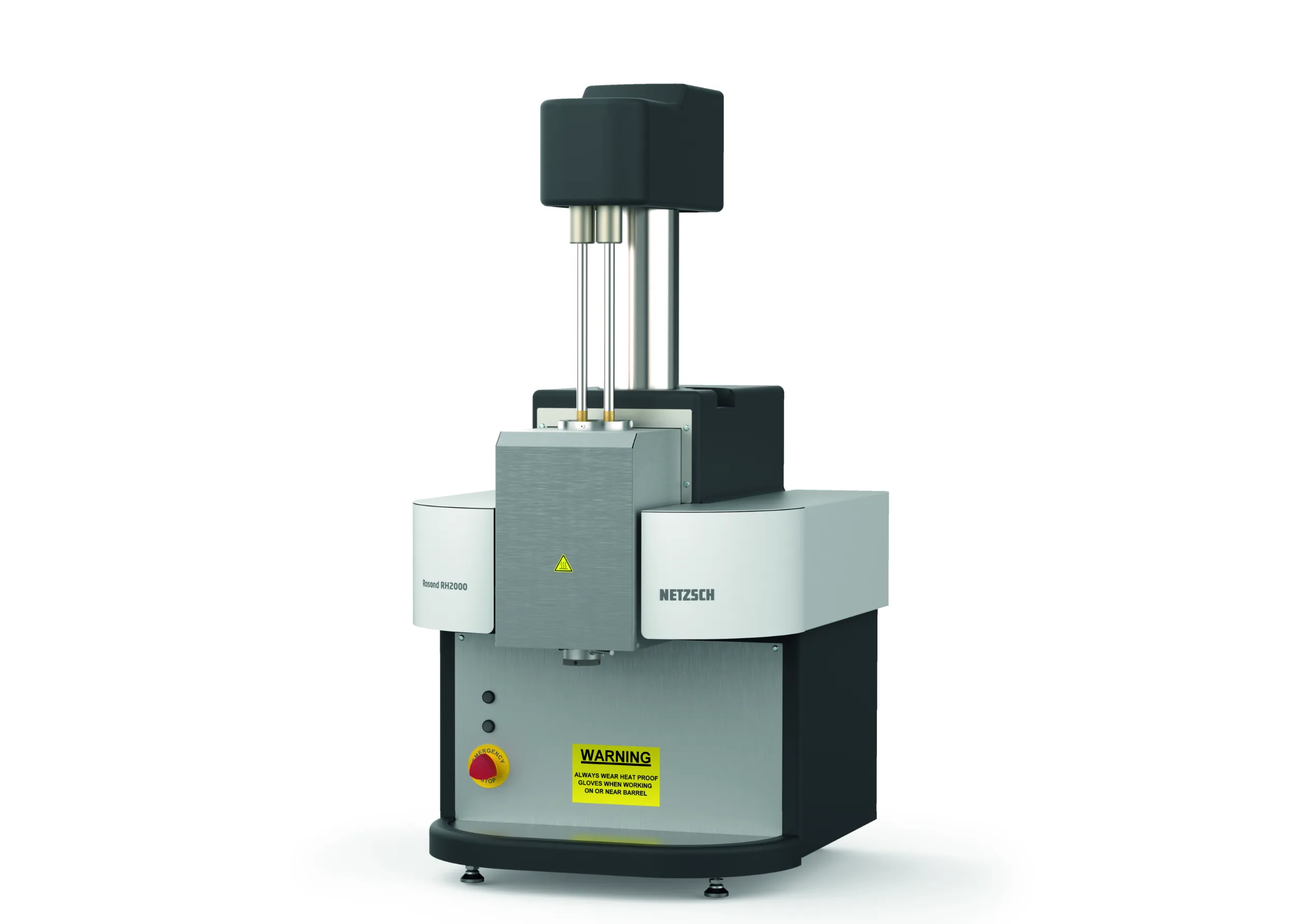
- Temperature ranges from approximately -50 °C to 600 °C are reported for advanced rheometry laboratories and specialized setups.
- Some systems support pressure cells and solvent-retention accessories for evaporation-sensitive materials and process-simulation conditions.
- Capillary rheometer systems for polymers may include high-load drive frames, multi-zone barrel temperature control, and fast recovery after sample loading.
For plastics-processing applications, some practical benchmark values are commonly used:
- Granulated plastic flakes or regrind intended for rheological or feedstock analysis are often prepared to sizes on the order of a few millimeters, although the exact size depends on the test geometry and sample preparation protocol.
- After centrifugal dewatering in upstream recycling or preparation lines, residual moisture is often reduced to low single-digit percentages or below, depending on polymer type and washing system performance; this is critical because moisture can distort viscosity and degradation measurements.
- Throughput in industrial rheology-related quality systems ranges from single-sample laboratory testing to continuous online measurement in extrusion and melt transfer lines, where response speed and stability are often more important than raw sample throughput.
Key quantitative outputs
Rheological instruments commonly report:
- Dynamic viscosity
- Shear stress
- Shear rate
- Yield stress
- Storage modulus
- Loss modulus
- Complex viscosity
- Normal forces
- Creep compliance
- Relaxation time
- Extensional viscosity
Types and Variations
| Type of equipment | Primary function | Strengths | Typical limitations |
|---|---|---|---|
| Rotational rheometer | Measures shear and oscillatory behavior | Broadest rheological capability, strong for viscoelastic characterization | More complex and costly than basic viscometers |
| Capillary rheometer | Simulates high-shear melt flow | Excellent for polymer processing conditions, useful for extrudability and die design | Less suited to low-shear viscoelastic studies |
| Viscometer | Measures viscosity at limited conditions | Fast, simple, economical for QC | Cannot capture full rheological behavior of complex materials |
| Extensional rheometer | Measures elongational flow | Important for films, foams, fibers, and adhesive strings | More specialized and application-dependent |
| Process/inline rheometer | Measures in production flow | Real-time control and process feedback | Requires integration, calibration, and stable process conditions |
A useful distinction in industrial practice is between research-grade rheometers, which maximize analytical depth, and QC-oriented instruments, which prioritize speed, repeatability, and ease of use.
Applications in Plastics Processing
Rheological testing is central to most polymer-processing decisions because flow behavior governs filling, shaping, orientation, and final part properties.
Major applications
- Injection molding: melt viscosity, shear thinning, and relaxation behavior help predict filling pressure, gate freezing, weld-line formation, and dimensional stability.
- Extrusion: capillary and rotational tests support die design, output stability, melt fracture control, and screw/melt-pump matching.
- Blow molding and film blowing: extensional viscosity and melt strength are critical for bubble stability and thickness uniformity.
- Fiber spinning: elongational flow response affects drawability, filament breakup, and final molecular orientation.
- Compounding and masterbatch production: rheology is used to assess filler dispersion, chain scission, branching, and batch-to-batch consistency.
- Recycling and recyclate qualification: viscosity and viscoelastic signatures help identify degradation, contamination, and blend variability.
Poor-fit use case
Rheometers are generally a poor fit for simple pass/fail identification of a homopolymer grade when the formulation is already well characterized, because a full rheological program may be unnecessary compared with faster fingerprint methods or routine density and melt-flow checks. In such cases, the value of rheometry lies more in troubleshooting, development, and process optimization than in basic identification.
Performance Metrics and Practical Interpretation
The usefulness of rheological data depends on how well the test simulates the real process.
- Low-shear measurements are valuable for storage stability, sag resistance, sedimentation, and slow deformation.
- High-shear measurements are more representative of extrusion, injection filling, pumping, and die flow.
- Oscillatory tests can reveal whether a melt behaves more like a liquid or a structured viscoelastic material, which is important for dimensional control and melt strength.
- Transient tests are especially useful in filled systems, gels, adhesives, sealants, and recycled formulations where structure rebuilding matters.
A major practical advantage of rheometry is that it can link laboratory data to real processing outcomes. For example, a resin with similar nominal viscosity at one temperature may behave very differently under high shear, elevated temperature, or long residence time because of molecular architecture, branching, or degradation.
Technological Innovations and Automation
Recent development has focused on making rheological testing faster, more reproducible, and more closely tied to production control.
- Automated test sequences reduce operator dependence and improve repeatability in QC environments.
- Online rheometers support process control in extrusion lines and melt pipelines, enabling real-time monitoring of melt index and melt viscosity.
- Advanced software now supports temperature sweeps, frequency sweeps, master curves, and compliance with standardized test methods.
- Small-sample and portable instruments expand use in production, field testing, and on-site troubleshooting.
A notable trend is the blending of rheology with broader materials analytics, including optical observation, pressure cells, microscopy, and complementary thermal or mechanical methods.
Environmental and Sustainability Aspects
Rheological testing supports sustainability primarily by reducing waste and enabling more efficient use of materials.
- Better viscosity control reduces scrap, start-up losses, and off-spec production.
- Rheology helps qualify recycled polymers and blended feedstocks whose variability would otherwise raise processing risk.
- Lower-energy processing is possible when formulations are tuned to flow efficiently at achievable temperatures and pressures.
- Accurate characterization can support lightweighting and material reduction by allowing thinner sections or optimized molecular architecture without compromising performance.
At the same time, sustainability introduces new measurement challenges. Recyclate and bio-based polymers may show broader variability, more pronounced thermal history effects, and stronger sensitivity to contamination, so rheological methods must be carefully standardized to remain meaningful across feedstock cycles.
Economic and Global Market Impact
Rheological equipment is a high-value segment within the broader plastics testing and instrumentation market because it directly supports formulation design, production efficiency, and quality assurance.
Its economic importance is strongest in:
- Polymer producers optimizing resin grades for processing windows and downstream conversion.
- Compounders validating filler loading, dispersion quality, and melt stability.
- Converters reducing downtime and defect rates.
- Recyclers proving consistency of secondary raw materials.
- Research organizations developing next-generation materials and processing routes.
Global demand is also influenced by increasing quality requirements, stricter process control, and the expansion of automated laboratories. Vendors such as Thermo Fisher Scientific, TA Instruments, Anton Paar, Brookfield, and Netzsch are prominent in different application segments, from routine viscometry to advanced rheology and capillary melt testing.
Current Challenges and Innovations
Several technical and operational issues remain central:
- Sample preparation can strongly affect results, especially for heterogeneous polymers, filled systems, and recycled materials.
- Method comparability remains difficult because geometry, thermal history, slip, evaporation, and loading technique can alter outcomes.
- High-temperature testing must balance accuracy with sample degradation risk.
- Correlation to processing is not always straightforward, since laboratory flow fields cannot fully replicate complex industrial equipment.
Current innovations are aimed at improving:
- Measurement speed
- Automation
- Realistic process simulation
- Online control
- Data interpretation and digital traceability
Future Outlook
The future of rheological testing in plastics is likely to emphasize tighter integration between the laboratory and the plant floor. Instruments will increasingly be used not only to characterize materials but also to feed predictive models, process twins, and adaptive control systems.
Three likely directions stand out:
- Greater online and inline deployment for continuous monitoring of melt behavior during extrusion and compounding.
- Expanded testing of recycled and bio-based materials as circular feedstocks become more central to polymer supply chains.
- More intelligent software that converts complex rheological data into processing recommendations, quality flags, and material fingerprints.
As plastics manufacturing becomes more data-driven, rheological measurement is likely to move from a specialized analytical function to a central element of process intelligence, linking polymer chemistry, machine settings, and final product performance.
References
- •
Rheometers | Viscometers | Thermo Fisher Scientific - SA. (2020, May 20). Thermo Fisher Scientific. https://www.thermofisher.com/us/en/home/life-science/lab-equipment/rheometry-viscometry.htmlLink
- •
High-Performance Rheometers | Discovery & ARES-G2. (2015, July 10). TA Instruments. https://www.tainstruments.com/products/rheology/Link
- •
Rheology & Viscosity - Gammadata - Improving Science. (2024, January 1). Gammadata. https://gammadata.se/products/materials-analysis/rheology-and-viscosity/Link
- •
Discovery Hybrid Rheometers - TA Instruments. (2016, March 28). TA Instruments. https://www.tainstruments.com/products/rheology/discovery-hybrid-rheometers/Link
- •
Rheometers and Viscometers Applications - Thermo Fisher Scientific. (2022, October 13). Thermo Fisher Scientific. https://www.thermofisher.com/us/en/home/life-science/lab-equipment/rheometry-viscometry/applications.htmlLink
- •
Rheometry laboratory. (2022, July 1). GREO. https://greo.mec.puc-rio.br/en/facilities/rheometrylaboratory/Link
- •
Rheometers | Viscometers | Resources | Thermo Fisher Scientific. (2019, May 21). Thermo Fisher Scientific. https://www.thermofisher.com/us/en/home/life-science/lab-equipment/rheometry-viscometry/resources.htmlLink
- •
Thermo Scientific™ HAAKE™ Viscotester™ iQ. (2025, April 1). DirectIndustry. https://www.directindustry.com/prod/thermo-fisher-scientific/product-236295-2382460.htmlLink
- •
Rheological measurement with digital rheometer C-VOR - Fraunhofer IWS. (2022, January 3). Fraunhofer IWS. https://www.iws.fraunhofer.de/en/technologyfields/cutting-and-joining/bonding/equipment/characterization_mechanical_testing/rheometer.htmlLink
- •
Rheometers for Viscosity & Rheological Testing - AMETEK Brookfield. (n.d.). AMETEK Brookfield. https://www.brookfieldengineering.com/products/rheometers/help-me-chooseLink
- •
Rheometer | Worldoftest - Qualitest. (n.d.). Qualitest. https://www.worldoftest.com/rheometerLink
- •
Rheometer Product List and Ranking from 5 Manufacturers, Suppliers and Companies | IPROS. (2025, October 22). IPROS. https://www.ipros.com/en/cg2/Rheometer/Link
- •
Rheometry Products, Equipment and Reviews - Select Science. (2026, February 9). SelectScience. https://www.selectscience.net/products?techniques=rheometry-materials&page=3Link
- •
Rheometers and Viscometers Features - Thermo Fisher Scientific. (2020, May 20). Thermo Fisher Scientific. https://www.thermofisher.com/us/en/home/life-science/lab-equipment/rheometry-viscometry/features.htmlLink
- •
Rheometers and Viscometers Instruments. (n.d.). Thermo Fisher Scientific. https://www.thermofisher.com/us/en/home/life-science/lab-equipment/rheometry-viscometry/instruments.htmlLink
- •
Discover the Latest in Rheometers: Kinexus & Rosand Series. (2025, May 13). NETZSCH. https://analyzing-testing.netzsch.com/en/products/rheometersLink
- •
Understanding Rheology: Basics, Testing and Applications. (2025, February 7). Technology Networks. https://www.technologynetworks.com/analysis/articles/rheology-basics-and-testing-rheological-properties-395278Link
- •
An apparatus for measuring the rheological properties of dental materials. (1976). Journal of Dental Research, 55(2), 223–228. https://pubmed.ncbi.nlm.nih.gov/1062420/Link
- •
Rheometer. (2005, July 19). Wikipedia. https://en.wikipedia.org/wiki/RheometerLink
- •
Rheological measurements. (n.d.). Anton Paar. https://wiki.anton-paar.com/us-en/basics-of-rheology/rheological-measurements/Link