

Introduction
3D Technologies is a broad term that can refer to three-dimensional visualization, 3D modeling, 3D scanning, 3D display systems, and, in manufacturing, additive manufacturing or 3D printing. In industrial practice, the phrase is most often used to describe a digital-to-physical workflow in which a CAD model, scan, or algorithmic design is converted into a part, prototype, tool, or medical device by layer-wise fabrication.
Within the plastics and polymer-processing context, 3D technologies are especially important because they support rapid prototyping, short-run production, tooling, fixtures, custom end-use parts, and emerging applications in medical, automotive, aerospace, and consumer products. The field has evolved from early stereoscopic display concepts into a mature industrial ecosystem that now includes polymer extrusion, vat photopolymerization, powder-bed fusion, material jetting, and hybrid additive-subtractive systems.
The technology landscape is increasingly shaped by automation, AI-assisted design, higher build speeds, multi-material capability, and sustainability pressures such as waste reduction, recycled feedstocks, and lower energy use per part. At the same time, the sector continues to face constraints in surface finish, dimensional consistency, certification, post-processing, and economics for high-volume production.
History and Development
The modern history of 3D technologies has two major strands: imaging and fabrication. In imaging, 3D display research developed from early stereoscopic principles to multiview, volumetric, and digital hologram systems. A major review of autostereoscopic display technologies groups them into those three categories, reflecting the evolution from simple binocular depth cues to more advanced light-field-like approaches.
In fabrication, 3D printing emerged as a layer-by-layer manufacturing method in the 1980s and is widely treated as synonymous with additive manufacturing. The first commercial systems were developed for rapid prototyping, but the technology later expanded into tooling, replacement parts, and end-use production across multiple industries.
Key milestones include:
- The invention of stereolithography and the commercialization of early polymer-based printers, which established the core additive-manufacturing principle of building objects from digital data layer by layer.
- The development of additional process families such as fused deposition modeling, selective laser sintering, and inkjet-based material jetting, which broadened material options and application scope.
- The recent shift toward industrial production use, supported by multi-laser metal systems, higher-speed resin processes, AI-based print optimization, and hybrid manufacturing cells.
Key Characteristics and Technical Overview
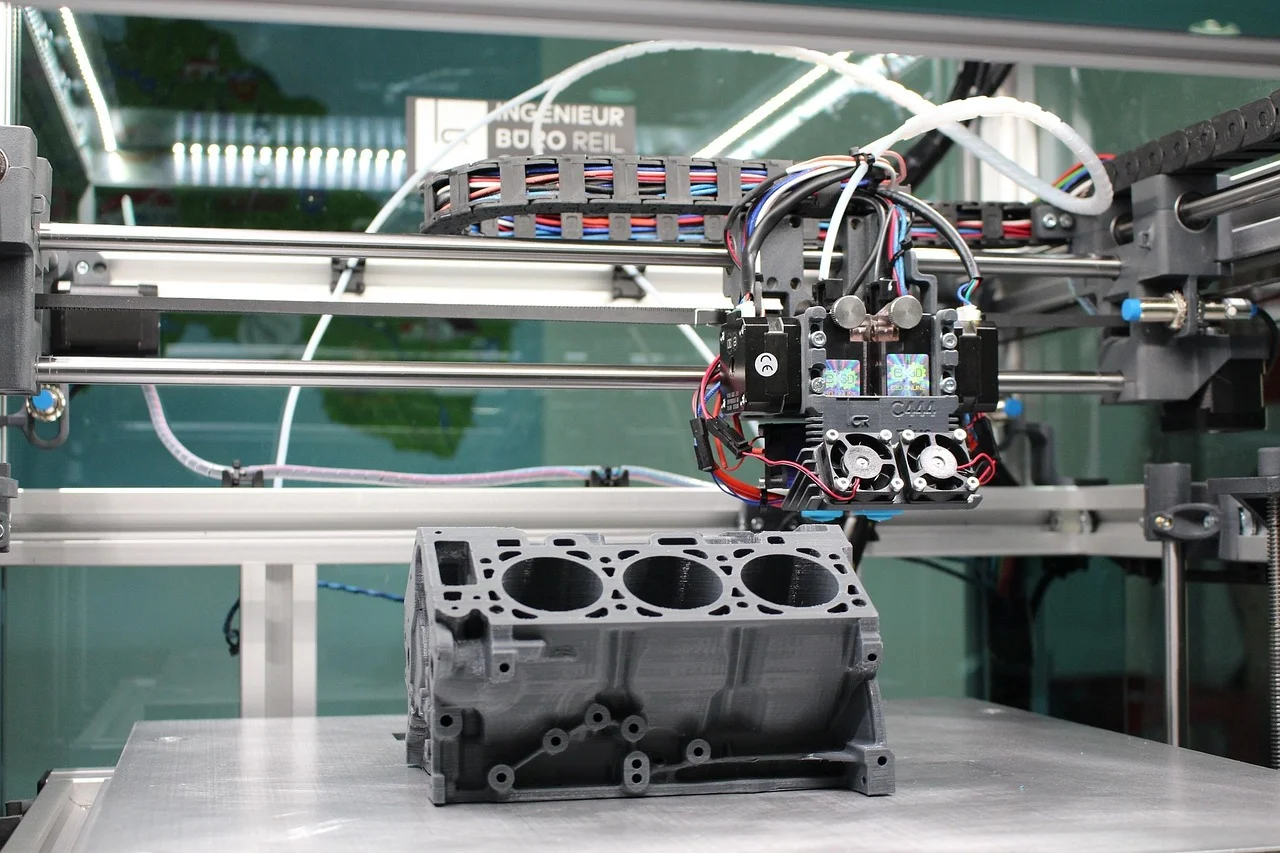
In manufacturing use, 3D technologies translate digital geometry into physical objects through tightly controlled deposition, curing, fusion, or binding of material. Unlike subtractive machining, additive processes build only where material is needed, which can reduce waste and enable internal channels, lattices, and part consolidation that would be difficult to machine conventionally.
Main process families
- Material extrusion: Thermoplastic filament or pellet is melted and deposited through a nozzle; this is the most familiar polymer-focused process and is widely used for prototypes, fixtures, and some end-use parts.
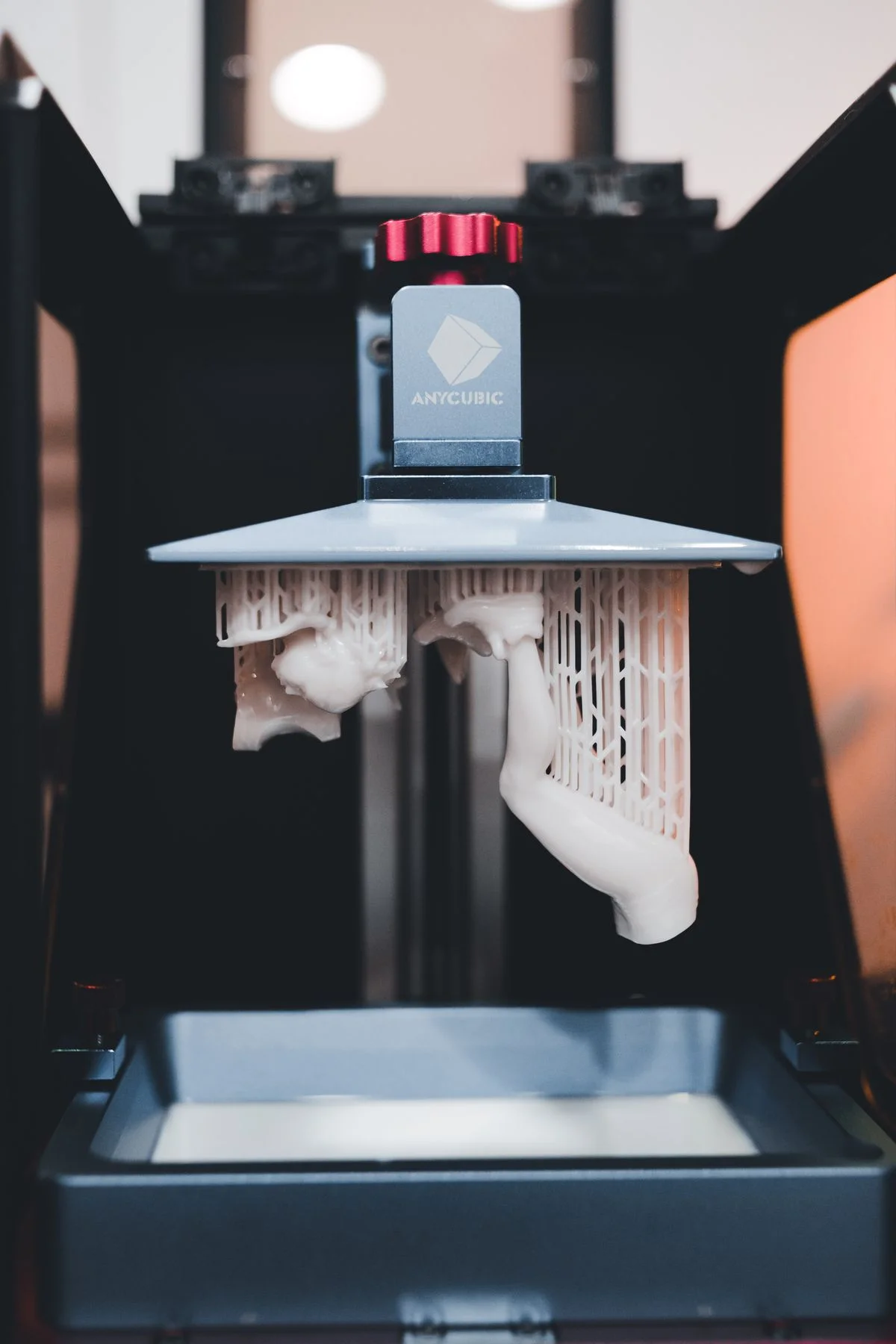
- Vat polymerization: A liquid photopolymer is selectively cured by light; this offers high resolution and fine detail, especially for dental, medical, and product-design applications.
- Powder bed fusion: Laser or other energy sources fuse polymer or metal powder layer by layer; this is used for functional parts, including aerospace and industrial components.
- Material jetting: Droplets of build material are jetted and cured, enabling smooth surfaces and multi-material combinations.
- Binder jetting: A liquid binder selectively joins powder particles, after which parts are cured or sintered; this is increasingly important for metals and some sand/casting workflows.
- Direct energy deposition: Material is fed into a melt pool created by a laser, electron beam, or arc source; this is more often used for repair, cladding, and large metal parts than for plastics.
Typical technical benchmarks
- Layer thickness commonly ranges from about \(20\) to \(300\ \mu m\), depending on process and quality target; finer layers improve detail but increase build time.
- Build speed varies widely, from small desktop polymer systems to industrial platforms capable of much higher throughput, especially in multi-laser and continuous resin processes.
- Specific energy consumption is highly process-dependent; the most efficient systems are generally those with high throughput and minimal thermal mass, while powder-bed and high-temperature systems typically consume more energy per part than simple extrusion systems.
- Post-processing remains a critical part of the workflow and may include support removal, washing, UV curing, sintering, polishing, machining, or inspection.
For plastics recycling and reprocessing, a related but distinct 3D-material stream is the production of filament or pellet feedstock from recycled polymers. Industrial recycling lines often aim for controlled particle size, low contamination, and consistent moisture content before extrusion into printable feedstock, because these factors strongly influence melt stability and surface quality. In practice, recycled polymer granules and flakes are commonly further processed to a uniform feedstock before printing, with dewatering and drying steps used to limit hydrolytic degradation and void formation. This is an engineering inference based on standard polymer-processing practice rather than a direct statement from the sources.
Performance and quality considerations
- Dimensional accuracy depends on calibration, thermal control, shrinkage behavior, and material formulation.
- Anisotropy is a persistent issue because many printed parts are mechanically weaker between layers than within layers.
- Surface finish is usually finer in resin and jetting systems than in extrusion-based systems, but the latter often provide lower operating cost.
- Repeatability improves with closed-loop sensing, machine monitoring, and standardized process windows.
Types and Variations
3D technologies can be organized by function or by physical process. In industrial practice, both views are useful.
| Category | Typical use | Strengths | Limitations |
|---|---|---|---|
| 3D modeling and CAD | Digital design, simulation, product development | Fast iteration, design flexibility, virtual testing | No physical output by itself |
| 3D scanning | Reverse engineering, metrology, medical imaging | Captures complex geometry rapidly | Sensitive to surface finish and occlusion |
| 3D display/visualization | Media, engineering review, training | Depth perception, immersive analysis | Hardware and content complexity |
| Additive manufacturing | Parts, tooling, prototypes | Geometric freedom, customization | Post-processing, certification, unit cost |
Within additive manufacturing, the most relevant technology variants are:
- Fused filament fabrication / material extrusion
- Stereolithography and related vat-curing systems
- Selective laser sintering and other powder-bed systems
- PolyJet and other material-jetting platforms
- Binder-jet systems
- Large-format polymer extrusion systems for tooling, molds, and architectural components
Applications and Uses
3D technologies are used across a wide range of sectors, but their most important industrial value lies in accelerating design cycles and enabling customized or low-volume production.
- Manufacturing: Rapid prototyping, jigs, fixtures, end-of-arm tooling, replacement parts, and limited-run production are among the largest industrial uses.
- Automotive: Functional prototypes, trim parts, tooling, and specialized replacement components are common applications.
- Aerospace: Lightweight structures, complex brackets, cabin components, and maintenance spares benefit from topology optimization and part consolidation.
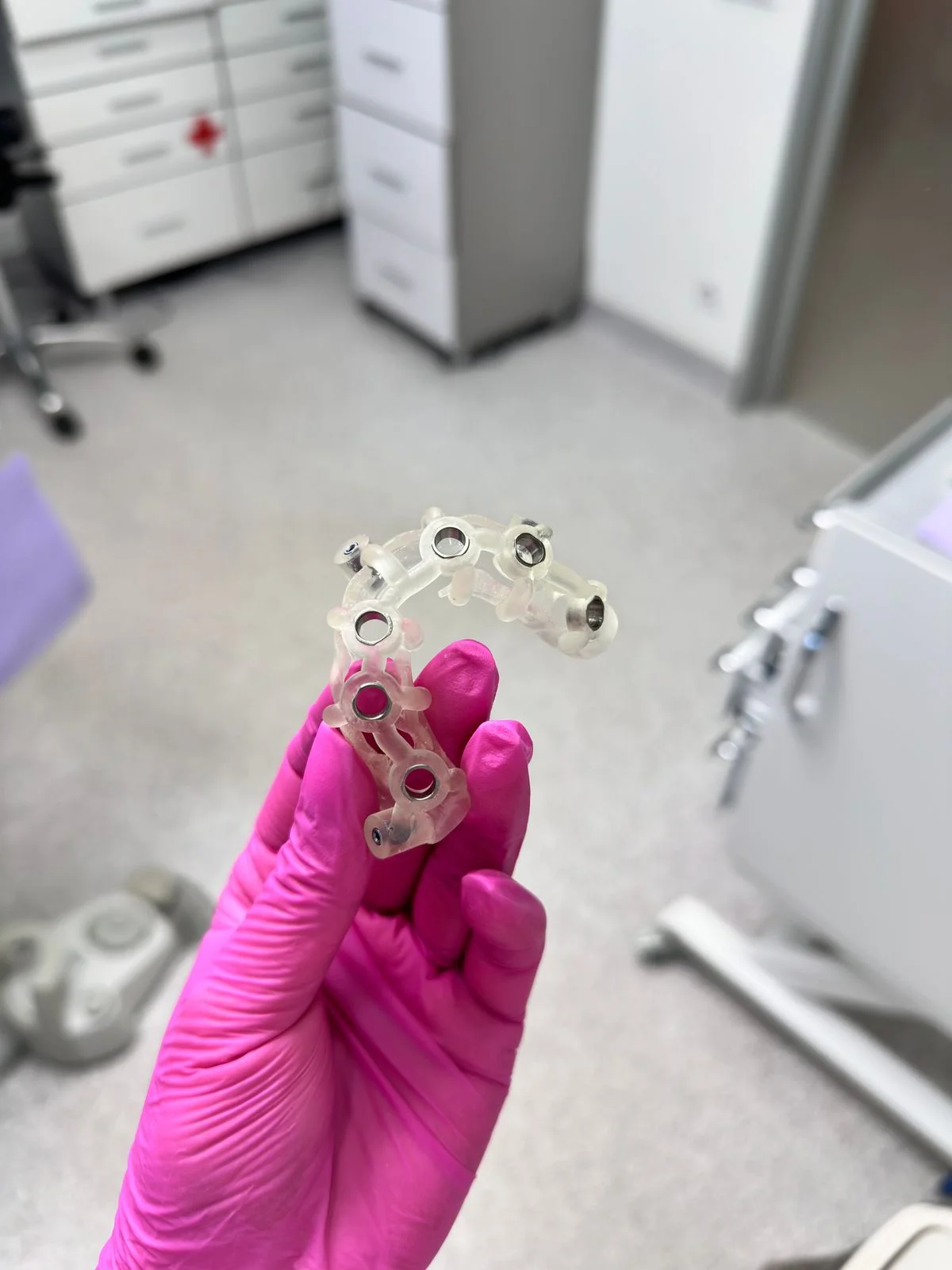
- Medical and dental: Surgical guides, anatomical models, prosthetics, orthotics, aligners, implants, and educational models are major uses.
- Architecture and construction: Scale models, formwork, decorative elements, and large-format printed components are growing use cases.
- Consumer goods and fashion: Custom accessories, eyewear, footwear, and virtual garment workflows increasingly use 3D design and printing.
- Education and research: Visualization, experiments, and STEM learning are long-standing uses.
- Poor-fit use: High-volume commodity packaging is generally a poor match for additive manufacturing because unit cost and cycle time usually favor conventional molding and extrusion. This follows from the process economics described in additive-manufacturing sources and the general limitations of layerwise production.
Technological Innovations and Automation
The current innovation cycle is defined by automation, speed, and digital integration. AI-driven design tools increasingly automate build orientation, support generation, and parameter tuning, reducing manual setup time and improving first-pass success rates.
Notable trends include:
- Multi-laser production systems, which improve throughput in powder-bed fusion by processing multiple areas in parallel.
- Continuous resin printing methods such as CLIP- and LSPc-type approaches, which greatly reduce layer-change delays and can increase speed by an order of magnitude relative to older resin systems.
- Hybrid additive-subtractive cells, which combine printing with milling or machining to achieve tighter tolerances and better surfaces.
- Real-time quality assurance, including in-situ layer inspection and defect detection.
- Text-to-3D and image-to-3D workflows, which reduce the barriers between concept generation and printable geometry.
Environmental and Sustainability Aspects
3D technologies have mixed sustainability implications. On the positive side, additive manufacturing can reduce material waste because it uses only the material needed for the part, and it can support lighter designs that lower downstream energy use in transportation.
Sustainability advantages include:
- Waste reduction through near-net-shape fabrication and part consolidation.
- Distributed production, which can reduce inventory and shipping requirements for spare parts.
- Recycled feedstocks, especially recycled polymers for filament and pellet-based systems.
Constraints remain important:
- Some processes are energy intensive, especially those requiring heated chambers, lasers, or extensive post-curing and sintering.
- Multi-material or color printing can generate purge waste, although newer process controls are reducing this burden.
- Many printed parts still require support removal, washing, curing, machining, or sanding, which adds labor and resource use.
Economic and Global Market Impact
The commercial footprint of 3D technologies has expanded from niche prototyping into a broader industrial supply chain. Market reports cited in the search results indicate continued growth in the additive-manufacturing segment, with strong demand from businesses that print more parts each year and increasingly view 3D printing as a production tool rather than only a prototyping tool.
Economic value is concentrated in:
- Short lead times for prototypes and replacement parts.
- Customization for medical, dental, consumer, and specialty industrial products.
- Tooling savings, especially for fixtures, jigs, and manufacturing aids.
- Localized production, which can reduce logistics exposure and inventory risk.
Companies known for specific roles in this segment include 3D Systems as an early commercial pioneer in additive manufacturing and CAMS-focused firms such as 3D Technologies, LLC as a service-and-support provider in a related digital workflow niche.
Current Challenges and Innovations
Despite rapid progress, several barriers continue to shape the market:
- Cost competitiveness remains difficult for high-volume parts, especially where molding or machining already have mature economics.
- Material qualification is still demanding in regulated sectors such as aerospace and healthcare.
- Process variability can arise from powder quality, thermal gradients, humidity, and machine calibration.
- Post-processing burden often determines real production cost more than the print itself.
Current innovations are focused on:
- Better process monitoring and closed-loop control.
- Expanded material portfolios, including high-performance polymers and engineered composites.
- More practical metal printing for industrial production, including cold-metal-fusion and multi-material approaches.
- Improved sustainability, especially recycled and lower-impact feedstocks.
Future Outlook
The next phase of 3D technologies is likely to be defined by convergence rather than by a single process breakthrough. Design software, scanning, simulation, printing, inspection, and post-processing are moving toward integrated digital manufacturing chains.
Three developments are especially likely to matter:
- Greater automation, with AI handling more of the design-to-build workflow.
- Higher throughput, making additive manufacturing more viable for production and spare-parts logistics.
- Broader material qualification, especially for polymers, composites, and metals in certified applications.
In plastics processing, the long-term significance of 3D technologies is not only the production of finished printed parts but also their role in toolmaking, customization, circular material strategies, and hybrid manufacturing systems that link digital design to polymer conversion with far greater flexibility than conventional processing alone.
References
- •
Three-dimensional display technologies. (n.d.). PMC. https://pmc.ncbi.nlm.nih.gov/articles/PMC4269274/Link
- •
3D applications and how they are used today. (2025, September 12). Style3D Blog. https://www.style3d.com/blog/what-are-3d-applications-and-how-are-they-used-today/Link
- •
3D Systems' technology overview and new applications in.... (2014, September 1). PMC. https://pmc.ncbi.nlm.nih.gov/articles/PMC5363289/Link
- •
3D technology in the real world: 5 uses you'll actually.... (2025, October 2). LinkedIn. https://www.linkedin.com/pulse/3d-technology-real-world-5-uses-youll-actually-see-2025-ofp6fLink
- •
What is a 3D printer used for? Top real-world uses. (2026, March 24). ScienceInsights. https://scienceinsights.org/what-is-a-3d-printer-used-for-top-real-world-uses/Link
- •
What is 3D technology? How to use it? (2024, November 13). Rend.pro. https://rend.pro/en/blog/what-is-3d-technology-how-use-it/Link
- •
Applications of 3D printing. (2017, February 24). Wikipedia. https://en.wikipedia.org/wiki/Applications_of_3D_printingLink
- •
3D printing applications. (2025, December 17). SKKU Lee Lab - Google Sites. https://sites.google.com/view/skkuleelab/research_1/3d-printing-applicationsLink
- •
What is 3D technology? A beginner's guide to understanding 3D printing, scanning, and modeling. (2023, May 18). Artist 3D. https://artist-3d.com/what-is-3d-technology/Link
- •
10 exciting applications of 3D printing that could revolutionize industry and society. (2021, October 4). Forbes. https://www.forbes.com/councils/forbestechcouncil/2021/10/04/10-exciting-applications-of-3d-printing-that-could-revolutionize-industry-and-society/Link
- •
3D-technology. (2020, August 18). SSLA. https://www.ssla.co.uk/3d-technology/Link
- •
تطبيقات الطباعة ثلاثية الأبعاد: 14 صناعة و36 حالة استخدام. (2025, April 15). 3ERP. https://www.3erp.com/blog/3d-printing-applications/Link
- •
Top 10 applications of 3D printing in everyday life. (2025, June 27). Medium. https://medium.com/@atinatechnology2580/top-10-applications-of-3d-printing-in-everyday-life-0b1ccd635f89Link
- •
11 tech experts discuss innovative and effective uses for 3D printing. (2022, September 15). Forbes. https://www.forbes.com/councils/forbestechcouncil/2022/09/15/12-tech-experts-discuss-innovative-and-effective-uses-for-3d-printing/Link
- •
The 7 types of 3D technology. (2024, October 17). 3DGearZone. https://3dgearzone.com/resources/3d-technology/Link
- •
Where 3D printing is used – key industries & real applications. (2025, December 8). Sinterit. https://sinterit.com/3d-printing-guide/introduction-to-3d-printing/where-3d-printing-is-used/Link
- •
Top 10 3D printing innovations in 2026: What's new and.... (2026, July 29). 3DPrintingIdeas. https://3dprintingideas.com/3d-printing-innovations/Link
- •
3D printing top technologies & trends to watch in 2026. (2026, January 8). 3DPrint.com. https://3dprint.com/322916/3d-printing-top-technologies-trends-to-watch-in-2026/Link
- •
What can you make with a 3D printer? (n.d.). HP. https://www.hp.com/us-en/printers/3d-printers/learning-center/what-can-you-make-with-3d-printer.htmlLink
- •
Real-world applications of 3D printing. (2022, September 27). Autodesk University. https://www.autodesk.com/autodesk-university/de/article/Real-World-Applications-3D-PrintingLink
- •
3D: The world of three dimensions. (2024, September 22). TomorrowDesk. https://tomorrowdesk.com/info/3dLink
- •
20+ 3D printing applications with real-world examples. (2023, March 30). Phrozen. https://info.phrozen3d.com/en-hk/blogs/resin-3d-printing-latest-news/3d-printing-applicationsLink
- •
The top 3D design trends shaping creative work in 2026. (2025, December 17). Envato. https://elements.envato.com/learn/3d-design-trendsLink
- •
10 applications of 3D printing: Uses and examples. (2023, May 18). Xometry. https://www.xometry.com/resources/3d-printing/applications-of-3d-printing/Link
- •
25 (unexpected) 3D printing use cases. (n.d.). Formlabs. https://formlabs.com/blog/25-unexpected-3d-printing-use-cases/Link
- •
3D computer graphics. (2007, March 21). Wikipedia. https://en.wikipedia.org/wiki/3D_computer_graphicsLink
- •
The ultimate guide to 3D technologies. (2016, April 23). TheNextWeb. https://thenextweb.com/news/guide-to-3d-techLink
- •
3d video - an overview. (n.d.). ScienceDirect. https://www.sciencedirect.com/topics/computer-science/3d-videoLink
- •
Overview of 3D printing technologies. (2026, April 7). Scribd. https://www.scribd.com/document/403218528/3d2maindoc-docxLink
- •
3-D printing news. (2026, September 3). ScienceDaily. https://www.sciencedaily.com/news/matter_energy/3-d_printing/Link
- •
Real-world applications of 3D printing. (2022, September 27). Autodesk University. https://www.autodesk.com/autodesk-university/article/Real-World-Applications-3D-PrintingLink
- •
AI 3D printing trends 2026 | 10 workflow changes to watch. (2026, June 3). Neural4D. https://blog.neural4d.com/neural4d/the-future-of-3d-printing-10-ai-workflow-trends-2026/Link
- •
Latest trends in 3D design: AI, sustainability and.... (2025, September 24). Style3D. https://www.style3d.com/blog/what-are-the-latest-trends-in-3d-design/Link
- •
What is 3D technology? Uses, how it works & top companies (2025). (2025, October 5). LinkedIn. https://www.linkedin.com/pulse/what-3d-technology-uses-how-works-top-companies-2025-statsculpt-nj9kcLink
- •
The future of 3D printing: Key technologies and market outlook for.... (2025, November 26). Creallo. https://creallo.com/en/blog/posts/3d-printing-trends-2026-market-technology-outlookLink
- •
3d graphics - an overview. (n.d.). ScienceDirect. https://www.sciencedirect.com/topics/computer-science/3d-graphicsLink
- •
What is 3D (three dimensions or three-dimensional)? (2024, March 1). TechTarget. https://www.techtarget.com/whatis/definition/3-D-three-dimensions-or-three-dimensionalLink
- •
An overview on 3D printing technology. (n.d.). ScienceDirect. https://www.sciencedirect.com/science/article/pii/S2351978919308169Link
- •
The future of 3D technology: AI, AR/VR, and industrial. (2026, March 2). openPR. https://www.openpr.com/news/4408415/the-future-of-3d-technology-ai-ar-vr-and-industrialLink
- •
REPORT. (2025, August 4). Scribd. https://www.scribd.com/document/435253718/REPORTLink
- •
Six cutting-edge trends in 3D printing. (2024, October 22). LinkedIn. https://www.linkedin.com/pulse/six-cutting-edge-trends-3d-printing-handy-tech-group-inc-fbpneLink
- •
Top 10 3D printing innovations to watch in 2026. (2026, May 19). AOSEED. https://www.aoseed.com/blogs/aoseed-sale/top-10-3d-printing-innovations-to-watchLink
- •
New 3D printing technology: innovations shaping the future. (2025, November 14). Sinterit. https://sinterit.com/3d-printing-guide/3d-printing-technologies/new-3d-printing-technology/Link
- •
The history of 3D technology. (2022, May 25). 3DGlassesOnline. https://www.3dglassesonline.com/the-history-of-3d-technology/Link
- •
3D printing. (2004, December 21). Wikipedia. https://en.wikipedia.org/wiki/3D_printingLink
- •
3D printing trend report 2024. (n.d.). Hubs. https://www.hubs.com/get/trends/Link
- •
3d printing in healthcare. (2018, January 1). PMC. https://pmc.ncbi.nlm.nih.gov/articles/PMC6140256/Link
- •
12 game-changing 3D printing technology trends to watch in 2025. (2026, April 21). 3D-Printed. https://www.3d-printed.org/d-printing-technology-trends/Link
- •
Latest 3D printing trends you can't miss in 2025. (2026, June 15). 3D Printed. https://www.3d-printed.org/latest-3d-printing-trends/Link
- •
What's actually "new" in 3D printing? (n.d.). Reddit. https://www.reddit.com/r/3Dprinting/comments/17wm09q/whats_actually_new_in_3d_printing/Link
- •
The future of 3D printing 2026: Key trends & advancements. (2026, June 18). JLC3DP. https://jlc3dp.com/blog/future-of-3d-printing-advancementsLink
- •
The most important 3D printing trends. (2025, June 16). ALSO. https://www.also.com/ec/cms5/en_6000/6000/company/blog/article/channel-insights/the-most-important-3d-printing-trends.jspLink
- •
3D printing trend report 2024. (n.d.). Protolabs. https://www.protolabs.com/resources/guides-and-trend-reports/3d-printing-trend-report/Link
- •
20 possible futures of 3D printing. (2024, May 10). Xometry. https://www.xometry.com/resources/3d-printing/future-of-3d-printing/Link
- •
3D Technologies, LLC. (n.d.). LinkedIn. https://www.linkedin.com/company/3d-technologies-llcLink
- •
About 3D Systems. (2017, January 20). 3D Systems. https://www.3dsystems.com/about-usLink