
Introduction
Mould and die cleaning equipment comprises the machines, systems, and consumables used to remove polymer residues, release agents, lubricants, carbonized deposits, scale, rust, and other contaminants from production tooling in plastics, rubber, die-casting, extrusion, and related industries. In plastics processing, these systems are central to mold maintenance because they help preserve part quality, protect tool surfaces, restore venting and cooling performance, and reduce unplanned downtime.
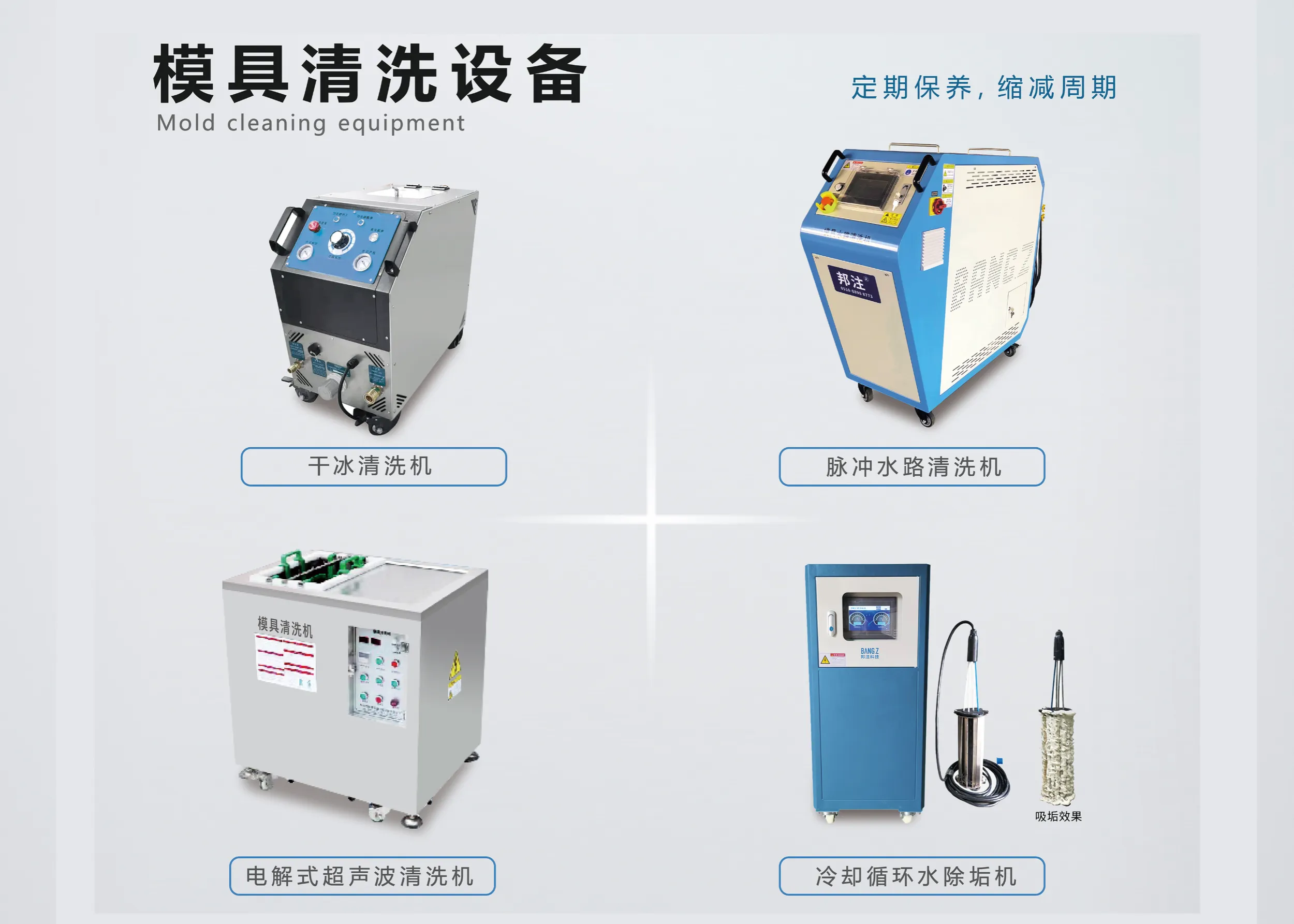
The field is most strongly associated with ultrasonic cleaning systems, but it also includes high-pressure spray washers, descaling and flushing units for cooling channels, dry-ice blasting, abrasive or micro-abrasive cleaning cabinets, laser cleaning systems, and specialized manual or semi-automatic workstations. The technology has evolved from labor-intensive manual cleaning toward more controlled, repeatable, and non-destructive methods, especially where tool geometry is delicate or dimensional integrity is critical.

For plastics manufacturers, the main engineering trade-off is between cleaning aggressiveness and tool preservation. Non-contact or low-abrasion methods are favored for fine cavities, venting features, ejector-pin bores, and polished surfaces, while more intensive systems may be selected for baked-on polymer buildup, heavy scale in cooling circuits, or large-format tooling. Sustainability is also an important driver: modern systems aim to reduce solvent use, lower manual labor, extend tool life, and improve bath life through filtration, oil separation, and water-based chemistry.
History and Development
Early mold maintenance relied on hand scraping, wire brushing, solvent wiping, and abrasive blasting, methods that were effective for gross contamination but often slow, inconsistent, and potentially damaging to precision surfaces.
A major step forward came with the adoption of ultrasonic immersion cleaning, which uses cavitation in a liquid bath to penetrate narrow features such as vent grooves, threads, pin holes, and textured surfaces that are difficult to clean mechanically. This approach became especially valuable for injection molds, extrusion dies, and die-casting tooling because it could remove residue without requiring aggressive rubbing or media impact.
More recent development has focused on automation and system integration. Vendors now offer semi-automatic or fully automated cleaning lines with lifting devices, drying stations, filtration, oil skimmers, spray rinsing, and process monitoring for repeatable maintenance workflows. In parallel, niche technologies such as dry-ice blasting, laser cleaning, and cooling-channel descaling units have expanded the available process palette for specific contamination types and tooling architectures.
Technical Overview
Working principles
- Ultrasonic cleaning: High-frequency sound waves generate microscopic cavitation bubbles in a heated liquid bath. When these bubbles collapse near the surface, they dislodge contamination from cavities, vents, and fine features while remaining non-abrasive to the base metal.
- High-pressure spray cleaning: Heated detergent or alkaline solution is sprayed over rotating or conveyed molds to remove oil, release agents, chips, and flash from larger accessible surfaces.
- Cooling-channel descaling: Chemical circulation systems flush internal passages with descaling agents to dissolve scale, rust, and sludge without dismantling the mold.
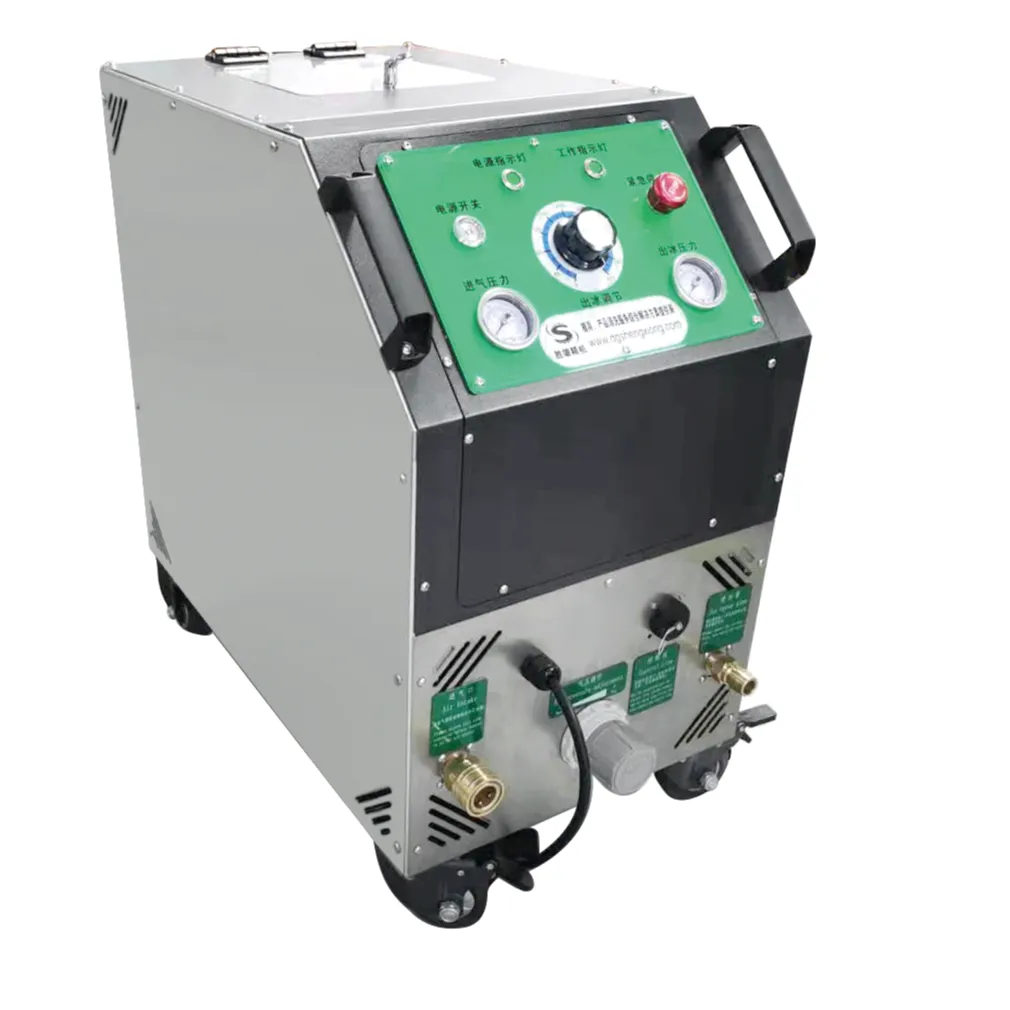
- Dry-ice blasting: Solid CO\(_2\) pellets impact the surface and sublimate, lifting contamination with minimal secondary waste and no abrasive residue.
- Laser cleaning: Focused laser energy removes surface contamination selectively, typically for localized cleaning where precision and dry processing are desirable.
Typical operating parameters
- Ultrasonic cleaning time: commonly about 5–30 minutes, depending on contamination load and part size.
- Bath temperature: often around 60–80°C, with some systems specifying 80°C max for steel.
- Cleansing chemistry: aqueous detergents, degreasers, or specialty formulations; one supplier lists a 5–20% dilution for its mold-and-die detergent.
- Residual moisture after dewatering/drying: systems with air-bubble rinsing and blow-dry or vacuum-dry stations are intended to leave tooling visibly dry, while practical residual moisture is minimized to support immediate reinstallation; vendors typically describe this as a near-dry finish rather than publish a universal numeric target.
- Throughput: small immersion units handle individual inserts or smaller dies, while larger custom systems accommodate full molds and baskets; spray-wash and automated line systems are used for medium and large molds requiring higher throughput.
- Rotor or mechanical agitation speed: where rotating baskets, spray arms, or turning fixtures are used, the aim is uniform exposure rather than a standardized rotor speed; published values vary widely by machine design and are not directly comparable across vendors.
- Specific energy consumption: precise cross-vendor comparisons are difficult because performance depends on bath volume, heater loading, transducer efficiency, and drying method; in practice, ultrasonic systems are generally selected for lower labor input and reduced rework rather than for a single universal energy benchmark.
Engineering considerations
- Material compatibility matters because tooling may be made from steel, aluminum, beryllium copper, or coated alloys, and cleaning chemistry must not attack base metal or surface finishes.
- Dimensional stability is important for fine cavity details and polished surfaces, so non-contact or low-abrasion methods are preferred where geometry must remain unchanged.
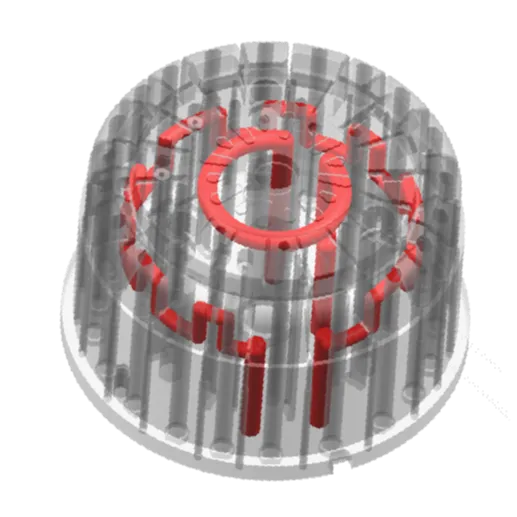
- Cooling-channel integrity is critical because fouled channels reduce heat transfer, increase cycle times, and raise scrap risk; descaling units address this maintenance bottleneck directly.
- Oil separation and filtration extend bath life and improve repeatability by preventing redeposition of contaminants.
Types and Variations
| Type | Main function | Typical strengths | Typical limitations |
|---|---|---|---|
| Ultrasonic immersion cleaners | Remove residue from cavities, vents, inserts, pins, and tooling faces | Deep cleaning of intricate geometries, non-abrasive action | Requires immersion tank and compatible chemistry |
| Spray washer systems | Clean larger molds or tooling by heated spray and circulation | Good for bulky parts and faster batch turnover | Less effective in very fine recesses |
| Cooling-channel descaling units | Restore water-flow passages inside molds and dies | Targets hidden scale and sludge without full teardown | Limited to internal circuit cleaning |
| Dry-ice blasters | Remove contamination with non-abrasive CO\(_2\) pellets | Dry process, minimal residue, suitable for some in-place cleaning | Higher equipment complexity and process tuning needs |
| Laser cleaning systems | Selective removal of localized deposits | Very precise, low consumable waste | Typically used for special cases rather than bulk cleaning |
| Manual / semi-automatic wash stations | Assist rinse, dry, and inspection steps | Lower capital cost, flexible workflow | More labor-intensive and operator-dependent |
Applications and Uses
- Injection molding: Cleaning mold plates, cavities, ejector components, vent paths, and hot-runner-adjacent tooling to remove burnt polymer, release agents, and lubricant residue.
- Extrusion: Cleaning extrusion dies used for PVC-U profiles, seals, barriers, and similar products where polymer buildup affects flow and surface finish.
- Rubber molding: Removing stubborn release-agent residues and burnt deposits from mold surfaces and inserts.
- Die casting: Cleaning die-casting molds and tempering channels where carbon, lubricant, and scale accumulate.
- Toolroom maintenance: Supporting preventive maintenance programs for molds, dies, fixtures, and machine components, often alongside inspection and preservation tasks.
- Pasta and food die cleaning: Specialized pressurized-water machines are used for certain food-processing dies and molds where hygiene and residue control are important.
- Less suitable application: Heavy rust removal from severely damaged tooling may be better handled by refurbishment processes rather than routine cleaning, because cleaning equipment is designed to preserve surfaces rather than restore worn geometry.
Technological Innovations and Automation
Modern systems increasingly combine cleaning with rinsing, drying, preservation, and inspection in one workflow. This reduces handling, shortens turnaround time, and improves repeatability, especially in high-mix toolrooms.
Key innovations include:
- Automatic lifting and immersion handling for safer transfer of heavy molds into tanks.
- Integrated oil skimmers and filtration to maintain bath cleanliness and extend service intervals.
- Multi-stage process chains with wash, rinse, blow-dry, oven-dry, and vacuum-dry stations.
- Leak testing and flow monitoring in cooling-channel systems, allowing maintenance teams to verify circuit performance after descaling.
- Dual- or multi-frequency ultrasonic systems, which can improve cleaning behavior across different contamination types and part geometries.
Environmental and Sustainability Aspects
Mould and die cleaning equipment has become an important part of resource-efficient tooling maintenance. Ultrasonic and aqueous systems can reduce reliance on harsh solvents and abrasive methods, while dry-ice blasting eliminates secondary abrasive media and leaves no grit residue.
Sustainability benefits commonly cited by suppliers and industry users include:
- Lower solvent consumption through aqueous or reduced-solvent processes.
- Reduced VOC emissions when wipes or safer cleaning chemistries replace open solvent wiping.
- Longer mold life because non-abrasive methods reduce surface damage and preserve polishing, vents, and microfeatures.
- Improved energy efficiency at the plant level by restoring cooling-channel performance and shortening molding cycles after descaling.
- Waste reduction through bath filtration, oil separation, and process control that delay disposal or recharge of cleaning media.
Economic and Global Market Impact
The market is driven by the economic value of tool uptime, part quality, and mold life extension. In injection molding and extrusion, even modest reductions in cleaning time can translate into higher machine availability and lower scrap rates, making cleaning equipment a maintenance investment rather than a standalone utility purchase.
Demand is global but unevenly distributed across sectors:
- Plastics and rubber tooling remain the core user base for ultrasonic mold cleaners.
- Aluminum extrusion and die-casting applications create additional demand for larger-capacity systems and channel-cleaning units.
- Toolrooms and contract molders often value flexible, multi-purpose systems that can service many part sizes and contamination types.
Commercial offerings range from compact bench-top units to heavy-duty industrial washers for large tooling, reflecting the diversity of mold sizes and maintenance philosophies in the market.
Current Challenges and Innovations
- Process selection remains application-specific because no single cleaning method is optimal for all contamination types, tool sizes, and surface finishes.
- Chemical compatibility is critical, especially for aluminum, copper alloys, and polished surfaces that can be sensitive to aggressive formulations.
- Cleaning validation is becoming more important as manufacturers seek repeatability in regulated or quality-sensitive production environments.
- Integration with preventive maintenance is still uneven; some shops use cleaning reactively, while more advanced facilities tie it into scheduled tool servicing and inspection routines.
- Automation versus flexibility is an ongoing trade-off: automated lines improve consistency and throughput, but manual or semi-automatic stations remain attractive for mixed tooling inventories and smaller operations.
Future Outlook
The most likely development path is continued convergence of precision cleaning, condition monitoring, and automation. Toolroom systems are expected to become more connected, with digital tracking of cleaning cycles, bath condition, leak testing, and maintenance history.
Future demand will likely be shaped by:
- Higher part-quality requirements in precision molding, thin-wall packaging, and medical or technical components.
- More sustainable maintenance practices, including reduced chemical intensity and better media reuse.
- Greater use of large-format automated systems for high-value injection molds and extrusion dies.
- Selective adoption of laser and dry-ice methods where non-contact, residue-free, or in-situ cleaning offers clear operational advantages.
As tooling tolerances tighten and product changeovers accelerate, mould and die cleaning equipment is likely to remain a strategically important support technology in plastics processing, linking surface engineering, maintenance practice, and production efficiency.
References
- •
Mold & Die Ultrasonic Cleaners. (n.d.). Ultrasonic Power Corporation. https://www.upcorp.com/mold-and-die-cleaning/Link
- •
Guyson Mould and Die Cleaning Options. (n.d.). Guyson. https://www.guyson.co.uk/finishing-applications/mould-and-die-cleaningLink
- •
Ultrasonic Mold and Dies Cleaner. (2023, October 1). Senalapan. https://senalapan.com/ultrasonic-mould-cleaner/Link
- •
Tempering channel cleaning of die casting moulds. (n.d.). Robamat. https://robamat.com/en/products/mould-cleaning-units.htmlLink
- •
Mould/die cleaner. (n.d.). Technopast. https://technopast.com/en/pasta-ravioli-gnocchi/accesoriesLink
- •
Cooling Line Descaling Machine for Moulds | Plassteze. (2024, February 4). Plassteze. https://plassteze.com/blog-details1.htmlLink
- •
Ultrasonic Mold Cleaner | Rkt Web. (2020, August 28). Rkt Web. https://www.rktransonic.com/ultrasonic-mold-cleanerLink
- •
Die Cleaning (Extrusion Die Cleaning). (n.d.). Kemet. https://www.kemet.co.uk/blog/cleaning/mould-die-cleaningLink
- •
Industries - Krumm-tec. (2026, March 17). Krumm-tec. https://www.krumm-tec.com/en/industries/Link
- •
Workshop Equipment | DME. (2022, September 1). DME. https://www.dmeeu.com/page/220-workshop-equipment-1Link
- •
Molding Supplies and Solutions - PCS Company. (n.d.). PCS Company. https://www.pcs-company.com/molding-solutionsLink
- •
Aluminum Extrusion Dies | Die Cleaning Equipment & Supply. (n.d.). Die Cleaning Equipment & Supply LLC. https://www.diecleaningequipment.com/Link
- •
Mould Wipes & Polish - Die Mould Equipment. (n.d.). Die Mould Equipment. http://www.diemouldequipment.com.au/products/mould-shop-production-supplies/mould-wipes-polish/Link
- •
Suppliers. (2023, January 1). Asia Machinery. https://www.asiamachinery.net/CD/2023/en/suppliersDetail.asp?id=8136Link
- •
HEAVY DUTY ULTRSONIC CLEANING SYSTEMS DESIGNED SPECIFICALLY FOR LARGE TOOLING APPLICATIONS. (n.d.). Blue Wave Inc. https://bluewaveinc.com/industrial-washers/mold-utility-cleanersLink
- •
[PDF] FINNSONIC CORUS. (n.d.). Finnsonic. https://finnsonic.com/wp-content/uploads/2022/01/FinnSonic_Corus-series_ENG_092024_EUwebFinal.pdfLink
- •
Mold & Die Ultrasonic Cleaners. (n.d.). Omegasonics. https://www.omegasonics.com/industry-specialties/mold-and-die-cleaning-ultrasonic-cleaners/Link
- •
KKS Mold and die cleaning systems 9Pages. (2025, January 1). KKS Ultraschall AG. https://pdf.directindustry.com/pdf/kks-ultraschall-ag/kks-mold-die-cleaning-systems/84231-773082.htmlLink
- •
Mold cleaning line. (2025, November 28). Huangye88. https://mobile.huangye88.com/product-detail/692a4fe4a4a8a19e8124fd51.htmlLink
- •
Mold And Die Cleaning: A Detailed Guide | Flyriver.com. (n.d.). Flyriver. https://www.flyriver.com/g/cleaning-molds-and-diesLink
- •
Plassteze • Metal polishing, honing and lapping machines,New Delhi. (n.d.). Kompass. https://in.kompass.com/c/plassteze/in752729/Link
- •
"Mold Cleaner". (n.d.). Made-in-China. https://www.made-in-china.com/products-search/find-china-products/0b0nolimit/Mold_Cleaner-4.htmlLink
- •
Ultrasonic Cleaners, Ultrasonic Cleaning Equipment and Cleaning Solutions. (2024, January 1). Kemet International. https://www.kemet-international.com/au/products/cleaningLink
- •
Modular Single Tank - JCS-Echigo Pte Ltd. (2023, July 24). JCS-Echigo. https://www.jcs-echigo.com.sg/product/modular-single-tank/Link
- •
DIE CLEANING EQUIPMENT. (n.d.). Dykast. https://www.dykast.com/products/die-cleaning-equipment/3144Link
- •
Products | Rkt Web. (2021, March 20). Rkt Web. https://www.rktransonic.com/productsLink
- •
Mould and Tool Cleaning - FinnSonic. (2023, March 30). Finnsonic. https://finnsonic.com/product-and-services/industry-solutions/mould-and-tool-cleaning/Link
- •
Mould and die cleaning equipment Price. (2025, April 22). China Plas Online. https://www.chinaplasonline.com/eMarketplace/Quality/AllProducts/eng/?v=c1&Sprods=14&SearchBy=ProdLink
- •
Portable Ultrasonic Cleaning Plastic Injection Mold Dies Extrusion Mould Tooling. (2021, March 24). Yahoo Finance. https://finance.yahoo.com/news/portable-ultrasonic-cleaning-plastic-injection-042700001.htmlLink
- •
Best Mould and die cleaning equipment. (2025, April 22). China Plas Online. https://www.chinaplasonline.com/eMarketplace/Quality/AllProducts/eng/?v=c3&Sprods=14&SearchBy=ProdLink
- •
Polishing and grinding tools for moulds - Kvota. (n.d.). Kvota. https://www.kvota.com.ua/en/katalohy/poliruvalnyy-i-shlifuvalnyy-instrument/Link
- •
Special Report: High-tech alternatives for extrusion die cleaning. (2017, May 22). Plastics Machinery Manufacturing. https://www.plasticsmachinerymanufacturing.com/blow-molding/article/13002276/special-report-high-tech-alternatives-for-extrusion-die-cleaningLink
- •
Mold Cleaning Tools. (2018, January 1). GlobalSpec. https://www.globalspec.com/industrial-directory/mold_cleaning_toolsLink
- •
Plastics Cleaning Machinery Suppliers - UK & IE | PlastikCity. (n.d.). PlastikCity. https://www.plastikcity.co.uk/equipment-suppliers/plastic-cleaning-machineryLink
- •
"Mold & die cleaning equipment" Related Plastics .. .... (2025, September 26). China Plas Online. https://www.chinaplasonline.com/eMarketplace/allexhibitors/eng?SearchType=all&SearchBy=Prod&page=1&Products=109&SProds=109&Regions=44&src=31&Tags=1073Link
- •
Mold and Die Change Equipment Selection Guide. (n.d.). GlobalSpec. https://www.globalspec.com/learnmore/manufacturing_process_equipment/molding_equipment_supplies/mold_die_change_equipmentLink
- •
Die Cleaning Equipment Archives. (2025, February 1). Light Metal Age. https://www.lightmetalage.com/supplier-industry/aluminum-extrusion/die-cleaning-equipment/Link
- •
Mold electrolysis ultrasonic cleaning machine. (2024, October 4). Leo-Sonic. https://www.leo-sonic.com/webls-en-us/mold-electrolysis-ultrasonic-cleaner.htmlLink
- •
Ultrasonic Mold Cleaning Machine - Mould .... (2020, October 5). Ultrasonic India. https://www.ultrasonicindia.com/ultrasonic-mold-cleaning-machine.htmlLink
- •
How to choose the right casting cleaning equipment. (2021, July 30). Die Casting Company. https://www.diecastingcompany.com/helpful-articles/how-to-choose-the-right-casting-cleaning-equipmentLink
- •
13 Mold Cleaning Equipment Manufacturers in 2026. (2011, August 2). Metoree. https://us.metoree.com/categories/3852/Link