
소개
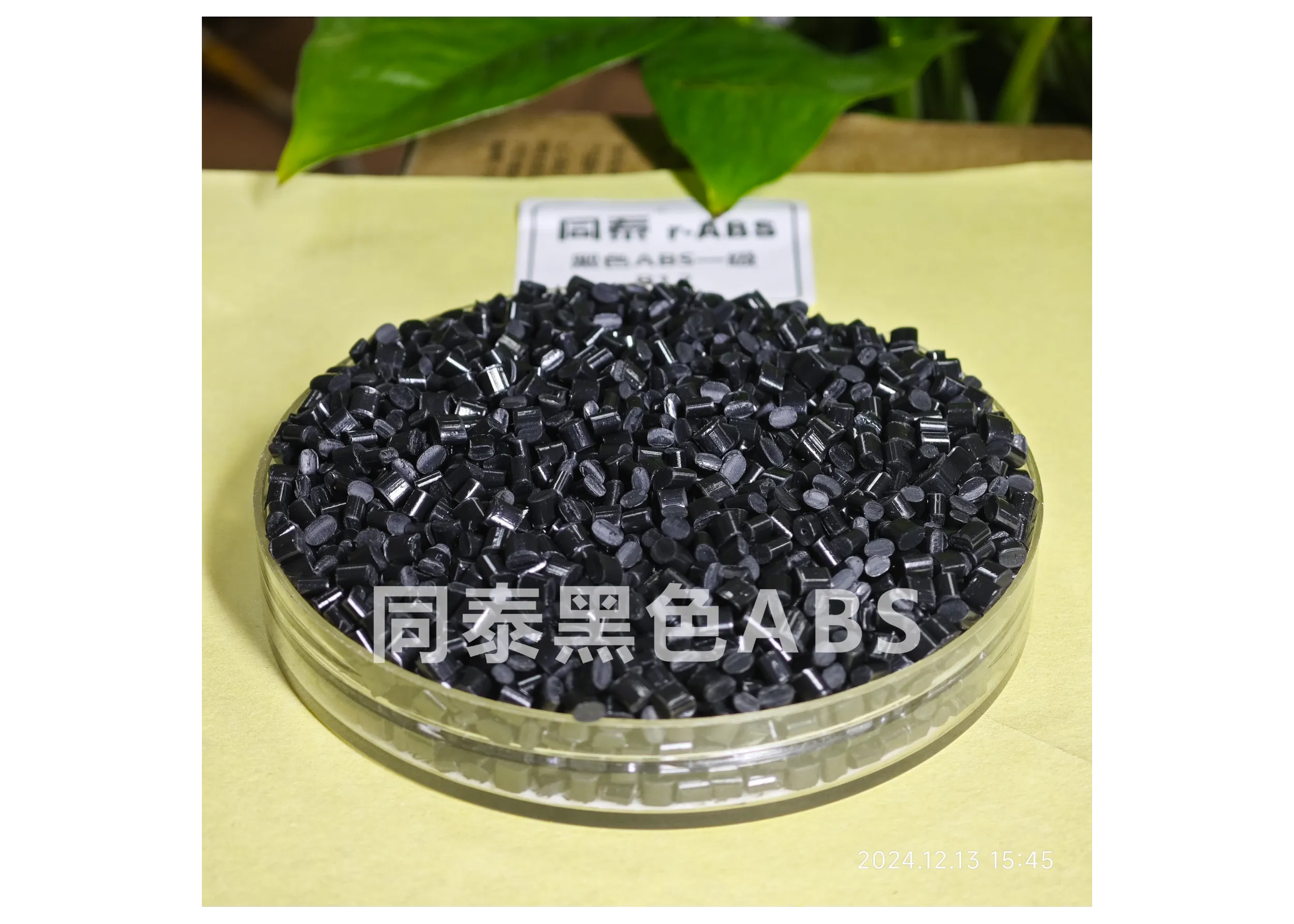
재활용 아크릴로니트릴 부타디엔 스티렌 (rABS)는 소비 후 또는 산업 후 ABS 폐기물로 만든 재활용 엔지니어링 열가소성 수지로, 주로 전자제품, 가전제품, 자동차 부품 및 기타 내구재에서 회수됩니다. 이는 버진 ABS의 충격 저항성, 강성, 표면 품질 및 가공성을 상당 부분 유지하면서 화석 기반 원료 의존도를 줄이고 플라스틱 폐기물을 매립지나 소각로에서 전환하는 데 가치가 있습니다.
실제로 rABS는 단일 소재가 아니라 공급원 스트림, 오염 수준, 색상 일관성, 용융 흐름 및 첨가제 패키지에 따라 다양한 재활용 등급의 제품군입니다. 가장 일반적인 상업적 경로는 분류된 ABS가 풍부한 폐기물의 기계적 재활용과, 최근에는 재활용 원료를 첨가제 기반 복원 또는 단량체의 화학적 재활용과 결합하여 더 높은 순도의 재활용 함량 ABS를 가능하게 하는 순환 계획입니다. 그 개발은 플라스틱 순환성, 전자폐기물 관리, 자동차 경량화 및 적층 제조의 교차점에 있습니다.
rABS는 이제 많은 가시적이고 구조적인 부품에서 버진 ABS의 실용적인 대체재로 자리 잡고 있으며, 특히 인성, 외관 및 비용의 균형이 중요한 경우에 그렇습니다. 동시에 재활용 특성은 원료 순도, 이전 열 이력 및 분류·상용화 정도에 크게 의존하기 때문에 성능이 버진 ABS보다 더 가변적입니다. 이로 인해 rABS는 기술적으로 유용하지만 품질에 민감한 소재가 되며, 특성 안정화, 냄새 제어, 난연 안전성 및 폐쇄 루프 회수에 대한 지속적인 혁신이 진행되고 있습니다.
역사와 개발
ABS는 세 가지 성분 구조가 강성, 인성 및 가공성을 결합하기 때문에 확립된 엔지니어링 플라스틱이 되었습니다. 소비자 전자제품, 자동차 인테리어, 가전제품, 여행 가방 및 장난감에서 ABS 사용이 확대되면서 산업 후 스크랩과 폐제품 모두에서 대규모 폐기물 스트림이 나타났습니다.
초기 rABS 사용은 주로 깨끗한 제조 스크랩의 재분쇄에 의존하는 기회주의적이었습니다. 시간이 지남에 따라 더 정교한 분류 및 세척/분류 시스템이 혼합 폐전기전자제품 및 폐자동차에서 ABS를 회수할 수 있게 만들었지만, 다른 폴리머, 충전제, 페인트 및 난연제와의 오염은 여전히 주요 장애물로 남아 있었습니다. 연구는 재활용 ABS를 버진 ABS 또는 인성 강화제와 혼합하여 충격 강도와 가공성을 회복할 수 있음을 반복적으로 보여주었습니다.
최근 개발은 더 높은 가치의 순환 시스템으로 전환되었습니다. 여기에는 현장 상용화, 사슬 연장, 반응성 블렌딩, 재활용 ABS의 적층 제조 재사용, 그리고 새로운 ABS 생산을 위한 스티렌과 부타디엔을 회수하는 화학적 재활용 프로젝트가 포함됩니다. 그 결과 "다운사이클" 재활용물에서 까다로운 응용 분야에 적합한 제어 사양 등급의 재활용 ABS로 점진적으로 이동하고 있습니다.
화학 구조와 주요 특성
ABS는 아크릴로니트릴, 부타디엔 및 스티렌으로 구성된 다상 삼원 공중합체로, 각 성분이 서로 다른 성능 기능을 제공합니다. 아크릴로니트릴은 내화학성 및 열 안정성을 향상시키고, 부타디엔은 충격 인성을 제공하며, 스티렌은 강성, 광택 및 가공 용이성을 제공합니다. rABS는 동일한 기본 구조를 계승하지만, 최종 특성은 재활용 후 이러한 상의 비율과 무결성에 따라 달라집니다.
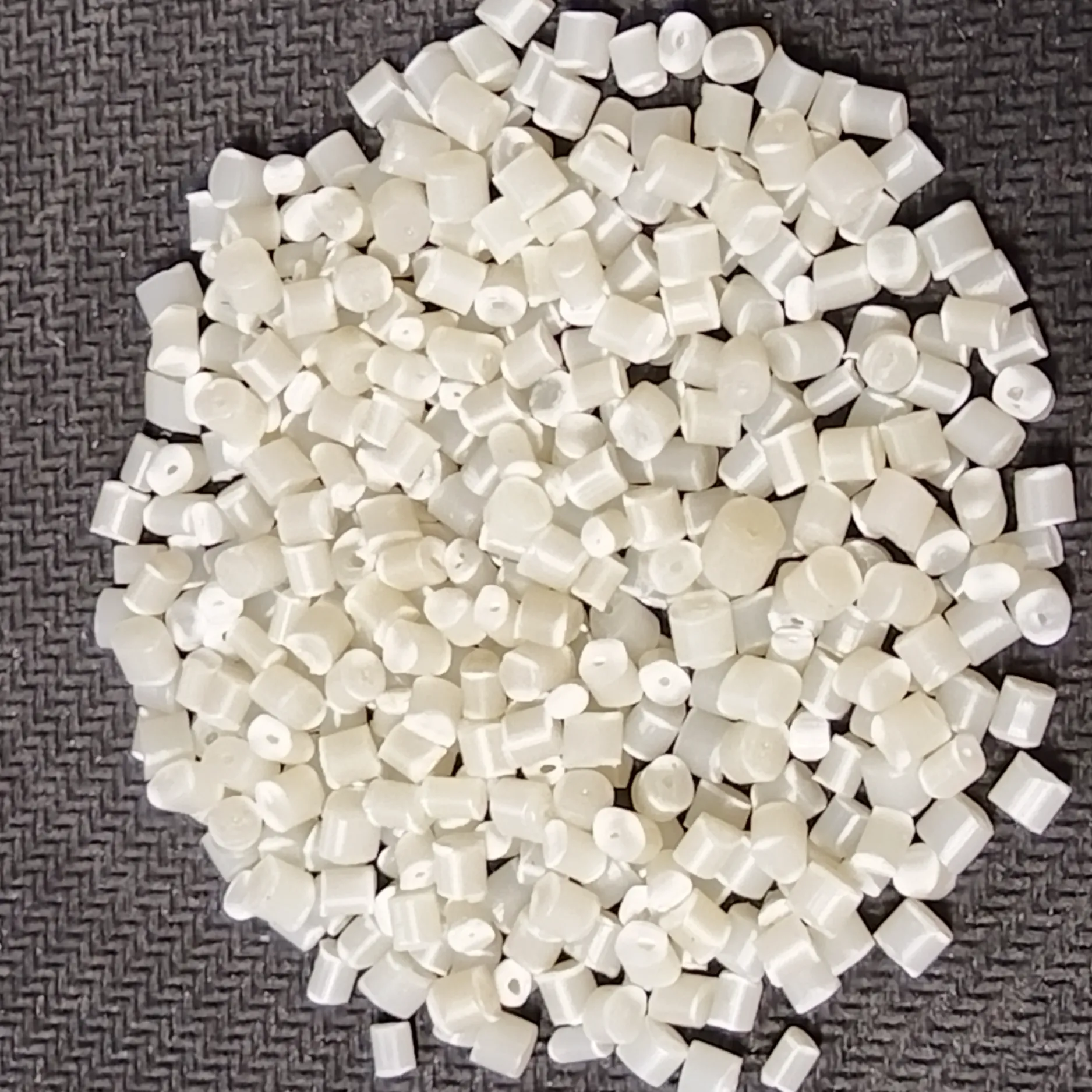
일반적인 rABS는 고충격, 강성, 치수 안정성 열가소성 수지로 설명되며, 우수한 전기 절연성과 많은 하우징 및 구조 부품에 적합한 허용 가능한 내열성을 갖추고 있습니다. 일반적으로 사출 성형 및 압출용 펠릿 또는 재분쇄 형태로 공급됩니다. 보고된 특성 범위는 공급원과 배합에 따라 다르지만, 보통 적당한 내열성, 우수한 표면 마감 및 충격 성능이 요구되는 곳에 사용됩니다.
중요한 실용적 한계는 다음과 같습니다:
- 제한된 산소 및 그리스 배리어 성능 → ABS 화학은 강한 배리어 특성을 제공하지 않으므로 rABS는 낮은 가스 투과가 필요한 포장 또는 연료 격납 용도에 적합하지 않습니다 → 해결책: 배리어 다층, 코팅 또는 다른 폴리머 계열을 사용합니다.
- 처리 전 낮은 표면 에너지 → 버진 ABS와 마찬가지로 rABS는 표면 처리가 없으면 접착, 인쇄 또는 도장을 일관되게 하기 어려울 수 있습니다 → 해결책: 코로나, 플라스마, 프라이머 또는 배합 조정을 사용하여 접착력을 개선합니다.
- 반복된 열 이력 후 특성 변화 → 반복 재가공은 공급원과 안정화에 따라 충격 강도를 감소시키거나 취성을 증가시킬 수 있습니다 → 해결책: 버진 ABS와의 블렌딩, SEBS 기반 인성 강화제, 사슬 연장제 또는 상용화제가 성능 회복에 도움이 됩니다.
참고 문헌
- •
Recycled ABS – Properties, Applications, and Benefits. (n.d.). https://www.ambiomaterials.com/en/materials/rabsLink
- •
rABS from E-Waste: Electronics and Automotive Flame-Retardant Applications Guide. (2026, June 7). https://www.geotopcentral.com/rabs-e-waste-sourced-recycled-acrylonitrile-butadiene-styrene/Link
- •
Recycling of Acrylonitrile Butadiene Styrene from Electronic Waste. (2024, June 18). https://pmc.ncbi.nlm.nih.gov/articles/PMC11442160/Link
- •
Microsoft Word - NicolasVanDamme_Final_paper-2.doc. (n.d.). https://backoffice.biblio.ugent.be/download/8501101/8501108Link
- •
Compatibilizing and toughening blends of recycled acrylonitrile-butadiene-styrene and high-impact polystyrene. (2023, April 17). https://researchportal.northumbria.ac.uk/en/publications/compatibilizing-and-toughening-blends-of-recycled-acrylonitrile-b/Link
- •
1. (n.d.). https://irep.ntu.ac.uk/id/eprint/37132/1/14303_Ford.pdfLink
- •
[PDF] LIFE ABSolutely Circular Layperson's report. (n.d.). https://www.ineos.com/contentassets/65553324c0a74f6bad48e04e2b9ea1c7/life_absolutely_circular_layperson_report_final-incl-logo.pdfLink
- •
Recycling of acrylonitrile-butadiene-styrene (ABS) copolymers from waste electrical and electronic equipment (WEEE), through using an epoxy-based chain extender. (2009, March 15). https://hero.epa.gov/hero/index.cfm/reference/details/reference_id/4398431Link
- •
[PDF] Polymer - The University of Tennessee, Knoxville. (n.d.). https://composites.utk.edu/papers%20in%20pdf/Reparation_Polymer_Wu_2017.pdfLink
- •
Material recycling of acrylonitrile butadiene styrene (ABS) from waste electrical and electronic equipment (WEEE). (n.d.). https://www.sciencedirect.com/science/article/pii/S2949839224000385Link
- •
Recyceltes ABS – Eigenschaften, Anwendungen und Vorteile - Ambio. (n.d.). https://www.ambiomaterials.com/de/materialen/rabsLink
- •
China PCR Recycled plastics RABS (Recycled Acrylonitrile Butadiene Styrene). (2025, December 1). https://www.unibrom.com/pcr-recycled-plastics-rabs-recycled-acrylonitrile-butadiene-styrene-for-electronic-device-housings-product/Link
- •
Återvunnet ABS – Egenskaper, användningsområden och fördelar. (n.d.). https://www.ambiomaterials.com/se/material/rabsLink
- •
Blends of rABS and SEBS: Influence of In-Situ Compatibilization on the Mechanical Properties. (2019, July 24). https://pubmed.ncbi.nlm.nih.gov/31344891/Link
- •
IWT-TETRA. (n.d.). https://medialibrary.uantwerpen.be/oldcontent/container49257/files/Design%20Experience_rABS_English%20booklet.pdfLink
- •
[PDF] Evaluating Combination of Solvent-Based Recycling and Mechanical Recycling for ABS. (n.d.). https://pdfs.semanticscholar.org/d4cc/73052d8d5ccc990a3d6d5f2355f1244ced4b.pdfLink
- •
PCR r-ABS - Acrylnitril-Butadien-Styrene - Sinox Polymers. (n.d.). https://www.sinox-polymers.com/en/plastic-recycled-pellets-pcr-abs-acrylnitril-butadien-styrene.htmlLink
- •
Blends of rABS and SEBS: Influence of In-Situ Compatibilization on the Mechanical Properties. (2019, July 24). https://pmc.ncbi.nlm.nih.gov/articles/PMC6695779/Link
- •
Typical Properties. (n.d.). https://rowadplastic.com/wp-content/uploads/2016/10/ABS_TS.pdfLink
- •
Recycled rABS - Material Guide. (2013, September 7). https://craftcloud3d.com/en/material-guide/recycled-rabsLink
- •
Embracing a sustainable future with rabs. (2023, July 5). https://www.syloon.com/latest-news/embracing-a-sustainable-future-with-rabsLink
- •
rABS - Recyceltes Acrylnitril-Butadien-Styrol. (2024, September 11). https://we-are-pa.com/service/rabs/Link
- •
Three-dimensional printing with waste acrylonitrile butadiene styrene: Processing and characterization. (2025, May 28). https://journals.sagepub.com/doi/abs/10.1177/07316844231225686Link
- •
European project yields recycled-content ABS. (2025, March 17). https://www.recyclingtoday.com/news/elix-repsol-anqore-plastic-abs-chemical-recycling-europe/Link
- •
Sustainable strategies towards better utilization of synthetic polymers. (2024, July 19). https://pubmed.ncbi.nlm.nih.gov/38666470/Link
- •
Recycled polycarbonate and polycarbonate/acrylonitrile butadiene styrene feedstocks for circular economy product applications with fused granular fabrication-based additive manufacturing. (n.d.). https://www.sciencedirect.com/science/article/pii/S2214993723001653Link
- •
[PDF] Using 100% Recycled ABS (rABS) in Plastic Products (Phase 2). (n.d.). https://irep.ntu.ac.uk/id/eprint/35511/7/13042_a1331_Ford.pdfLink
- •
Lightweight High Strength Flexible Radar Absorbing. (n.d.). https://www.drdo.gov.in/drdo/sites/default/files/inline-files/LHSF_RAbS30082024.pdfLink
- •
Cirplus - rabs #recycled #automotive #electronics #3d. (2024, August 13). https://www.linkedin.com/posts/cirplus_rabs-recycled-automotive-activity-7229033264907255808-tX3jLink
- •
Engineering plastic, rABS, Recycled - Spot material - Spot material. (2025, August 7). https://spotmaterial.com/material/acrylonitrile-butadiene-styrene-abs/engineering-plastic-rabs-recycled/Link
- •
Investigating the use of 100% recycled Acrylonitrile Butadiene Styrene (ABS) for 3D printing. (2017, August 7). https://research.utwente.nl/en/publications/ecoprinting-investigating-the-use-of-100-recycled-acrylonitrile-b/Link
- •
rABS in Consumer Appliances. (2026, June 5). https://www.geotopcentral.com/rabs-in-consumer-appliances/Link
- •
RECYCLING CARBON FIBER FILLED ACRYLONITRILE-BUTADIENE-STYRENE. (n.d.). https://repositories.lib.utexas.edu/bitstreams/de30e1d1-5756-4bd7-969f-1e79d8df8799/downloadLink
- •
Low‐Temperature and High‐Rate Rechargeable Aluminum Batteries Enabled by Ternary Eutectic Electrolytes. (2021, January 1). https://www.osti.gov/biblio/2529505Link
- •
An effective sustainable approach towards recycling and value addition of waste poly(vinyl chloride) and acrylonitrile butadiene styrene (ABS) recovered from electronic waste (e-waste). (n.d.). https://link.springer.com/article/10.1007/s10965-021-02678-9Link
- •
Polymer-Based Additive Manufacturing: Recent Developments. (2019, June 19). https://pubs.acs.org/doi/abs/10.1021/bk-2019-1315.ch003Link
- •
bage rABS. (2025, April 17). https://bage-plastics.com/products/bage-abs/Link
- •
Investigation of Closed-Loop Manufacturing with Acrylonitrile Butadiene Styrene over Multiple Generations Using Additive Manufacturing. (2019, June 24). https://pubs.acs.org/doi/10.1021/acssuschemeng.9b02368Link
- •
Recycled Polystyrene & ABS | International Polymers Ltd. (2021, January 22). https://www.internationalpolymersltd.com/recycled-polystyrene-abs/Link
- •
Exploring the Versatile Uses of Recycled ABS Resins. (2024, June 12). https://www.midcontinentplastics.com/blog/sustainable-innovations-exploring-the-versatile-uses-of-recycled-abs-resins/Link
- •
Recovery of recycled acrylonitrile–butadiene–styrene, through mixing with styrene–ethylene/butylene–styrene. (n.d.). https://www.sciencedirect.com/science/article/abs/pii/S0924013613000721Link
- •
Recycled Acrylonitrile Butadiene Styrene (rABS) for Automotive Interior Parts Market Research Report 2026-2034. (n.d.). https://www.24chemicalresearch.com/reports/308923/recycled-acrylonitrile-butadiene-styrene-for-automotive-interior-parts-marketLink
- •
Recent Progress in Sustainable Recycling of Waste Acrylonitrile–Butadiene–Styrene. (2025, September 29). https://www.mdpi.com/2071-1050/17/19/8742Link
- •
Mechanical recycling of acrylonitrile-butadiene-styrene copolymer and high impact polystyrene from waste electrical and electronic equipment to comply with the circular economy. (n.d.). https://www.frontiersin.org/journals/sustainability/articles/10.3389/frsus.2023.1203457/pdfLink
- •
B. Rabs (recycled Abs). (2024, October 14). https://www.linkedin.com/pulse/material-guide-your-promotional-merchandise-part-hyogcLink
- •
3D printing with recycled ABS resin: Effect of blending and printing temperature. (2023, November 1). https://www.sciencedirect.com/science/article/abs/pii/S0254058423010258Link
- •
RABS: restricted access barrier system for aseptic processing of pharmaceutical products. (2009, December 17). https://www.comecer.com/rabs-restricted-access-barrier-systems-for-aseptic-processing-pharmaceutical-products/Link
- •
Sustainable Additive Manufacturing: Mechanical Response of Acrylonitrile-Butadiene-Styrene over Multiple Recycling Processes. (2020, April 27). https://www.mdpi.com/2071-1050/12/9/3568Link
- •
Recycled ABS: Materials Explained. (2024, October 16). https://www.mondaymerch.com/us/resources/fabrics-and-materials/recycled-absLink
- •
Upcycling Polystyrene - PMC - NIH. (2022, November 18). https://pmc.ncbi.nlm.nih.gov/articles/PMC9695542/Link
- •
ABS Plastic (Acrylonitrile Butadiene Styrene). (2026, April 22). https://www.specialchem.com/plastics/guide/acrylonitrile-butadiene-styrene-abs-plasticLink
- •
Exploring ABS Material: Properties and Applications. (2023, June 21). https://sendcutsend.com/blog/what-is-abs-material/Link
- •
Replacing ABS plastic sustainably. (2024, May 2). https://www.sulapac.com/blog/replacing-abs-plastic-sustainably/Link