

Introduction
Fluorinated ethylene propylene (FEP) is a melt-processable, semi-crystalline fluoropolymer made by copolymerizing tetrafluoroethylene and hexafluoropropylene; it is widely valued for combining PTFE-like chemical inertness with conventional thermoplastic processing. In industry, FEP is used as a high-performance raw material for wire and cable insulation, chemical linings, tubing, films, and other components where heat resistance, low friction, and electrical insulation are critical.
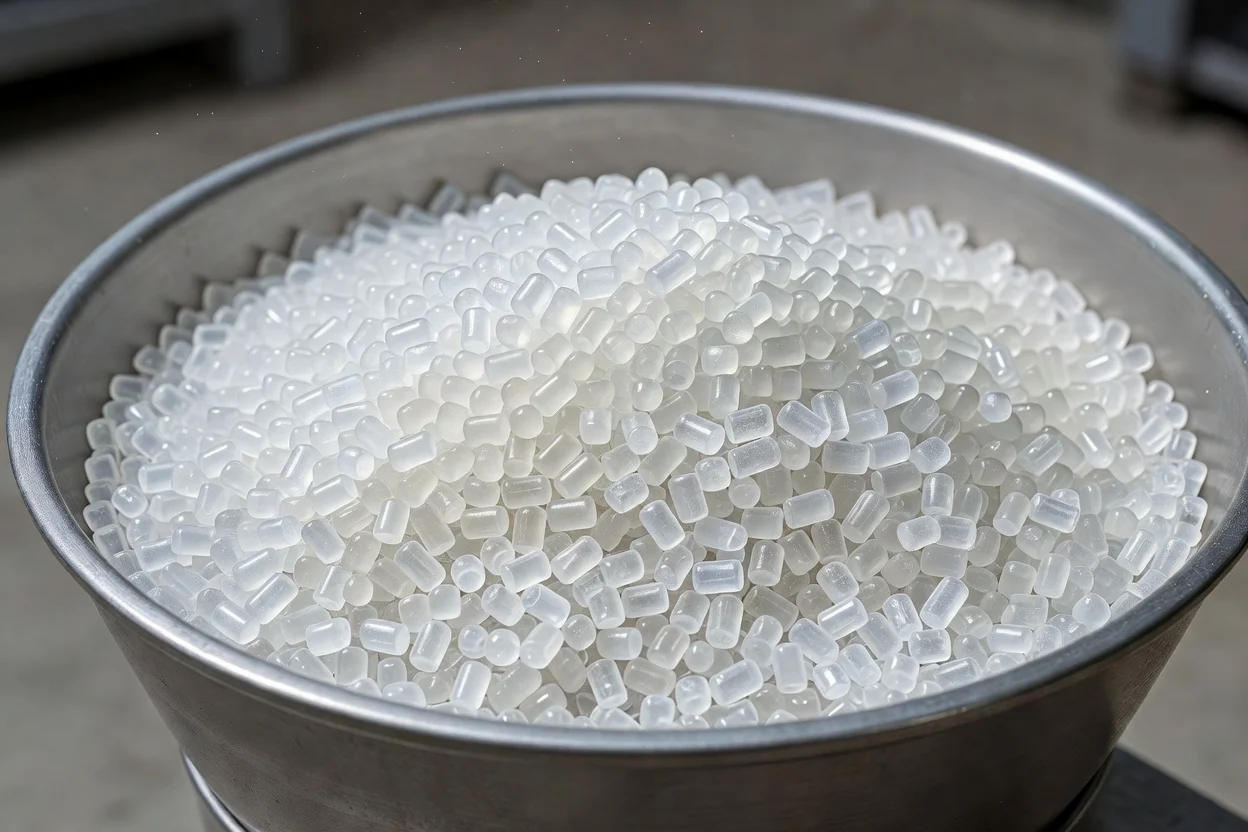
FEP occupies a distinct position in the fluoropolymer family because it is easier to extrude, mold, and fabricate than PTFE, while still offering strong resistance to chemicals, weathering, and flame. Its main trade-off is lower mechanical strength and creep resistance than some competing engineering polymers, which limits structural loading applications and favors uses where inertness, purity, and processability matter more than stiffness.
Commercially, FEP has been established for decades and remains strategically important in electronics, chemical processing, medical tubing, and high-purity fluid handling. Sustainability discussions around FEP are shaped by the broader fluoropolymer debate: long service life can support durability-led resource efficiency, yet fluorinated feedstocks, difficult end-of-life recovery, and concerns over per- and polyfluoroalkyl substance governance continue to push reformulation, recycling, and safer processing innovation.
History and Development
FEP was introduced in the mid-20th century as part of the broader effort to develop fluoropolymers that retained the exceptional chemical resistance of PTFE but could be processed using standard thermoplastic methods. Its market adoption accelerated because melt processability enabled extrusion of tubing, film, and wire insulation at industrial scale.
The material’s early commercial importance was tied to electrical and chemical industries, where stable insulation and corrosion resistance were immediate value drivers. Over time, FEP moved into more specialized markets such as aerospace composites, analytical tubing, and high-purity process equipment, where transparency and clean processing added advantages beyond simple chemical resistance.
Chemical Structure and Key Properties
FEP is a random copolymer of tetrafluoroethylene and hexafluoropropylene with a fully fluorinated backbone and branched molecular architecture. The hexafluoropropylene comonomer reduces crystallinity relative to PTFE, which lowers melting temperature and allows melt processing.
Key property profile
| Property | Typical significance for FEP |
|---|---|
| Semi-crystalline fluoropolymer | Balances inertness with thermoplastic processability |
| Melt-processable | Enables extrusion, injection molding, and film production |
| Excellent chemical resistance | Suitable for acids, solvents, oxidizers, and corrosive media |
| Strong electrical insulation | Widely used in high-voltage and high-frequency wire and cable |
| Low surface energy | Supports non-stick and release applications, but reduces wetting and adhesion |
| Transparent in many grades | Useful in sight tubes, UV systems, and visual flow monitoring |
Real limits and practical workarounds
| Limit | Cause | Workaround |
|---|---|---|
| Low mechanical strength and creep resistance | Semi-crystalline fluoropolymer structure with relatively low modulus under sustained load | Use in thin-wall or unsupported linings, add mechanical backup structures, or choose a stiffer fluoropolymer where load-bearing performance is primary |
| Poor wettability / low surface energy before treatment | Highly fluorinated surface suppresses adhesion and wetting | Apply surface activation, use primers, or design for mechanical retention rather than adhesive bonding |
| Barrier performance is not universal | FEP is highly inert but not a general-purpose high-barrier packaging polymer in the way some multilayer systems are designed to be | Use multilayer structures or select alternative barrier polymers where oxygen or grease barrier is the main requirement |
Typical thermal performance reported in technical sources places FEP melting near 260 C, with continuous service around 200 C and short-term exposure higher than that. Electrical properties are a major strength, with low dielectric constant and very high dielectric strength making it useful in demanding insulation applications.
Production Processes and Raw Feedstocks
FEP is produced by free-radical copolymerization of tetrafluoroethylene and hexafluoropropylene, typically in controlled aqueous or emulsion systems. The monomer ratio is adjusted to tune crystallinity, melt flow, and performance, with technical descriptions indicating TFE-rich compositions are common.
Feedstock and process chain
- Primary feedstocks: tetrafluoroethylene and hexafluoropropylene.
- Polymerization route: controlled radical copolymerization in pressurized reactors.
- Form factors: pellets, powders, films, tubing, sheets, and compounded grades for extrusion or molding.
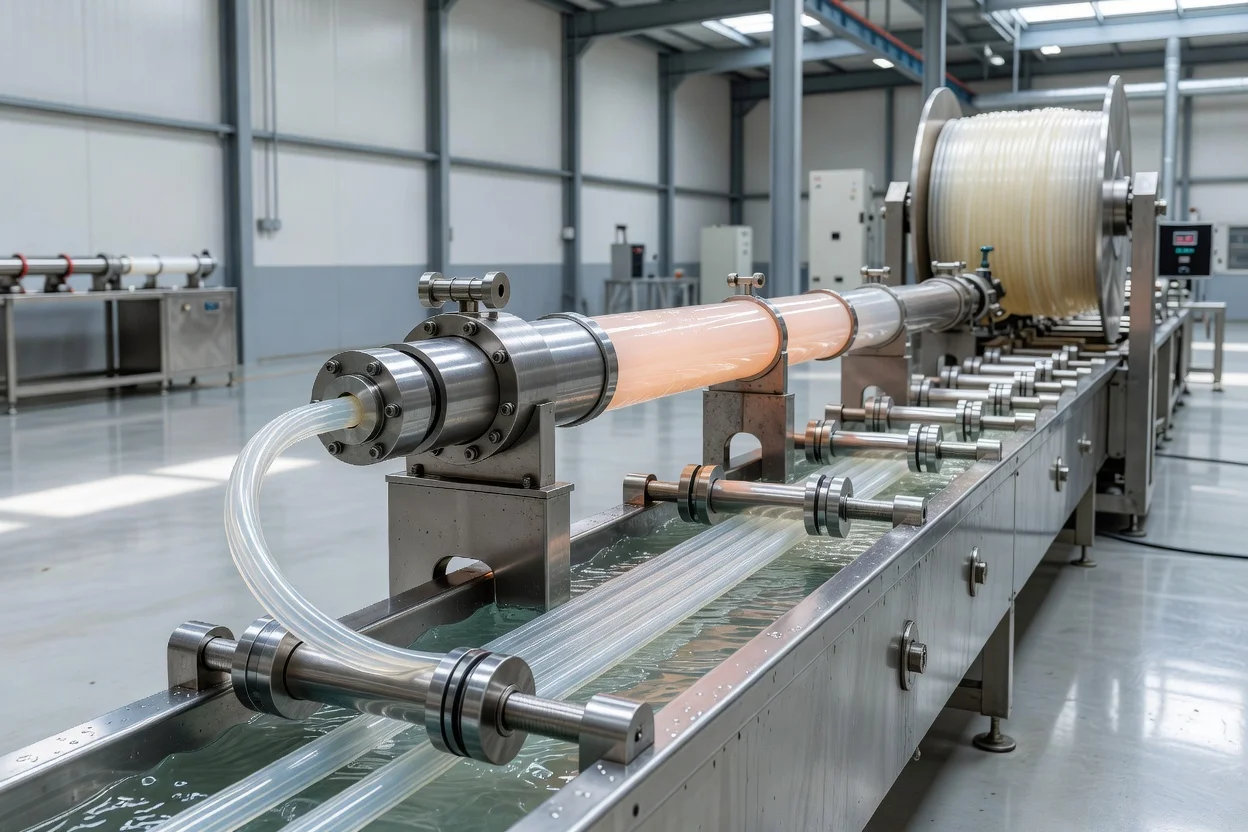
- Processing methods: extrusion, injection molding, blow molding, film formation, and coating or lining operations.
Because FEP is melt-processable, it can be processed on conventional thermoplastic equipment at elevated temperatures, which distinguishes it from PTFE and supports broad industrial conversion. That processing advantage is one of the main reasons FEP maintains relevance despite the higher cost of fluoropolymer feedstocks.
Applications and End-Use Markets
FEP serves markets that need a rare combination of chemical inertness, electrical performance, and processability. Its major end uses are closely linked to its grade and form.
| End-use sector | Usual FEP form or grade | Why FEP is used |
|---|---|---|
| Wire and cable | Extrusion grade resin | Electrical insulation, thermal stability, low flammability, low dielectric loss |
| Chemical processing | Tubing, sheet, liners, valves, fittings | Corrosion resistance and low permeability |
| Medical and laboratory | Tubing, catheter components, fluid paths | Cleanliness, chemical inertness, clarity in some grades |
| Aerospace and composites | Film and release film | Release performance and heat resistance during curing |
| Electronics and semiconductor-related systems | High-purity tubing, coatings, insulation | Purity, dielectric properties, and chemical resistance |
| Solar and UV systems | Film and transparent glazing | UV transmission and weatherability |
| Food contact and packaging-related uses | Film, shrink tubing, process components | Clean processing and chemical neutrality where permitted |
Typical application details
- Wire and cable: FEP is widely used for plenum cable, aircraft wire, data cables, and high-temperature insulation because it combines flexibility with excellent dielectric behavior.
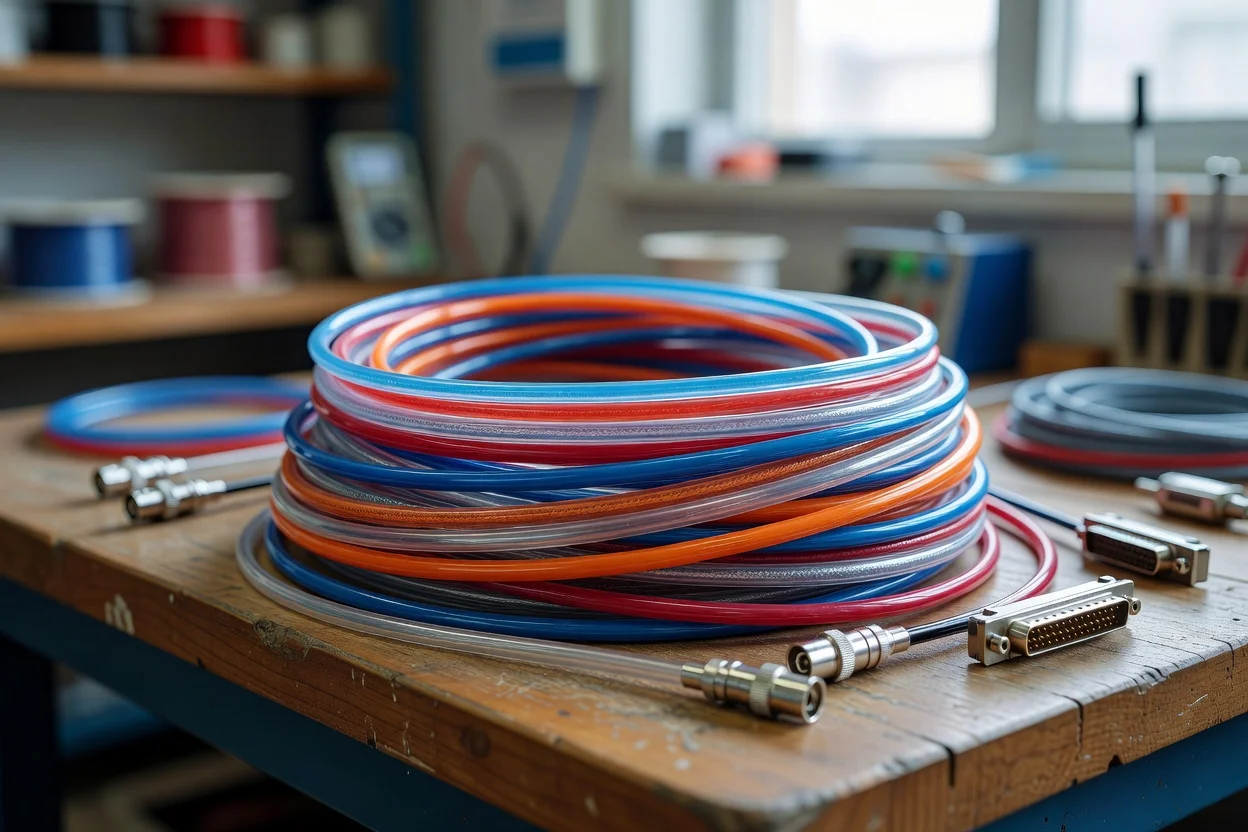
- Chemical handling: It is used in tubing, tank linings, and protective layers for corrosive fluids, where PTFE-class inertness and weldability are valuable.
- Medical tubing and devices: Transparent grades support catheter tubing, diagnostic lines, and sterile fluid handling.
- Films and release media: FEP film is used in composite curing and as a release layer in demanding laminate processing.
- Solar and UV applications: Its optical clarity and UV transmission support collector glazing and UV systems.
A comparatively poor-fit use is rigid load-bearing structural parts, because FEP’s creep and relatively modest strength make it less suitable than more structural engineering plastics for sustained mechanical loads.
Environmental and Sustainability Aspects
FEP is durable, chemically inert, and long-lived in service, which can reduce replacement frequency in harsh environments. That durability is an environmental benefit in applications where premature failure would create waste, downtime, or contamination risk.
At the same time, FEP sits within the wider fluoropolymer sustainability debate. Recycling is technically challenging because of the material’s chemical stability, collection complexity, contamination, and the limited economics of separating high-value fluoropolymers from mixed waste streams. End-of-life options therefore remain constrained relative to more common thermoplastics.
Main sustainability themes
- Recyclability: mechanically possible in some controlled industrial loops, but limited by sorting and purity requirements.
- Bio-based alternatives: true bio-based replacements are not straightforward because the performance envelope comes from the fluorinated backbone, not merely the feedstock origin.
- Carbon footprint: production is energy- and fluorine-intensive, so lifecycle emissions are typically higher than those of commodity polyolefins.
- Use-phase efficiency: long service life and low failure rates can partially offset embodied impacts in critical applications.
Regulatory and market pressure around fluorinated chemistries is encouraging more scrutiny of emissions control, monomer management, and product stewardship, especially in high-purity and consumer-facing uses. Innovation is therefore focused on reducing process losses, improving collection, and designing for extended service life rather than assuming broad drop-in replacement.
Economic and Global Market Impact
FEP is a specialty polymer with a value proposition based on performance rather than volume. As a result, its market is smaller than that of commodity plastics but strategically important in sectors where failure is expensive or dangerous.
The highest demand typically comes from electrical, chemical-processing, medical, and high-purity industrial users. These sectors favor resin suppliers that can provide consistent melt flow, tight impurity control, and application-specific grades.
Industry leadership
Publicly visible commercial supply is associated with large fluoropolymer producers and specialty resin brands, including Chemours through Teflon-branded FEP resins. Technical product literature and distributors also show participation by specialty fluoropolymer suppliers that serve regional extrusion and fabrication markets.
Because FEP is a specialty material, global competitiveness depends on:
- reliable access to fluorine-based feedstocks,
- regulatory compliance,
- conversion know-how,
- and the ability to serve high-purity, high-reliability customers.
Current Challenges and Innovations
The most important challenges are balancing performance with processing cost, controlling fluoropolymer emissions, and maintaining market access under tightening chemical regulation. In addition, FEP’s low adhesion and creep behavior can complicate bonding, sealing, and long-term mechanical design.
Innovation directions
- Lower-defect processing: improved reactor control and extrusion consistency for thin-wall wire and tubing.
- Surface modification: plasma or chemical activation to improve adhesion and printability.
- Composite and multilayer systems: combining FEP with structural backings to offset creep while preserving chemical resistance.
- High-purity grades: tighter control for semiconductor, medical, and analytical applications.
- Recycling and recovery: closed-loop industrial scrap recovery and take-back systems where material purity is high enough to justify reclamation.
Recent research also continues to examine structure-property relationships, including how branching and comonomer distribution influence rheology, foaming, and dielectric behavior. That work matters because small compositional changes can materially affect processing windows and final performance.
Future Outlook
FEP is likely to remain a niche but indispensable fluoropolymer where high reliability outweighs cost and where no simpler polymer matches its combined resistance and processability. Near-term growth is likely to be strongest in high-purity fluid handling, electronics, and specialty wire and cable, particularly where miniaturization and thermal management increase performance requirements.
Longer term, the material’s position will depend on three forces: regulatory pressure on fluorinated chemistries, continued demand for durable high-performance materials, and the development of better end-of-life pathways. The most plausible future is not replacement across the board, but more selective use in applications where its unique property balance is truly irreplaceable.
Summary
FEP is a melt-processable fluoropolymer that bridges the gap between PTFE-like chemical inertness and practical thermoplastic fabrication. Its value lies in high-performance insulation, corrosion resistance, and clarity in specialized applications, even though it remains limited by creep, low surface energy, and sustainability challenges common to the fluoropolymer family.
If the user wants, a second version can be produced in a more concise encyclopedia format or in a market-focused format with grade-by-grade application detail.
References
- •
Fluorinated ethylene propylene - FEP. (2001, May 9). AZoM. https://www.azom.com/article.aspx?ArticleID=414Link
- •
Fluorinated ethylene propylene (FEP) [PDF]. (n.d.). Eagle Plastics. https://eagle-plastics.com/wp-content/uploads/2019/10/FEP.pdfLink
- •
Fluorinated ethylene propylene copolymer: Advanced material. (n.d.). Eureka PatSnap. https://eureka.patsnap.com/materials/fep-copolymer-propertiesLink
- •
Perfluorinated polymers, perfluorinated ethylene–propylene copolymers. (n.d.). Wiley Online Library. https://onlinelibrary.wiley.com/doi/abs/10.1002/0471440264.pst417.pub2Link
- •
Virgin FEP - Fluoropolymers. (2021, November 22). Alfa Chemistry. https://fluoropolymers.alfa-chemistry.com/products/virgin-fep.htmlLink
- •
New focus on FEP [PDF]. (n.d.). Zeus. https://www.zeusinc.com/wp-content/uploads/2018/07/RESINATE-SE-NewFocusOnFEP-Zeus-1.pdfLink
- •
ERIKS - FEP description [PDF]. (n.d.). Eriks Group. https://static.eriksgroup.com/nl-be/datasheets/fluorkunststoffen/ptfe/eriks%20-%20fep%20description.pdfLink
- •
FEP: Tetrafluoroethylene/hexafluoropropylene copolymer. (n.d.). Netzsch Polymers. https://polymers.netzsch.com/Materials/Details/36Link
- •
FEP fluoropolymer: Thermal properties and industrial applications. (2026, May 21). Linseis. https://www.linseis.com/en/wiki/fep-fluoropolymer-thermal-properties-and-industrial-applications/Link
- •
Perfluoroethylene propylene copolymer. (2021, November 23). ChemicalBook. https://amp.chemicalbook.com/ProductChemicalPropertiesCB5855254_EN.htmLink
- •
Tetrafluorethylen-hexafluorpropylen-copolymer. (2017, March 21). Wikipedia. https://de.wikipedia.org/wiki/PerfluorethylenpropylenLink
- •
Fluorinated ethylene propylene: Comprehensive analysis. (n.d.). Eureka PatSnap. https://eureka.patsnap.com/materials/fep-molecular-engineeringLink
- •
Fluorinated ethylene propylene chemical resistant. (n.d.). Eureka PatSnap. https://eureka.patsnap.com/materials/fep-chemical-resistantLink
- •
Fluorinated ethylene-propylene copolymer FEP for short. (n.d.). b.safe. https://www.bsafe.de/en/Technical-Information/Information-about-materials/b.safe-Materials/FEP-Tetrafluorethylene-Perfluoropropylene/Link
- •
FEP – Eigenschaften und Verwendung des Fluorkunststoffs. (n.d.). RCT Online. https://www.rct-online.de/de/newsletter/fep-eigenschaften-und-verwendung-des-fluorkunststoffsLink
- •
Perfluorinated polymers. (n.d.). Wiley Online Library. https://onlinelibrary.wiley.com/doi/10.1002/0471238961.2005201807011407.a02.pub3Link
- •
What is FEP? Properties and applications. (n.d.). Polyfluor. https://www.polyfluor.nl/en/what-is-fep/Link
- •
2008-0826_TDS_Ftorplast_FEP_granules.doc [PDF]. (n.d.). HaloPolymer. https://halopolymer-usa.com/wp-content/uploads/b917d210e1d7bb5d5f004caf1ada74b5.pdfLink
- •
FEP (fluorinated ethylene propylene). (n.d.). HaloPolymer. http://halopolymer-usa.com/products/fep-fluorinated-ethylene-propylene/Link
- •
Fluorinated ethylene propylene fluoropolymer. (n.d.). Eureka PatSnap. https://eureka.patsnap.com/materials/fep-fluoropolymer-structureLink
- •
Fluoropolymers (PTFE, FEP, PFA). (2000). BYU Idaho. https://books.byui.edu/plastics_materials_a/fluoropolymers_ptfe_Link
- •
The synthesis and characterisation of fluorinated ethylene propylene [PDF]. (n.d.). University of Pretoria Repository. https://repository.up.ac.za/server/api/core/bitstreams/6c4cd0a6-fa9a-4b29-83b8-eca0bd251bd4/contentLink
- •
FEP polymer: Properties, uses & cost guide. (2026, May 30). Propprose. https://propprose.com/materials/fep-fluorinated-ethylene-propylene/Link
- •
Fluorinated ethylene propylene - An overview. (n.d.). ScienceDirect. https://www.sciencedirect.com/topics/engineering/fluorinated-ethylene-propyleneLink
- •
Fluorinated ethylene propylene material: Comprehensive analysis. (n.d.). Eureka PatSnap. https://eureka.patsnap.com/materials/fep-material-analysisLink
- •
Fluorinated ethylene propylene. (2005, December 1). Wikipedia. https://en.wikipedia.org/wiki/Fluorinated_ethylene_propyleneLink
- •
FEP tubing and UV spirals in the context of application. (n.d.). Gremco. https://www.gremco.de/en/magazin/application-fep-tubing-uv-spirals/Link
- •
Fluorinated ethylene propylene sheet: Comprehensive analysis. (2026, April 23). Eureka PatSnap. https://eureka.patsnap.com/materials/fep-sheet-propertiesLink
- •
FEP fluorinated ethylene propylene. (2024, February 7). Holscot. https://holscot.com/glossary/fep-is-a-type-of-fluoropolymer-that-shares-similarities-with-other-fluoropolymers-like-pfa/Link
- •
PTFE vs. FEP: Key differences and applications of two fluoroplastics. (2025, July 12). Quanda Plastic. https://www.quandaplastic.com/ptfe-vs-fep-key-differences-and-applications-of-two-fluoroplastics/Link
- •
Fluorinated ethylene propylene (FEP) in chemical processing. (n.d.). Eureka PatSnap. https://eureka.patsnap.com/materials/fep-chemical-processingLink
- •
FEP plastic material properties. (2025, February 3). Curbell Plastics. https://www.curbellplastics.com/materials/plastics/fep/Link
- •
Tetrafluoroethylene propylene copolymer corrosion resistant. (n.d.). Eureka PatSnap. https://eureka.patsnap.com/materials/fep-corrosion-resistantLink
- •
The synthesis and characterisation of fluorinated ethylene. (2015, April 14). University of Pretoria Repository. https://repository.up.ac.za/handle/2263/46241Link
- •
FEP resin fluoropolymer resin by XiFlon. (2025, August 11). XiFlon. https://xiflon.com/fep-resin-3/Link
- •
What is FEP material? (2024, December 23). Chuangbo. https://www.cbextrusion.com/what-is-fep-material/Link
- •
Fluorinated ethylene propylene solvent resistant properties. (2026, April 23). Eureka PatSnap. https://eureka.patsnap.com/materials/fep-solvent-resistantLink
- •
Tetrafluoroethylene/hexafluoropropylene copolymers including. (2016, February 12). Google Patents. https://patents.google.com/patent/US20180030184A1/enLink
- •
FEP material: Properties, grades & applications. (2026, August 26). Pexco. https://www.pexco.com/resources/fep-properties-and-applications/Link
- •
Fluorinated ethylene propylene film: Comprehensive analysis. (n.d.). Eureka PatSnap. https://eureka.patsnap.com/materials/fep-film-properties-applicationsLink
- •
Teflon™ FEP resins. (n.d.). Teflon. https://www.teflon.com/en/products/resins/fep-resinsLink
- •
High-performance FEP terpolymer molecular structure. (2025, October 13). ScienceDirect. https://www.sciencedirect.com/science/article/abs/pii/S003238612500881XLink
- •
(FEP) Tetrafluoroethylene / perfluoropropylene c.... (2026, August 31). China Plas Online. https://www.chinaplasonline.com/eMarketplace/allexhibitors/eng?SProds=383&Apps=15&SearchType=all&SearchBy=Prod&page=1&Sort=0Link
- •
Overview of materials for fluorinated ethylene propylene (FEP. (n.d.). MatWeb. https://www.matweb.com/search/datasheet.aspx?matguid=c782af4519d949349d7c771ff6953314&n=1Link