
Introduction
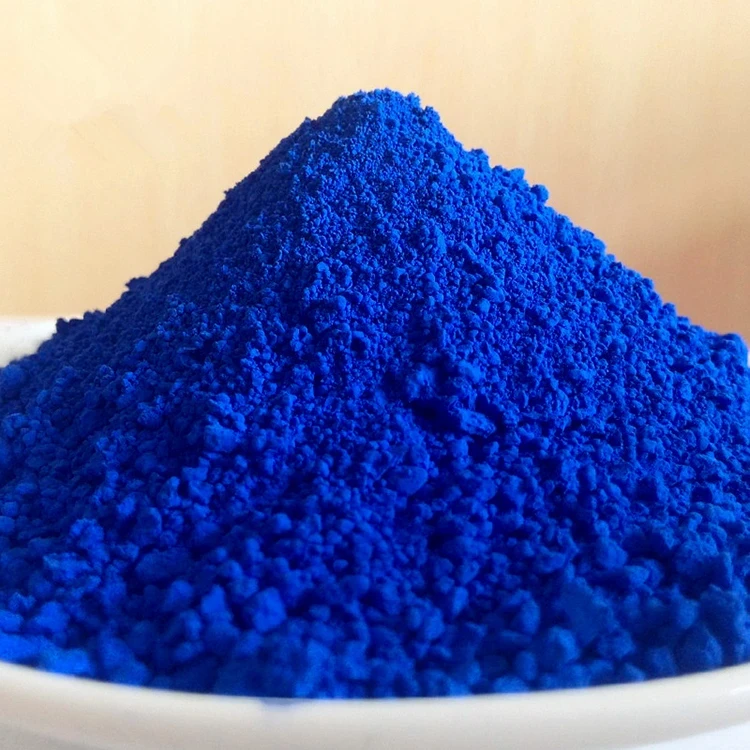
Phthalocyanine pigments are a major family of synthetic organic pigments whose commercial importance rests on their intense blue and green shades, high color strength, and exceptional resistance to light, heat, solvents, acids, and alkalis. In plastics, inks, coatings, and rubber goods, they are among the most widely used organic colorants, with copper phthalocyanine pigments remaining the dominant blue organic pigment and chlorinated or other modified phthalocyanines serving as important green variants.
The family is centered on a large, conjugated macrocycle related to porphyrins, and its industrial success began in the 1930s after the commercial introduction of phthalocyanine blue. Over time, producers developed multiple crystal forms, halogenated derivatives, and pigmentary after-treatments to improve dispersibility, phase stability, tinting strength, and compatibility with demanding processing conditions.
Within the plastics value chain, phthalocyanine pigments are especially important because they provide durable coloration with low migration and high thermal robustness, which is valuable in masterbatches, engineering plastics, packaging, cable compounds, and weather-resistant outdoor goods. At the same time, sustainability discussions increasingly focus on solvent use in production, energy intensity, and the need to align high-performance organic pigments with circular-economy design and safer formulations.
History and Development
Phthalocyanines were identified in the early twentieth century and commercialized in the 1930s, when industrial producers recognized the value of the new blue pigment class. Their rise was rapid because they combined vivid color with a level of fastness that was unusual for organic pigments at the time.
A key milestone was the industrial development of copper phthalocyanine, which became the benchmark blue pigment for many applications. Subsequent development expanded the family into green pigments and specialty derivatives by altering the central metal, peripheral substitution, and crystal form.
Pigment technology later shifted from simple synthesis toward particle engineering. Industrial practice increasingly emphasized milling, solvent treatment, salt grinding, and post-treatment steps to produce the required pigmentary form and to suppress flocculation or unwanted phase conversion in end use. This evolution was especially important for plastics, where dispersion quality often determines final shade, gloss, transparency, and processing stability.
Chemical Structure and Key Properties
Phthalocyanines are macrocyclic, highly conjugated compounds built from four isoindole-like units linked by nitrogen atoms, with a central cavity that can host metal ions. The conjugated ring system is responsible for their strong visible absorption, while the metal center and peripheral substituents control hue, crystal habit, and chemical behavior.
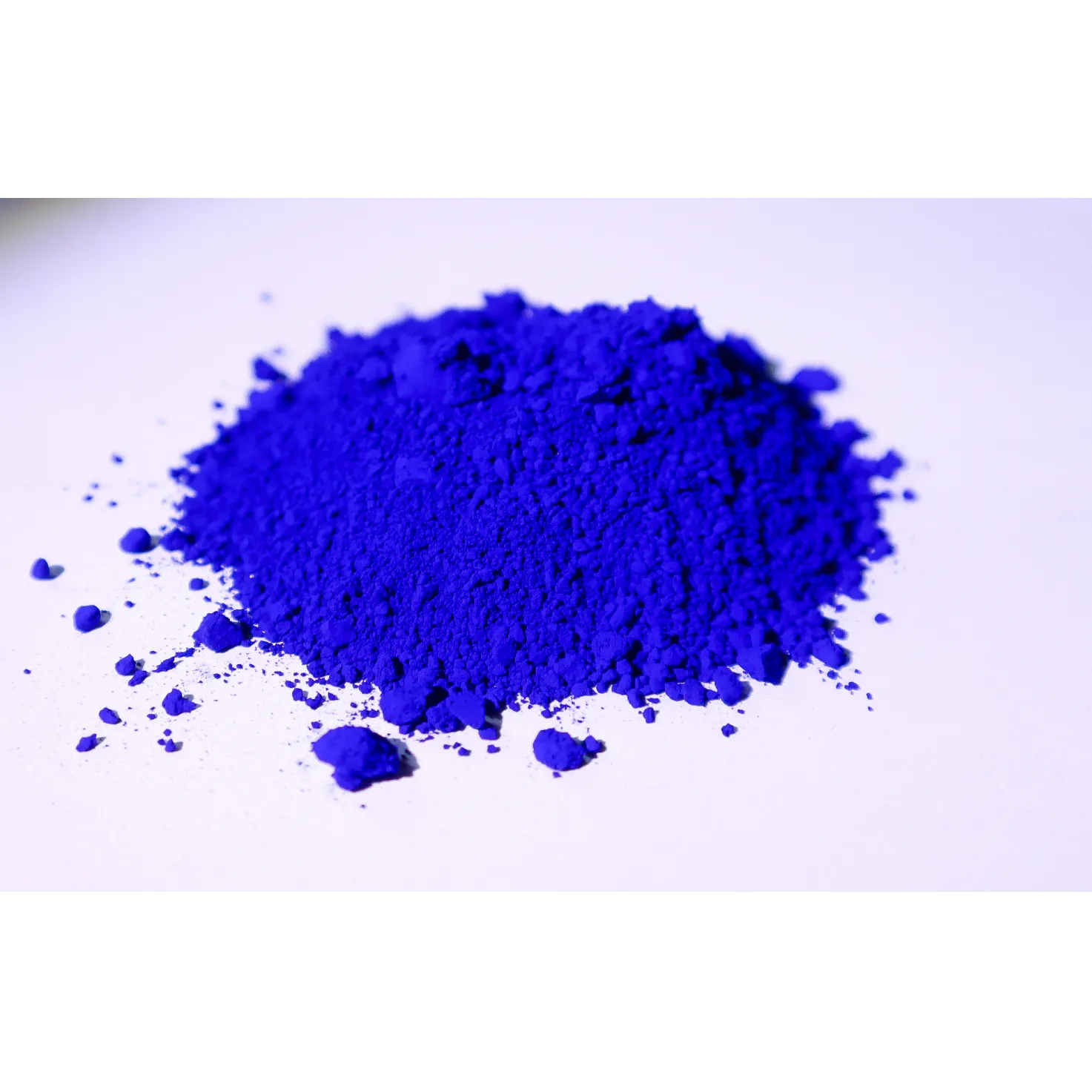
The most important pigmentary forms are copper phthalocyanines, commonly associated with blue shades, and chlorinated copper phthalocyanines, which produce green shades. The α and β crystal forms of copper phthalocyanine are especially important in pigments, and the polymorphic form can affect shade, transparency, and stability.
Key properties
- High tinting strength: small additions provide strong coloration.
- Excellent lightfastness: suitable for long-life outdoor and indoor applications.
- High thermal stability: reported to remain stable in demanding thermal conditions, with some sources noting stability above 400 °C under specific conditions.
- Low solubility and low migration: advantageous in plastics and printed articles where bleed resistance matters.
- Strong blue-to-green chromatic range: industrially valuable because these hues are difficult to replace with equal durability.
Practical limits and workarounds
- Poor dispersibility in some polymers → strong crystal cohesion and hydrophobic surfaces → use surface-treated pigment grades, masterbatches, or high-shear compounding to improve wetting and dispersion.
- Shade shift or flocculation during processing → crystal form sensitivity and aggregation → select the correct polymorph and apply post-treatment to stabilize particle surface.
- Transparency can be limited at higher loadings → strong crystallinity and high refractive contrast → reduce dosage, use finer particle-size grades, or combine with transparent base resins where clarity matters.
Production Processes and Raw Feedstocks
Industrial manufacture of copper phthalocyanine typically uses commodity aromatic feedstocks such as phthalic anhydride, urea, ammonia, and a copper source, with catalytic systems often involving ammonium molybdate or related catalysts. Some routes also use phthalonitrile or related precursors.
A simplified manufacturing sequence is:
- Cyclization to form the phthalocyanine macrocycle.
- Metallation, usually with copper for the most important blue pigment.
- Isolation of crude pigment.
- Conversion to the desired pigmentary form through milling, acid treatment, solvent treatment, or other post-processing.
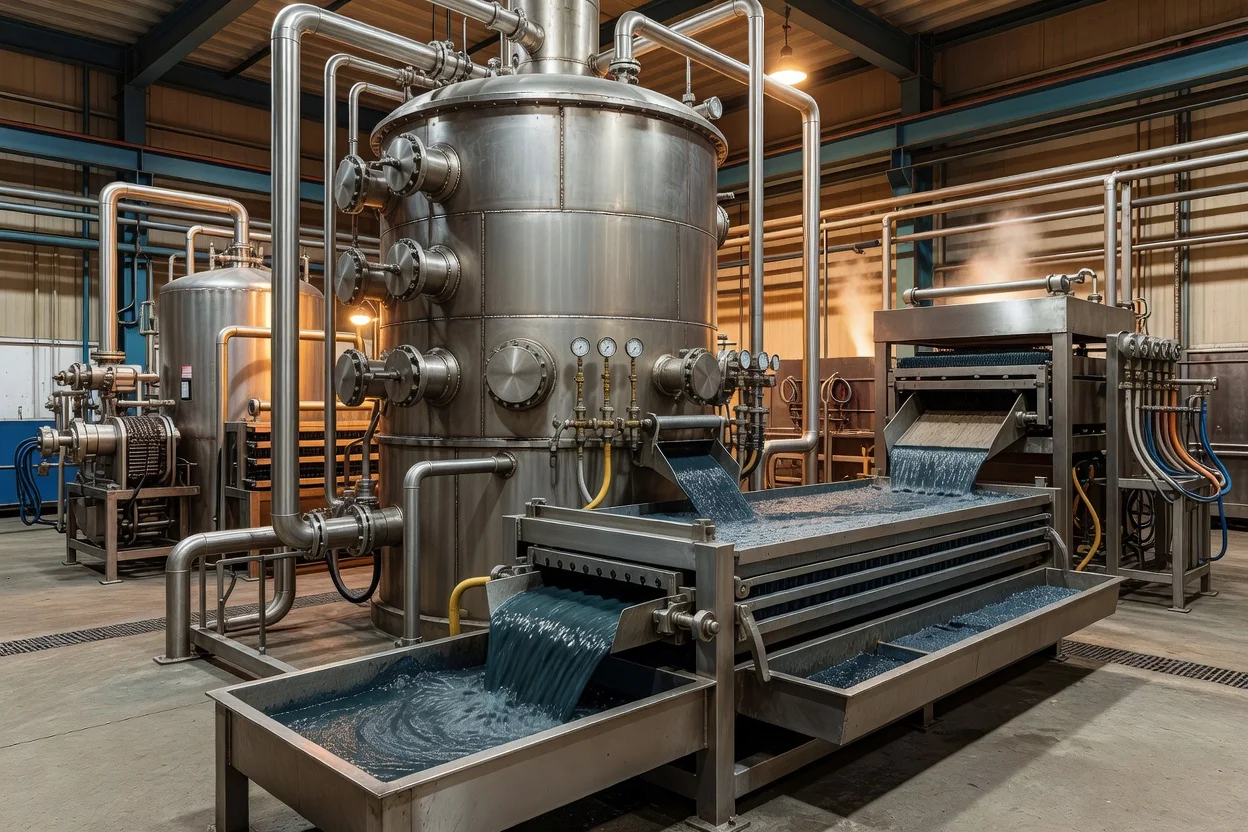
After-treatment is not a minor finishing step; it is central to performance. It controls particle size, crystal habit, phase stability, and dispersion behavior, which directly influence color strength and robustness in plastics and inks. For specialty grades, peripheral chlorination or other substitution can shift the pigment toward green shades or alter compatibility with specific processing systems.
Applications and End-Use Markets
Phthalocyanine pigments are used across many sectors, but their value is strongest where durable blue or green coloration is required.
Major plastic-related uses
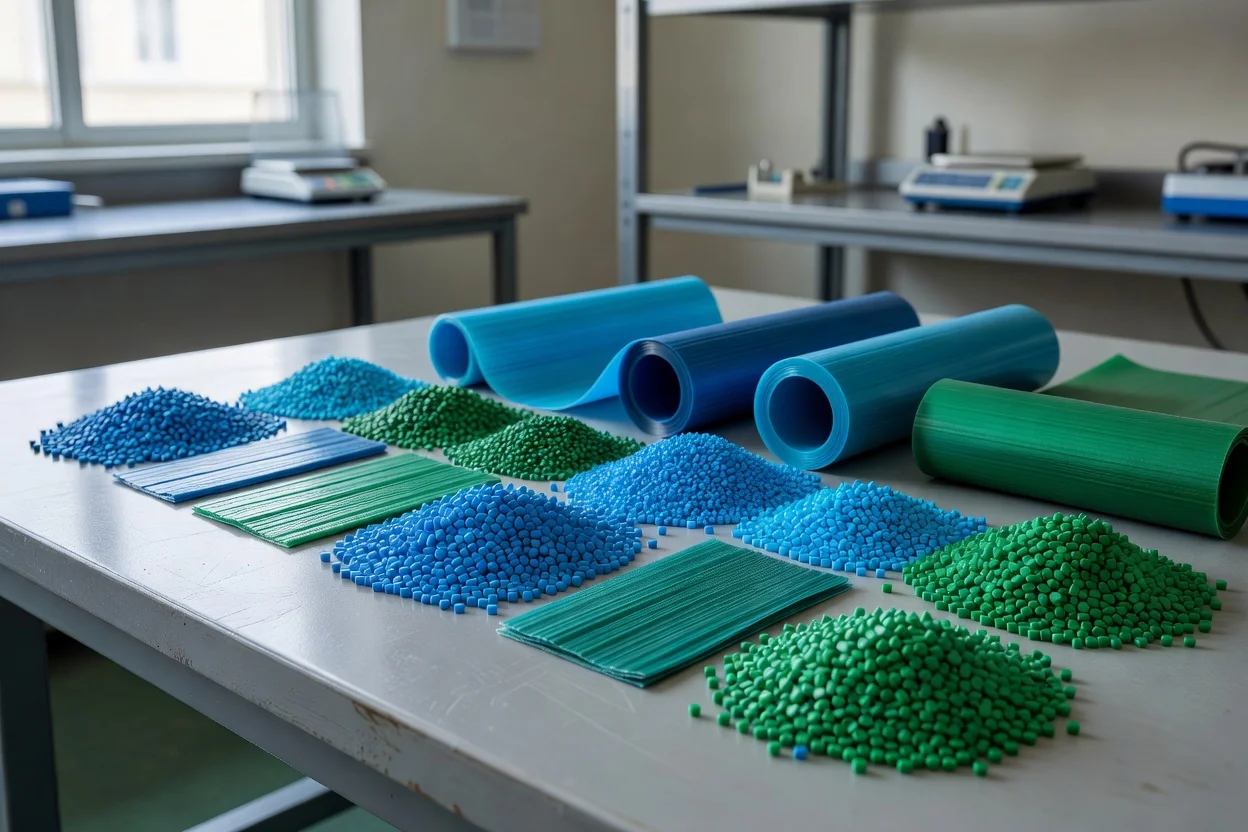
- Packaging films and sheets: used in masterbatches for strong, stable blue and green coloration, often in opaque or semi-opaque structures.
- Bottles and rigid packaging: common in colored closures, containers, and label-sensitive applications where tint consistency matters.
- Pipe and conduit: used where weatherability and long-term color retention are important.
- Cable compounds: used for colored insulation and sheathing because of heat resistance and low migration.
- Agricultural films: used when UV stability and outdoor durability are needed.
- Geomembranes: used in durable outdoor linings where long service life is essential.
- Rotomolding compounds: used in tanks, bins, and large hollow articles that need stable color under prolonged heat exposure.
- UHMWPE wear and medical applications: used selectively where low migration and chemical resistance are valued, although color use is more limited than in general plastics.
- PEX and crosslinked systems: used in colored grades that must withstand elevated processing temperatures.
- One poor-fit use: high-clarity transparent plastics, because the pigment’s strong chromatic power and crystalline nature often make it unsuitable when optical neutrality or crystal-clear transparency is required.
Non-plastic sectors
They are also major pigments in paints, printing inks, textiles, rubber goods, enamels, and linoleum. In printing, their strong, clean cyan-to-blue hues and archival stability are especially important.
Usual grade/process relationships
| End use | Typical grade emphasis | Processing need |
|---|---|---|
| Films and sheets | fine, well-dispersed blue or green grades | masterbatch dilution, good deagglomeration |
| Bottles and rigid packaging | low-migration, stable shade grades | thermal stability during molding |
| Pipe and cable | weatherable, heat-resistant grades | color consistency under extrusion |
| Agricultural films | lightfast outdoor grades | UV durability and dispersion |
| Rotomolding | heat-stable grades | resistance to long heating cycles |
| Inks and coatings | high-strength, transparent-to-semitransparent grades | controlled rheology and gloss |
| Engineering plastics | post-treated pigment grades | compatibility with high processing temperatures |
Environmental and Sustainability Aspects
Phthalocyanine pigments are often favored in durability terms because they reduce the need for frequent recoloring or replacement of finished goods, and their low migration can support long service life in plastics and coatings. Their strong lightfastness and thermal resistance can therefore contribute indirectly to material efficiency.
At the same time, their production is not impact-free. Conventional manufacture relies on petrochemical or coal-derived aromatic intermediates, and post-treatment may involve energy use and solvent handling. Sustainability pressure therefore falls on cleaner synthesis routes, solvent recovery, energy efficiency, and safer downstream formulation.
Recyclability considerations
- Their low migration is useful in mechanically recycled plastics because color tends to remain stable over service life.
- However, strong coloration can complicate sorting and color recovery in mixed waste streams.
- In recycled content applications, pigment selection must balance appearance retention with contamination tolerance.
Bio-based alternatives
Bio-based or lower-carbon feedstocks may eventually support phthalocyanine precursor chemistry, but the pigment family itself is still predominantly made from conventional industrial aromatic chemistry. In practice, sustainability gains are more often achieved through process optimization, solvent recovery, and higher-durability formulations than through full substitution of the pigment class.
Carbon and circularity
The main climate lever is not the pigment’s use phase, but the upstream synthesis and finishing chain. Longer-lived products, lower rework rates, and fewer replacement cycles can offset part of the embodied impact, especially in construction, infrastructure, and outdoor applications.
Economic and Global Market Impact
Phthalocyanine pigments occupy a strategically important position because they supply the highest-volume durable blues and greens in industrial colorants. Their dominance is strongest in copper phthalocyanine blue and chlorinated copper phthalocyanine green, which are hard to replace on a performance-to-cost basis.
The market is shaped by:
- demand from coatings, inks, plastics, and construction materials;
- the need for consistent crystal form and particle engineering;
- pricing pressure from commodity pigment competition;
- environmental compliance costs in manufacturing and post-treatment.
Leading producers are concentrated in major chemical manufacturing regions, particularly Asia, Europe, and North America, with Chinese producers playing an increasingly visible role in global supply chains according to recent industry and company disclosures. The competitive advantage increasingly lies not only in synthesis capacity but also in dispersion technology, quality consistency, and regulatory compliance.
Current Challenges and Innovations
Main challenges
- Crystal-form control: polymorphism can alter shade and application performance.
- Dispersion in modern polymers: high-performance plastics often demand tighter particle-size control.
- Regulatory and customer requirements: low heavy-metal contamination, low migration, and traceability are increasingly important.
- Sustainability pressure: solvent recovery, waste reduction, and lower-energy processing remain priorities.
Notable innovations
- Micro- and nano-engineered pigment grades for improved transparency, strength, and dispersibility.
- Surface-treated pigments for better polymer compatibility and reduced flocculation.
- Functional phthalocyanines for niche roles beyond coloration, including photoconductive and catalytic uses.
- Specialty applications in color filters and electronics, where precise optical behavior is required.
A useful formulation example is a phthalocyanine masterbatch in polyolefins at low single-digit percent pigment loading in the masterbatch concentrate, which is then let down to very low finished-use levels; the mechanism is physical dispersion rather than chemical reaction, and the goal is uniform particle separation to maximize color strength and minimize specks.
Future Outlook
Phthalocyanine pigments are likely to remain core colorants wherever durable blue and green shades are required, especially in plastics, inks, and outdoor materials. Their future will depend on the ability of producers to combine high chromatic performance with lower-impact manufacturing and better compatibility with circular materials systems.
The most important development directions are:
- cleaner, more efficient synthesis and post-treatment;
- improved dispersion technology for engineering plastics and recycled polymers;
- specialty grades for high-temperature and low-migration applications;
- further functionalization for optics, electronics, and antimicrobial or antiviral formulations, where technically justified.
Their long-term commercial strength comes from a rare combination of vivid color, durability, and processing utility, which makes them difficult to displace even as the plastics industry shifts toward more circular and lower-emission material systems.
Summary
Phthalocyanine pigments are one of the most important families of organic pigments in the plastics industry and beyond. Their commercial success rests on intense blue and green color, high fastness, thermal robustness, and low migration, while their main technical challenges lie in dispersion, crystal-form control, and sustainable manufacturing.
For plastics, they remain especially valuable in masterbatches, films, pipes, cables, packaging, and outdoor products, where long-term color retention and processing stability are essential.
References
- •
酞菁_化工词典. (2023, January 1). https://www.chemicalbook.com/ProductDict_90.htmLink
- •
有机颜料. (n.d.). https://baike.baidu.com/item/%E6%9C%89%E6%9C%BA%E9%A2%9C%E6%96%99/10677771Link
- •
Phthalocyanine and quinacridone pigments: Their history, properties and use. (2005, June 1). Studies in Conservation. http://www.tandfonline.com/doi/full/10.1179/sic.2005.50.Supplement-1.19Link
- •
The thermal properties and the flammability of pigmented elastomeric materials: Part I. Phthalocyanine pigments. (n.d.). Journal of Thermal Analysis and Calorimetry. https://link.springer.com/article/10.1007/s10973-014-3739-xLink
- •
Material Safety Data Sheet. (n.d.). https://datasheets.scbt.com/sc-215718.pdfLink
- •
Phthalocyanine pigments: General principles. (2021, June 1). https://ui.adsabs.harvard.edu/abs/2021PhSRv...6..194C/abstractLink
- •
US2867539A - Phthalocyanine pigments. (n.d.). https://patents.google.com/patent/US2867539A/enLink
- •
1. (n.d.). https://digital.csic.es/bitstream/10261/181018/1/Manuscript%20Spectroch%20A.pdfLink
- •
Phthalocyanine dye - CAMEO (mfa.org). (2005, January 1). https://cameo.mfa.org/wiki/Phthalocyanine_dyeLink
- •
酞青| 574-93-6. (2025, December 22). https://www.chemicalbook.com/ChemicalProductProperty_CN_CB3258727.htmLink
- •
Phthalocyanine | 574-93-6 - ChemicalBook. (2026, July 16). https://www.chemicalbook.com/ChemicalProductProperty_EN_CB3258727.htmLink
- •
Phthalocyanine pigments. (1996, January 10). https://patents.google.com/patent/US2713005A/enLink
- •
Phthalocyanine | chemical compound. (2025, September 8). Britannica. https://www.britannica.com/science/phthalocyanineLink
- •
CHLORINATED COPPER PHTHALOCYANINE PIGMENTS. (2016, June 2). https://patents.justia.com/patent/20180215921Link
- •
新型的铜酞菁颜料及铜酞菁微粒的制造方法. (2009, September 29). https://patents.google.com/patent/CN102165020B/zhLink
- •
Phthalocyanine blue pigments. (n.d.). https://ui.adsabs.harvard.edu/abs/2021PhSRv...6..192C/abstractLink
- •
读取中,请稍候. (n.d.). https://money.finance.sina.com.cn/corp/view/vCB_AllBulletinDetail.php?stockid=301036&id=12528478Link
- •
酞菁蓝. (n.d.). https://baike.baidu.com/item/%E9%85%9E%E8%8F%81%E8%93%9D/3956906Link
- •
Pigment Colour Index: Blue Pigments. (2021, October 15). https://www.jacksonsart.com/blog/2021/10/15/pigment-colour-index-blue-pigments/Link
- •
[PDF] NASA Technical Memorandum. (n.d.). https://ntrs.nasa.gov/api/citations/19950005073/downloads/19950005073.pdf?attachment=trueLink
- •
CN107207872B - 酞菁颜料组合物、着色组合物及彩色滤光片. (2016, February 2). https://patents.google.com/patent/CN107207872B/zhLink
- •
Phthalocyanine pigments and dyes. (n.d.). https://link.springer.com/chapter/10.1007/978-1-4615-6663-2_15Link
- •
酞菁颜料制剂. (2003, December 4). https://patents.google.com/patent/CN1326951C/zhLink
- •
具有抗菌作用或抗病毒作用的酞菁颜料. (2022, August 18). https://patents.google.com/patent/CN117715987A/zhLink
- •
Composés de phtalocyanine. (2003, February 7). https://patents.google.com/patent/EP1335000A2/frLink
- •
双乐颜料股份有限公司2025 年半年度报告全文. (n.d.). http://notice.10jqka.com.cn/api/pdf/6a78b114bfc5c4bd.pdfLink
- •
CN106661343A - 着色组合物、彩色滤光器、图案形成方法. (2015, July 23). https://patents.google.com/patent/CN106661343A/zhLink
- •
The Phthalocyanines A New Class of Synthetic Pigments and Dyes. (2002, May 1). Industrial & Engineering Chemistry. https://pubs.acs.org/doi/10.1021/ie50355a012Link
- •
CN101405349A - 使用该酞菁结晶的电子照相感光体. (2007, March 20). https://patents.google.com/patent/CN101405349A/zhLink
- •
[PDF] 双乐颜料股份有限公司与浙商证券股份有限公司关于《关于双乐颜料.... (n.d.). http://xinpi.zqrb.cn/pdf/CYB/301036/2025/0818/520426b345322f283fb9b31a8b125512.pdfLink
- •
信凯科技:首次公开发行股票并在主板上市招股说明书新浪财经. (n.d.). https://vip.stock.finance.sina.com.cn/corp/view/vCB_AllBulletinDetail.php?stockid=&id=10849059Link
- •
(10)授权公告号 CN 102081305 B. (n.d.). http://static.tianyancha.com/patent/contentPDF/669a1c1d2c7da000395625397383c797.pdfLink
- •
(19)中华人民共和国国家知识产权局. (n.d.). https://patentimages.storage.googleapis.com/e3/d6/6b/6be91cd1437245/CN113924527A.pdfLink
- •
关于浙江信凯科技集团股份有限公司首次. (n.d.). http://file.finance.sina.com.cn/211.154.219.97:9494/MRGG/CNSESZ_STOCK/2023/2023-6/2023-06-15/9293429.PDFLink