
المقدمة
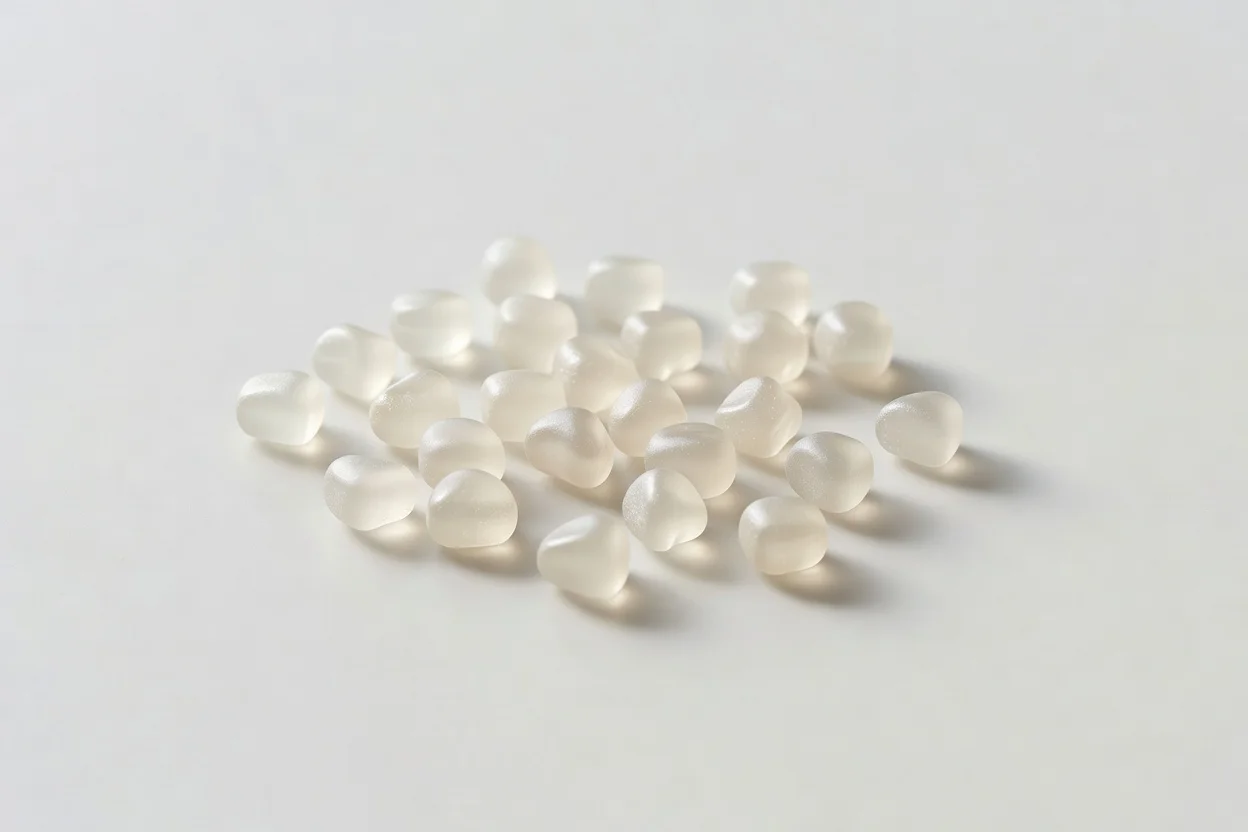
اللدائن الحيوية هي عائلة واسعة من المواد البلاستيكية التي تكون مشتقة من مصادر حيوية، قابلة للتحلل الحيوي، أو كليهما، وفقًا للتعريف المستخدم من قبل المصدر أو المعيار. في الممارسة الصناعية، يشمل المصطلح كل شيء من الراتنجات "القابلة للاستبدال" المتجددة مثل PE الحيوي، وPP الحيوي، وPET الحيوي إلى المواد القابلة للتحلل الحيوي مثل PLA، وPHA، وPBS، ومزائج النشا، مما يعني أن اللدائن الحيوية تُفهم بشكل أفضل كفئة محددة بـأصل المادة الخام و/أو سلوك نهاية العمر، بدلاً من كونها عائلة بوليمر واحدة.
تكمن أهميتها في إمكانيتها لتقليل الاعتماد على المواد الخام الأحفورية، وخفض انبعاثات غازات الاحتباس الحراري على مدار دورة الحياة في بعض التطبيقات، وتوسيع مجموعة أدوات الاقتصاد الدائري لصناعة البلاستيك. في الوقت نفسه، لا تعد اللدائن الحيوية حلاً عالميًا للاستدامة: فالقيود على الأداء، والتكاليف الأعلى، والمنافسة على استخدام الأراضي، ومسارات نهاية العمر غير المؤكدة، وخطر الادعاءات المضللة بـ"القابلية للتحويل إلى سماد" تبقى مخاوف مركزية.
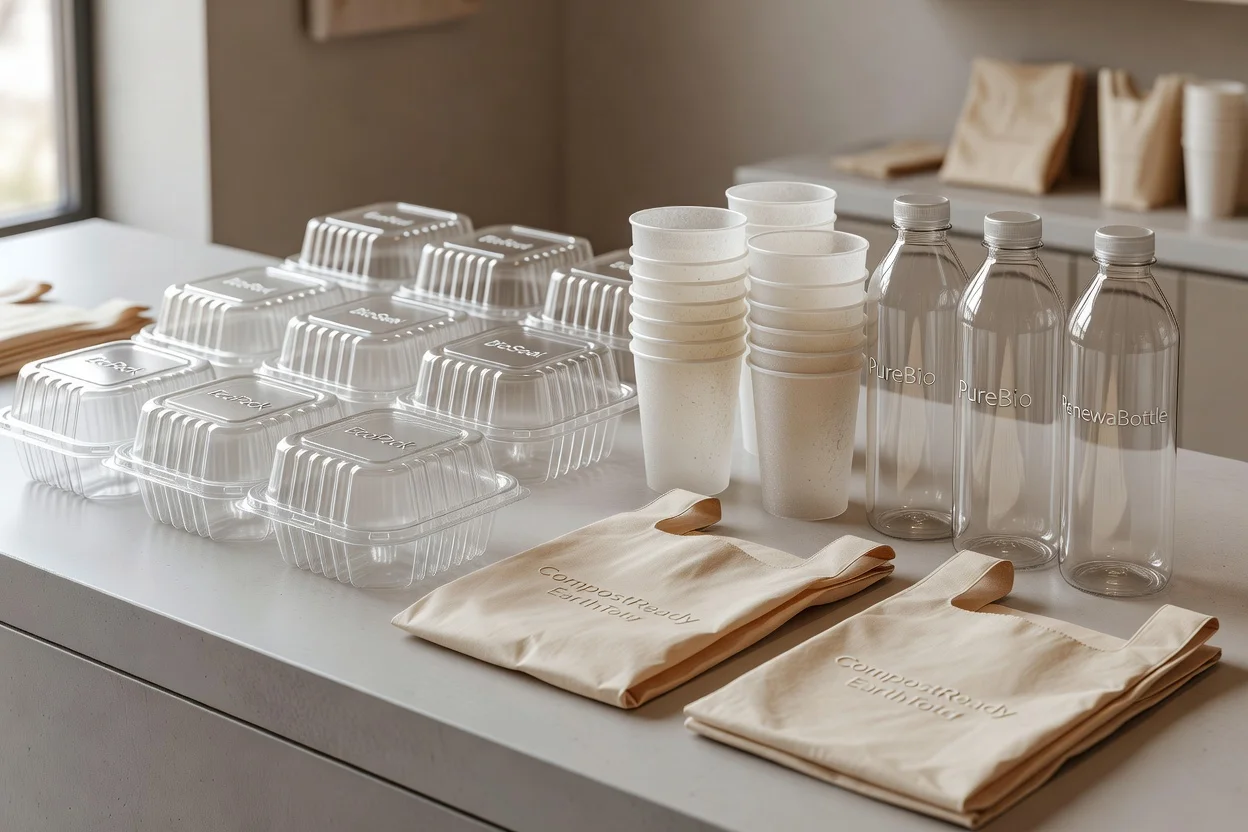
تُستخدم اللدائن الحيوية التجارية الآن في التعبئة والتغليف، وخدمات الطعام، والزراعة، والسلع الاستهلاكية، والمنسوجات، والطباعة ثلاثية الأبعاد، وبعض التطبيقات الطبية، حيث يهيمن PLA والمواد القائمة على النشا على العديد من أسواق العمر القصير، بينما تدعم اللدائن القابلة للاستبدال الحيوية التوافق مع أنظمة إعادة التدوير القائمة. ومن بين المنتجين الرائدين ومطوري التكنولوجيا: NatureWorks في PLA، وBASF وNovamont في البوليستر القابل للتحلل الحيوي والأنظمة القائمة على النشا، وBraskem في البولي أوليفينات الحيوية، ومجموعة متنامية من المنتجين الآسيويين والأوروبيين في PHA، وPBS، ومشتقات السليلوز، والوسيطات الحيوية.
التاريخ والتطوير
ظهرت اللدائن الحيوية المبكرة من محاولات استخدام الموارد الزراعية المتجددة والبوليمرات الطبيعية كبدائل للبلاستيك المشتق من البترول. كانت المواد القائمة على النشا والسليلوز والكازين من بين أقدم البلاستيكات القابلة للتشكيل، لكنها أُزيحت تدريجيًا بواسطة البوليمرات الاصطناعية الأقل تكلفة ذات الاتساق والقابلية للمعالجة الأفضل.
استعادت اللدائن الحيوية الحديثة أهميتها التجارية مع التقدم في التخمير والتحويل الحفزي وكيمياء البوليمرات وتقنية المزج. وشهد تصنيع PLA من حمض اللاكتيك ومواد خام السكر، وتطوير PHAs الميكروبية، ونمو البوليمرات "القابلة للاستبدال" الحيوية الانتقال من مواد متخصصة إلى منصة تجارية متنوعة.
تتشكل المرحلة الحالية من التطوير بشكل أقل بالاستبدال البسيط وأكثر بتصميم الأنظمة. يقوم المنتجون الآن بتخصيص تركيبات اللدائن الحيوية للتحويل الصناعي إلى سماد، أو التوافق مع إعادة التدوير الميكانيكي، أو أداء الحاجز، أو مقاومة الحرارة، أو تقليل البصمة الكربونية، حسب حالة الاستخدام.
المراجع
- •
European Bioplastics. (2025, June 12). Bioplastics. https://www.european-bioplastics.org/bioplastics/Link
- •
Bioplastic. (2005, August 29). In Wikipedia. https://en.wikipedia.org/wiki/BioplasticLink
- •
Degli Esposti, M., Sessa, L., & Avella, M. (2023, December 13). What are “bioplastics”? Defining renewability, biosynthesis, and biodegradability. Polymers, 15(24), 5174. https://pmc.ncbi.nlm.nih.gov/articles/PMC10747977/Link
- •
Bioplastic. (2026, July 29). In Encyclopædia Britannica. https://www.britannica.com/technology/bioplasticLink
- •
Tabone, M. (2017, December 13). The truth about bioplastics. State of the Planet. https://news.climate.columbia.edu/2017/12/13/the-truth-about-bioplastics/Link
- •
Atiwesh, G., Mikhael, A., Parrish, C. C., Banoub, J., & Le, T.-A. T. (2021, September 3). Environmental impact of bioplastic use: A review. Heliyon, 7(9), e07918. https://pmc.ncbi.nlm.nih.gov/articles/PMC8424513/Link
- •
Bioplastics and their impact on environment. (2022, November 4). Research & Reviews: Journal of Ecology and Environmental Sciences. https://www.rroij.com/open-access/bioplastics-and-their-impact-on-environment.php?aid=92109Link
- •
Environmental performance of bioplastics: Degradation pathways, chemical leaching, and life-cycle implications. (2026, March 3). Nature Reviews Earth & Environment. https://www.nature.com/articles/s44296-026-00096-wLink
- •
What are bioplastics? Definition, applications, advantages.... (2026, January 13). Formary. https://www.formary.de/en/blog/what-are-bioplasticsLink
- •
Comprehensive analysis of bioplastics: Life cycle assessment.... (2024, September 11). Polymers, 16(18), 2619. https://pmc.ncbi.nlm.nih.gov/articles/PMC11401513/Link
- •
Bioplastics: What they are and why they're not a perfect solution. (n.d.). CBC News. https://www.cbc.ca/news/science/bioplastics-backgrounder-1.5485009Link
- •
Rudin, A., & Choi, P. (2013). Bioplastics—An overview. ScienceDirect. https://www.sciencedirect.com/topics/agricultural-and-biological-sciences/bioplasticsLink
- •
The unintended side effects of bioplastics: Carbon, land, and water footprints. (2020, July 24). One Earth, 3(1), 45–59. https://www.cell.com/one-earth/fulltext/S2590-3322(20)30305-5Link
- •
Bioplastic. (2024, November 15). In Merriam-Webster. https://www.merriam-webster.com/dictionary/bioplasticLink
- •
Bioplastics. (2025, November 7). In Merriam-Webster. https://www.merriam-webster.com/dictionary/bioplasticsLink
- •
Bioplastics offer carbon-cutting advantages but are no panacea. (2021, March 23). Proceedings of the National Academy of Sciences, 118(14), e2103183118. https://www.pnas.org/doi/10.1073/pnas.2103183118Link
- •
Bioplastics: Overview, types, production and benefits. (n.d.). APR Composites. https://aprcomposites.com.au/materials-science/polymer-chemistry/bioplastics/Link
- •
Bioplastics—An overview. (2011, October 8). ScienceDirect. https://www.sciencedirect.com/topics/engineering/bioplasticsLink
- •
Review of types and applications of bioplastics. (n.d.). IARJSET. https://iarjset.com/wp-content/uploads/2020/07/IARJSET.2020.7607.pdfLink
- •
Bioplastics explained. (n.d.). Australian Bioplastics Association. https://bioplastics.org.au/bioplastics-explained/Link
- •
Types of bioplastic. (2025, January 31). PHA Sourcing. https://pha-sourcing.com/bioplastic-types/Link
- •
Bioplastics for food packaging: Environmental impact, trends.... (2022, October 5). Polymers, 14(21), 4563. https://pmc.ncbi.nlm.nih.gov/articles/PMC9563026/Link
- •
Key types of bioplastics and their applications. (2026, February 25). EVS Institute. https://evs.institute/environmental-biotechnology/key-types-of-bioplastics-applications/Link
- •
Bioplastics: Types, properties, sustainability, and applications. (2026, April 13). SpecialChem. https://www.specialchem.com/plastics/guide/bioplastics-selectionLink
- •
Bioplastics and biopolymers. (2022, January 30). Bioplastics News. https://bioplasticsnews.com/bioplastics/Link
- •
Environmental impact of bioplastic use: A review. (n.d.). ScienceDirect. https://www.sciencedirect.com/science/article/pii/S2405844021020211Link
- •
An investigation of the environmental implications.... (n.d.). Environmental Research. https://www.sciencedirect.com/science/article/abs/pii/S0013935123025112Link
- •
Bioplastics for a circular economy. (n.d.). Nature Reviews Materials. https://pmc.ncbi.nlm.nih.gov/articles/PMC8771173/pdf/41578_2021_Article_407.pdfLink
- •
The diverse uses of bioplastics. (2022, September 8). PBPC. https://pbpc.com/diverse-uses-of-bioplastics/Link
- •
Are bioplastics the solution to the plastic pollution problem? (2023, March 22). Polymers, 15(7), 1627. https://pmc.ncbi.nlm.nih.gov/articles/PMC10032476/Link
- •
Bioplastics for a circular economy. (2022, January 20). Nature Reviews Materials, 7, 117–137. https://www.nature.com/articles/s41578-021-00407-8Link
- •
Bioplastics & sustainability. (2026, August 5). Plastics Industry Association. https://www.plasticsindustry.org/bio-page/Link
- •
Bioplastics guide: PLA, PHA & starch-based types. (2026, February 2). Salesplastics. https://salesplastics.com/bioplastics/Link
- •
Demystifying 'compostable' and 'biodegradable' plastics. (2026, June 4). Beyond Plastics. https://www.beyondplastics.org/fact-sheets/bad-news-about-bioplasticsLink
- •
Innovations in applications and prospects of bioplastics.... (2021, November 29). Polymers, 13(24), 4391. https://pmc.ncbi.nlm.nih.gov/articles/PMC8629338/Link
- •
5 types of bioplastics: Starch, cellulose, protein, and more. (2024, September 27). Green Business Benchmark. https://www.greenbusinessbenchmark.com/archive/5-bioplastic-typesLink
- •
Impact of bioplastics on environment from its production to.... (n.d.). Process Safety and Environmental Protection. https://www.sciencedirect.com/science/article/pii/S0957582024006359Link
- •
An overview of biodegradable polymers and types.... (2024, November 12). IntechOpen. https://www.intechopen.com/chapters/1201338Link
- •
Vol.:(0123456789). (n.d.). Springer. https://link.springer.com/content/pdf/10.1007/s41748-021-00208-7.pdfLink
- •
European Bioplastics. (n.d.). What are bioplastics? https://docs.european-bioplastics.org/publications/fs/EuBP_FS_What_are_bioplastics.pdfLink
- •
What are bioplastics and how are they made? (2025, November 8). UKHI. https://ukhi.com/what-are-bioplastics-and-how-are-they-made/Link
- •
Can bioplastics always offer a truly sustainable alternative to.... (2024, April 3). Polymers, 16(8), 1052. https://pmc.ncbi.nlm.nih.gov/articles/PMC10990045/Link
- •
An insight on sources and biodegradation of bioplastics. (2023, May 31). Polymers, 15(12), 2629. https://pmc.ncbi.nlm.nih.gov/articles/PMC10230146/Link
- •
Environmental impacts of biodegradable microplastics. (2024, September 27). Nature Reviews Earth & Environment. https://www.nature.com/articles/s44286-024-00127-0Link
- •
Recent advances in bioplastics: Application and biodegradation. (2020, April 15). Polymers, 12(4), 920. https://pmc.ncbi.nlm.nih.gov/articles/PMC7240402/Link
- •
Bioplastic materials. (2026, February 10). European Bioplastics. https://www.european-bioplastics.org/bioplastics/materials/Link
- •
Environmental impact and sustainability of bioplastic production from food waste. (2024, June 28). Sustainability, 16(13), 5529. https://www.mdpi.com/2071-1050/16/13/5529Link
- •
Bioplastics. (2016, August 6). Wyss Institute. https://wyss.harvard.edu/technology/bioplastic/Link