
परिचय
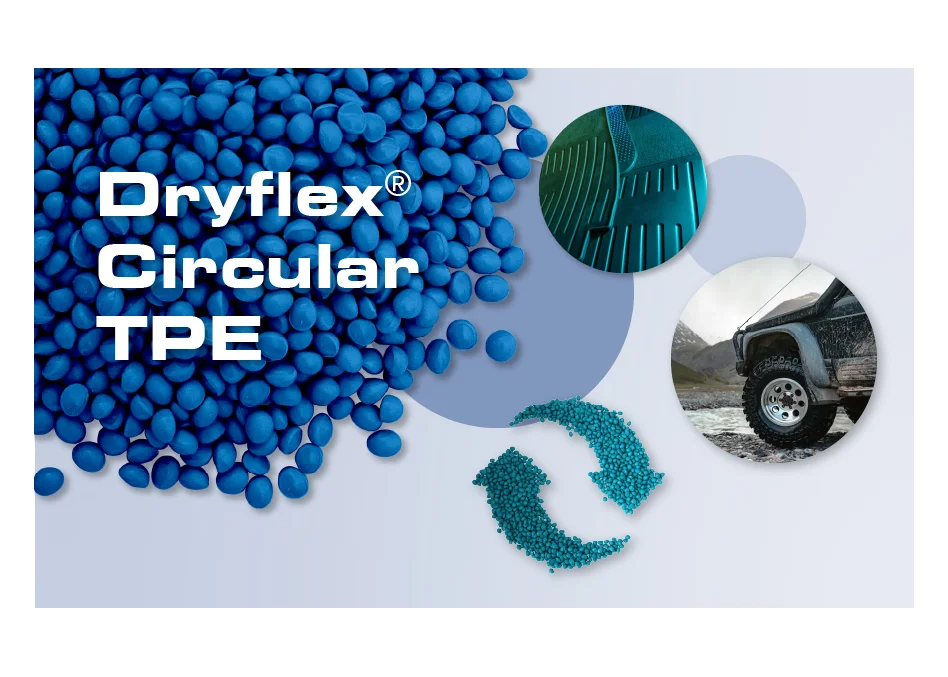
पुनर्चक्रित थर्मोप्लास्टिक elastomers (rTPE) और पुनर्चक्रित thermoplastic rubber (rTPR) पुनर्चक्रित, पुनःप्रसंस्करण योग्य इलास्टोमेरिक सामग्री हैं जो रबर जैसी लचीलापन को थर्मोप्लास्टिक मेल्ट प्रोसेसेबिलिटी के साथ जोड़ती हैं। उद्योग उपयोग में, शब्दों को अक्सर पोस्ट-कंज्यूमर रिसाइकल्ड या पोस्ट-इंडस्ट्रियल रिसाइकल्ड पॉलिमर, रिसाइकल्ड रबर, या मिश्रित रिसाइकल्ड स्ट्रीम से बने कंपाउंड्स पर व्यापक रूप से लागू किया जाता है जिन्हें एक्सट्रूजन, इंजेक्शन मोल्डिंग, या कंप्रेशन-टाइप डाउनस्ट्रीम ऑपरेशंस के लिए उपयुक्त सामग्री में सुधारित किया गया है।
सामग्री परिवार के रूप में, rTPE/rTPR रबर रिसाइक्लिंग, पॉलिमर कंपाउंडिंग, और सर्कुलर प्लास्टिक डिजाइन के चौराहे पर स्थित है। इसका उपयोग अपशिष्ट elastomers, प्लास्टिक, और कभी-कभी टायर-व्युत्पन्न फीडस्टॉक्स को निचली वर्जिन सामग्री मांग, कम उत्पाद कार्बन फुटप्रिंट, और पारंपरिक थर्मोसेट रबर सिस्टम की तुलना में आसान यांत्रिक रिसाइक्लेबिलिटी वाले नए उत्पादों में बदलने के लिए किया जाता है। हालिया अनुसंधान और वाणिज्यिक उत्पाद लाइनों में भी "डाउनसाइकल्ड" रिसाइकल्ड रबर ब्लेंड्स से बेहतर स्थिरता, ट्यूनेबल कठोरता, और GRS ट्रेसेबिलिटी जैसे स्पष्ट प्रमाणन मार्गों वाले अधिक इंजीनियर्ड rTPE सिस्टम की ओर बढ़ते बदलाव दिखते हैं।
इतिहास और विकास
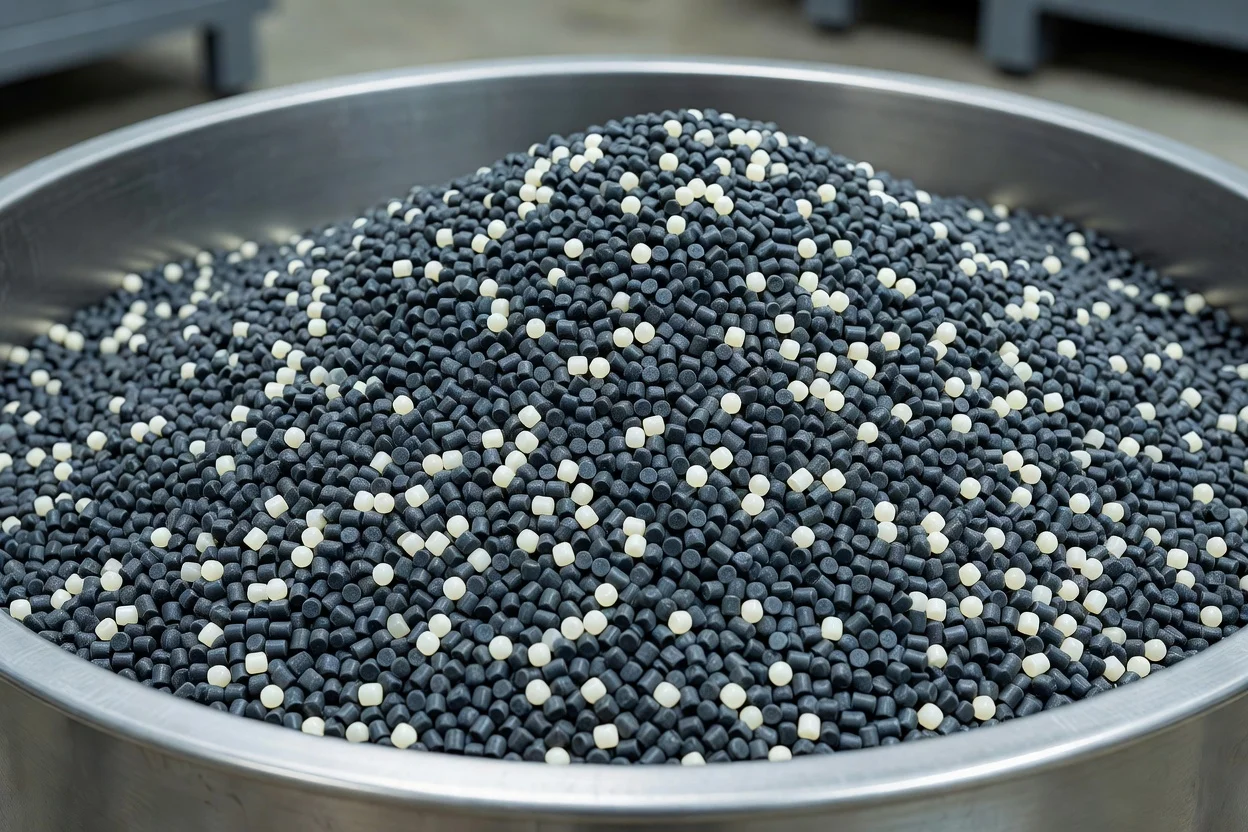
थर्मोप्लास्टिक elastomers एक महत्वपूर्ण सामग्री वर्ग के रूप में उभरे क्योंकि वे दो अन्यथा परस्पर विरोधी प्रदर्शन लक्ष्यों को जोड़ते हैं: रबर की इलास्टिक रिकवरी और प्लास्टिक की मेल्ट प्रोसेसेबिलिटी। उनके रिसाइकल्ड वेरिएंट बाद में विकसित हुए, शुरू में रबर अपशिष्ट और पोस्ट-कंज्यूमर प्लास्टिक स्ट्रीम के लिए कंपाउंडिंग समाधान के रूप में, विशेष रूप से उन अनुप्रयोगों में जहां पूर्ण वर्जिन-प्रदर्शन समानता की आवश्यकता नहीं थी।
एक प्रमुख ऐतिहासिक चालक टायर और रबर अपशिष्ट मूल्यांकन रहा है। अनुसंधान और पेटेंट ग्राउंड टायर रबर या डेवल्कनाइज्ड रबर को thermoplastics, अक्सर polypropylene या polyethylene, के साथ ब्लेंडिंग का वर्णन करते हैं ताकि नई थर्मोप्लास्टिक इलास्टोमेरिक सामग्री बनाई जा सके। एक उल्लेखनीय तकनीकी मार्ग EPDM अपशिष्ट का डेवल्कनाइजेशन है जिसके बाद polypropylene के साथ ब्लेंडिंग और डायनामिक वल्कनाइजेशन किया जाता है, जिससे निरंतर प्रक्रिया में रिसाइकल्ड-रबर-आधारित TPE का उत्पादन होता है। इस प्रकार का दृष्टिकोण आधुनिक rTPR और रिसाइकल्ड-रबर-आधारित TPV-जैसी सामग्रियों के लिए तकनीकी आधार स्थापित करने में मददगार रहा।
समानांतर में, उपभोक्ता और औद्योगिक वस्तुओं के लिए वाणिज्यिक रिसाइकल्ड-कंटेंट TPEs का विस्तार हुआ। TSRC ने Global Recycled Standard प्रमाणन वाले rTPE उत्पादों और impact modifiers के रूप में अनुप्रयोगों की रिपोर्ट की है जो पोस्ट-कंज्यूमर रिसाइकल्ड प्लास्टिक की कठोरता को 80 Shore A या उससे नीचे कम कर सकते हैं। Freudenberg ने भी 100% रिसाइकल्ड TPE बेस कंटेंट पर आधारित अपैरल इंटरलाइनिंग्स पेश की हैं, यह दर्शाते हुए कि रिसाइकल्ड elastomers कमोडिटी कंपाउंडिंग से परे मूल्य-वर्धित टेक्सटाइल और सॉफ्ट-गुड्स बाजारों में आगे बढ़ रहे हैं।
संदर्भ
- •
Thermoplastic elastomers. (2025, July 31). Gianeco. https://gianeco.com/en/products/thermoplastic-elastomers/Link
- •
rTPE. (2025, September 10). TSRC. https://www.tsrc.com.tw/tw/products-services/rtpe/Link
- •
Devulcanization of EPDM waste and dynamic vulcanization of the rubber component. (n.d.). Toyoda Gosei. https://www.toyoda-gosei.co.jp/seihin/technology/report/vol45_2/pdf/vol45_2_002.pdfLink
- •
Recent developments in synthesis, properties, applications and recyclability of thermoplastic elastomers. (2024, January 12). PMC. https://pmc.ncbi.nlm.nih.gov/articles/PMC10819226/Link
- •
From the sector. (2023, March 29). Textination. https://textination.de/en/news/archive?;newstype=205&;page=,1&newstype=211&page=,25Link
- •
Valorization of waste tires, recycled HDPE, and recycled EVA. (2022, June 27). Frontiers in Sustainability. https://www.frontiersin.org/journals/sustainability/articles/10.3389/frsus.2025.1638375/fullLink
- •
Thermoplastic elastomers based on recycled high-density polyethylene/ground tire rubber/ethylene vinyl acetate: Effect of ground tire rubber regeneration on morphological and mechanical properties. (2022, April 25). PMC. https://pmc.ncbi.nlm.nih.gov/articles/PMC10235528/Link
- •
Recycling content TPE. (n.d.). Kraiburg TPE. https://www.kraiburg-tpe.com/en/recycling-content-tpeLink
- •
Waste rubber recycling: A review on the evolution and properties of thermoplastic elastomers. (2020, February 8). PubMed. https://pubmed.ncbi.nlm.nih.gov/32046356/Link
- •
Ribonucleoside triphosphate: An overview. (n.d.). ScienceDirect. https://www.sciencedirect.com/topics/chemistry/ribonucleoside-triphosphateLink
- •
rTPE. (2025, August 12). TSRC. https://www.tsrc.com.tw/products-services/rtpe/Link
- •
Production and characterization of thermoplastic elastomers based on recycled rubber. (n.d.). Collectionscanada. https://www.collectionscanada.gc.ca/obj/thesescanada/vol2/QQLA/TC-QQLA-30327.pdfLink
- •
An overview of TPE recycling: Standards, grades, and mechanical properties. (2026, March 5). Alibaba. https://www.alibaba.com/product-insights/tpe-recycling.htmlLink
- •
Thermoplastic elastomers based on waste rubber and plastics. (2004, July 1). Rubber Chemistry and Technology. https://rct.kglmeridian.com/view/journals/rcat/77/3/article-p569.xmlLink
- •
Thermoplastic elastomers in modern rubber. (n.d.). International Journal of Materials Science and Technology. https://internationaljournalssrp.org/index.php/ijmst/article/download/171/123Link
- •
Sustainable TPE solutions & TPE recycling. (2024, June 12). Teknor Apex. https://www.teknorapex.com/en-us/teknor-apexs-extensive-product-portfolio-of-vinyl-thermoplastic-elastomers-nylon-and-colorants/sustainable-solutions/sustainable-tpe-solutionsLink
- •
The fundamentals of recyclable thermoplastic rubber. (2026, March 14). Alibaba. https://www.alibaba.com/product-insights/recyclable-thermoplastic-rubber.htmlLink
- •
Smart TPE materials based on recycled rubber shred. (2021, October 20). Materials. https://www.mdpi.com/1996-1944/14/21/6237Link
- •
Applied. (n.d.). Semantic Scholar. https://pdfs.semanticscholar.org/aa2c/a5decca3a57d8f6e97756a2a3099599e0d11.pdfLink
- •
Phase morphology, mechanical, and thermal properties of fiber-reinforced thermoplastic elastomer: Effects of blend composition and compatibilization. (2021, October 22). PMC. https://pmc.ncbi.nlm.nih.gov/articles/PMC9028046/Link
- •
Biorenewable and circular polyolefin thermoplastic elastomers. (2024, October 1). Nature Communications. https://www.nature.com/articles/s41467-024-52850-0Link
- •
Recycled polypropylene improved with thermoplastic elastomers. (n.d.). Wiley. https://onlinelibrary.wiley.com/doi/10.1155/2017/7525923Link
- •
Fully recyclable and tough thermoplastic elastomers from simple bio-sourced δ-valerolactones. (2024, September 10). Nature Communications. https://www.nature.com/articles/s41467-024-52229-1Link
- •
Thermoplastic elastomers and polymers derived from recycled rubber and plastics. (2001, September 21). Google Patents. https://patents.google.com/patent/US20020113333A1/enLink
- •
Enhanced recyclability of thermoplastic elastomer. (2024, October 30). PMC. https://pmc.ncbi.nlm.nih.gov/articles/PMC11561595/Link
- •
Thermoplastic elastomer. (2006, February 15). Wikipedia. https://en.wikipedia.org/wiki/Thermoplastic_elastomerLink
- •
Understanding thermoplastic elastomers: Versatile and recyclable. (2024, June 15). Plastics Engineering. https://www.plasticsengineering.org/2024/06/understanding-thermoplastic-elastomers-versatile-and-recyclable-005255/Link
- •
A guide to thermoplastic elastomers. (n.d.). Vanden Recycling. https://blog.vandenrecycling.com/a-guide-to-thermoplastic-elastomersLink
- •
Emerging trends and developments in thermoplastic elastomers. (2020, November 10). SpecialChem. https://www.specialchem.com/plastics/guide/emerging-trends-and-developments-in-thermoplastic-elastomersLink
- •
The differences between TPE and TPR. (2024, January 14). Essentra Components. https://www.essentracomponents.com/en-us/news/manufacturing/injection-molding/the-differences-between-tpe-and-tpr-a-handy-guideLink
- •
Thermoplastic elastomer (TPE) recycling. (2023, May 5). Reclaim Plastics. https://reclaimplastics.com/materials-we-recycle/tpe-recycling/Link
- •
Class II ribonucleotide reductases catalyze carbon−cobalt bond reformation on every turnover. (1999, August 6). ACS Publications. https://pubs.acs.org/doi/10.1021/ja9913840Link
- •
Thermoplastic elastomers TPE, TPR. (n.d.). BPF. https://www.bpf.co.uk/plastipedia/polymers/Thermoplastic_Elastomers.aspxLink
- •
Understanding TPE materials: Characteristics, differences with TPR. (2024, September 14). TPE-SP. https://en.tpe-sp.com/news/340.htmlLink
- •
Developing recyclable TPE materials (thermoplastic elastomers). (2024, July 31). Eureka. https://eureka.patsnap.com/blog/material-tech-resources/developing-biodegradable-and-recyclable-tpe/Link
- •
Thermoplastic elastomer: An overview. (n.d.). ScienceDirect. https://www.sciencedirect.com/topics/materials-science/thermoplastic-elastomerLink
- •
TPR vs TPE: What is the difference between them. (n.d.). ECHEMI. https://www.echemi.com/cms/1418036.htmlLink
- •
TPR vs. TPE: Material differences and comparisons. (2023, January 20). Xometry. https://www.xometry.com/resources/materials/tpr-vs-tpe/Link
- •
Thermoplastic rubber (TPR): Materials and properties. (2022, August 15). Xometry. https://www.xometry.com/resources/materials/thermoplastic-rubber-tpr/Link
- •
Thermoplastic rubber (TPR) & thermoplastic elastomers (TPEs). (n.d.). Molding Dynamics. https://www.moldingdynamics.net/materials/tpr-tpes/Link
- •
TPR vs. TPE: Similarities and differences. (2023, March 21). Fictiv. https://www.fictiv.com/articles/tpr-vs-tpe-similarities-and-differencesLink
- •
TPR vs. TPE: Which material is right for your project? (2025, June 11). VMT. https://vmtcnc.com/tpr-vs-tpe/Link
- •
Thermoplastic elastomer (TPE): An ultimate guide. (2026, April 1). SpecialChem. https://www.specialchem.com/plastics/guide/thermoplastic-elastomerLink
- •
Thermoplastic rubber (TPR): Meaning, properties, uses. (2025, November 26). Farr. https://farr.ae/thermoplastic-rubber-meaning-properties-benefits-real-world-applicationsLink
- •
Structural. (2024, April 26). RTP Company. https://www.rtpcompany.com/products/structural/Link