
Introduction
Packaging technology for molded parts and semi-finished products is the set of materials, machines, and process methods used to protect plastic components after molding, extrusion, forming, machining, or intermediate conversion and before final assembly, shipment, or further processing. In plastics manufacturing, it serves a critical interface between production and logistics, preserving surface quality, dimensional stability, cleanliness, and traceability while supporting automated handling and cost-efficient distribution.
The field covers a wide range of solutions, from simple bags, trays, separators, and anti-scratch films to highly engineered returnable containers, tray-and-dunnage systems, kitting packages, moisture-control packaging, and integrated packaging lines for molded or semi-finished plastic products. It is especially important for parts with tight cosmetic tolerances, electrostatic sensitivity, contamination risk, or assembly-critical features such as clips, snap fits, threaded closures, lenses, medical components, and technical semi-finished goods.
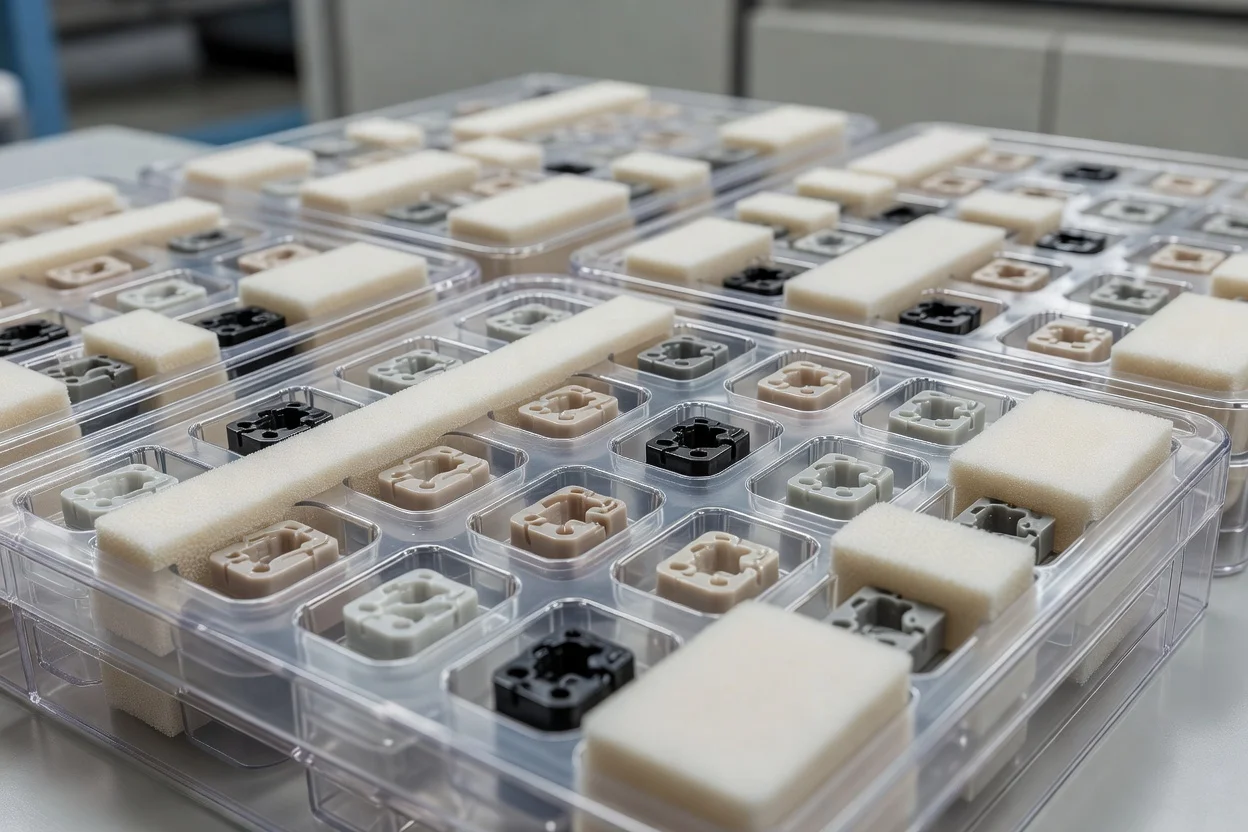
Historically, the discipline evolved alongside mass production and globalized supply chains: early protection relied on manual wrapping and corrugated cartons; later, industrial packaging introduced formed inserts, custom dunnage, antistatic materials, and reusable transport systems; more recently, automation, right-sized packaging, and digital traceability have become central, particularly in automotive, electronics, appliances, and contract manufacturing. Sustainability has also reshaped the sector, favoring recyclable mono-material solutions, returnable packaging, reduced void space, and lower material intensity, while also creating trade-offs between protection, reuse cycles, and logistics complexity.
History and Development
The packaging of molded parts and semi-finished products developed from basic protective wrapping into a specialized engineering function as plastics manufacturing scaled up and product tolerances tightened.
- Manual protective packaging phase: Early operations relied on paper, film, crates, and foam-offcut protection for molded articles in transit, with little standardization beyond keeping parts from rubbing, dust, or moisture exposure.
- Custom industrial packaging phase: As injection molding and technical plastics expanded, manufacturers adopted custom trays, divider systems, anti-scratch inserts, and kitting to prevent handling damage and to support assembly-oriented logistics.
- Automation and sustainability phase: Modern systems increasingly integrate robotic loading, container optimization, reusable packaging loops, and right-sized box generation to reduce labor, transport volume, and packaging waste, particularly in automotive and high-volume industrial supply chains.
A further milestone has been the use of packaging not only for protection but also for process integration, such as kitting for multi-component assemblies and packaging designed to move directly into production cells with minimal repacking. Another important development is the growth of packaging for technically demanding semi-finished products such as molded foam, polyurethane slabs, or semi-finished plastic components requiring grouping, stabilization, and volume reduction during shipping.
Key Characteristics and Technical Overview
Packaging for molded parts and semi-finished products is engineered around several performance variables: mechanical protection, surface preservation, contamination control, moisture control, electrostatic control, packing density, returnability, and compatibility with automated handling.
Core functional requirements
- Impact protection: Prevents fracture, deformation, edge damage, and stress whitening during transport and warehouse handling.
- Surface protection: Avoids scratches, gloss loss, abrasion, and imprint transfer, which are critical for visible and cosmetic parts.
- Cleanliness control: Limits dust, fibers, release agents, oils, and particulate contamination, especially for medical, optical, and electronics-related parts.
- Dimensional stability: Holds parts in a fixed orientation to prevent creep, warpage, or distortion under stacking and vibration loads.
- Moisture and climate protection: Uses barrier films, desiccants, or sealed systems for hygroscopic materials or corrosion-sensitive mixed assemblies.
- Static control: Employs antistatic packaging for electronic housings, precision components, and dust-sensitive parts.
Common technical metrics
- Throughputs: Manual or semi-automatic packaging lines for molded parts often range from hundreds to several thousand parts per hour, while high-volume automated lines can run continuously and synchronize with molding cells or downstream logistics systems.
- Returnable packaging cycles: Reusable totes, crates, and racks are designed for repeated circulation, often with standardized footprints for warehouse automation and truck utilization.
- Void reduction: Packaging engineering increasingly targets low empty-space ratios to reduce shipping volume and damage risk; in many industrial packaging contexts, minimizing voids is treated as a key cost and sustainability metric.
- Pack cost targets: In competitive industrial channels, packaging cost is often tightly constrained as a share of product value, which drives materials optimization and design simplification.
Material and structural choices
- Corrugated fiberboard: Cost-effective for moderate protection and single-use logistics.
- Thermoformed trays and inserts: Provide precise part location, especially for repetitive geometry.
- Foam dunnage: Common for fragile or cosmetic components requiring tailored support.
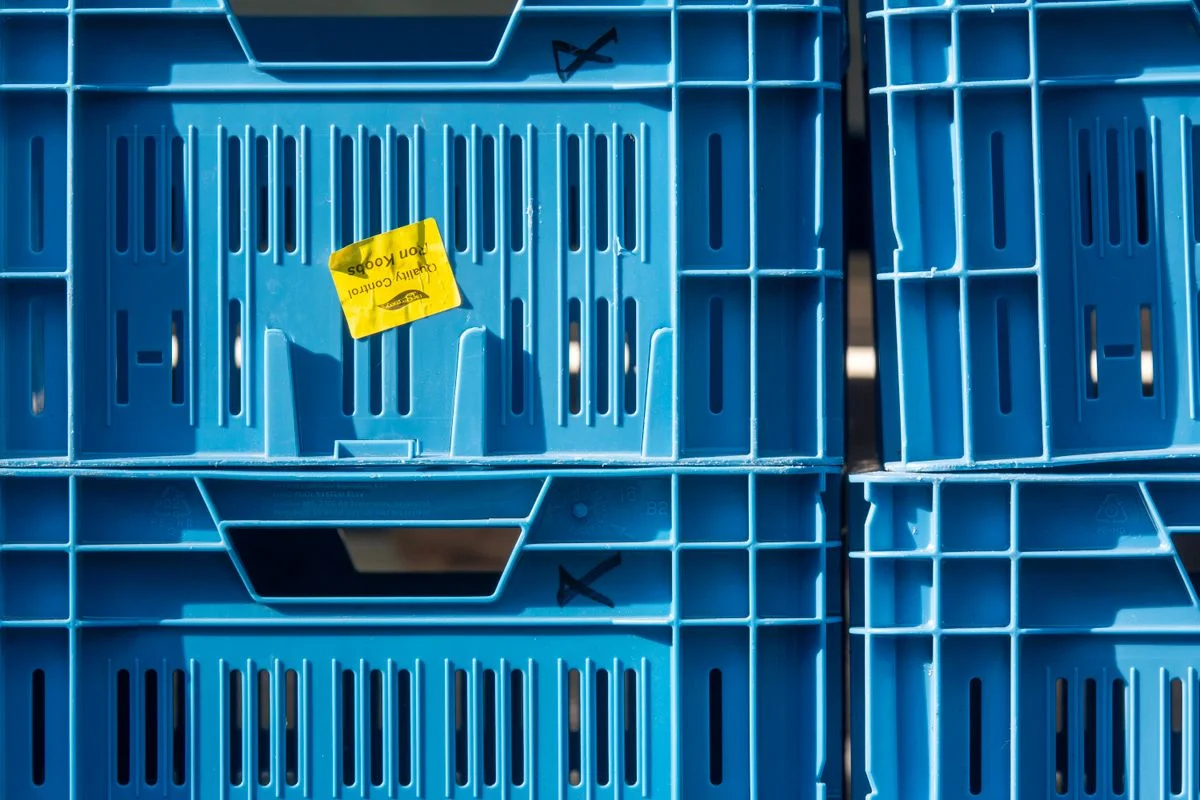
- Plastic returnable containers: Used in closed-loop automotive and industrial supply chains.
- Barrier films and liners: Support moisture-sensitive or contamination-sensitive applications.
- Molded pulp and fiber-based inserts: Increasingly used where fiber recyclability and cushioning are priorities.
Mechanical and process considerations
Packaging design must account for part geometry, stacking loads, vibration spectra, and the interaction between the part surface and packaging interface. For example, hard contact points can create stress concentrations or polish marks, while overly soft support may allow movement and abrasion. In practice, the packaging engineer often balances retention, cushioning, space efficiency, and line speed rather than optimizing any single variable in isolation.
Types and Variations
| Type | Main purpose | Typical use case | Main advantage |
|---|---|---|---|
| Protective bags and liners | Dust, moisture, and scratch protection | Small molded parts, semi-finished sheets, handled components | Low cost and simple handling |
| Trays and blisters | Part location and separation | Precision molded components, electronics housings, closures | Good part retention and automation compatibility |
| Foam dunnage | Cushioning and anti-abrasion protection | Fragile cosmetic parts, mixed assemblies, high-value components | Tailored fit and strong shock absorption |
| Corrugated divider packs | Multi-part separation and stacking | Assemblies, small molded goods, industrial shipments | Lightweight and recyclable |
| Returnable totes and racks | Reusable transport in closed loops | Automotive and contract manufacturing | Lower lifecycle waste and good standardization |
| Kitting systems | Component grouping for assembly | Multi-part molded sets and OEM kits | Improves assembly efficiency and traceability |
| Moisture-controlled packs | Climate-sensitive protection | Hygroscopic polymers, electronics-adjacent parts | Reduces degradation risk |
| Antistatic packaging | Static dissipation | ESD-sensitive molded components | Limits dust attraction and discharge risk |
Packaging for molded parts often emphasizes cosmetic and dimensional protection, while packaging for semi-finished products such as sheets, rods, profiles, foam blocks, or intermediate forms more often emphasizes bulk handling, edge protection, bundling, and readiness for downstream machining or assembly.
Applications and Uses
Packaging technology for molded parts and semi-finished products is used across the plastics value chain and in sectors that consume technical plastic components.
- Automotive: Trays, returnable totes, and custom dunnage are widely used for clips, trim parts, housings, connectors, and precision assemblies, where damage-free delivery and assembly sequencing are critical.
- Consumer electronics and appliances: Antistatic and scratch-resistant packaging protects housings, bezels, controls, and molded functional parts during cross-border logistics.
- Medical and laboratory products: Clean, controlled packaging is used for device housings, disposable components, and semi-finished items that require contamination control and traceability.
- Industrial goods and machinery: Semi-finished plastic stock shapes, molded technical parts, and subassemblies are typically packed to prevent deformation and surface wear during storage and machining transfer.
- Polyurethane and foam products: Slabs and molded parts often require grouping, compression management, and volume reduction before shipment.
- Packaging-related molded articles: Caps, closures, trays, and thermoformed containers may be packed in automated systems to preserve appearance and dimensional consistency.
A poor-fit use is highly irregular, heavy, and oil-contaminated parts that change geometry after molding or cooling; these often require bespoke handling and may not be suited to standard tray-based or kitting-oriented packaging without substantial rework.
Technological Innovations and Automation
Automation has become a defining feature of this segment. Packaging lines increasingly incorporate robots, conveyor synchronization, machine vision, and modular stations so that molded parts can move from molding to packaging with minimal manual intervention.
Key innovations include:
- Robotic pick-and-place loading for fragile molded parts and multi-cavity outputs.
- Modular packaging platforms that can be reconfigured for different part families and package formats, reducing changeover time.
- Right-sized packaging systems that generate packages closer to part dimensions, reducing void space and transport inefficiency.
- Integrated kitting for OEM supply, where multiple molded components are assembled into ready-to-use sets.
- Print-and-code traceability, including labels, batch identification, and serialization for quality control and logistics visibility.
- Hybrid packaging concepts combining rigid support, flexible liners, and moisture barriers to tune protection for specific polymer grades and surfaces.
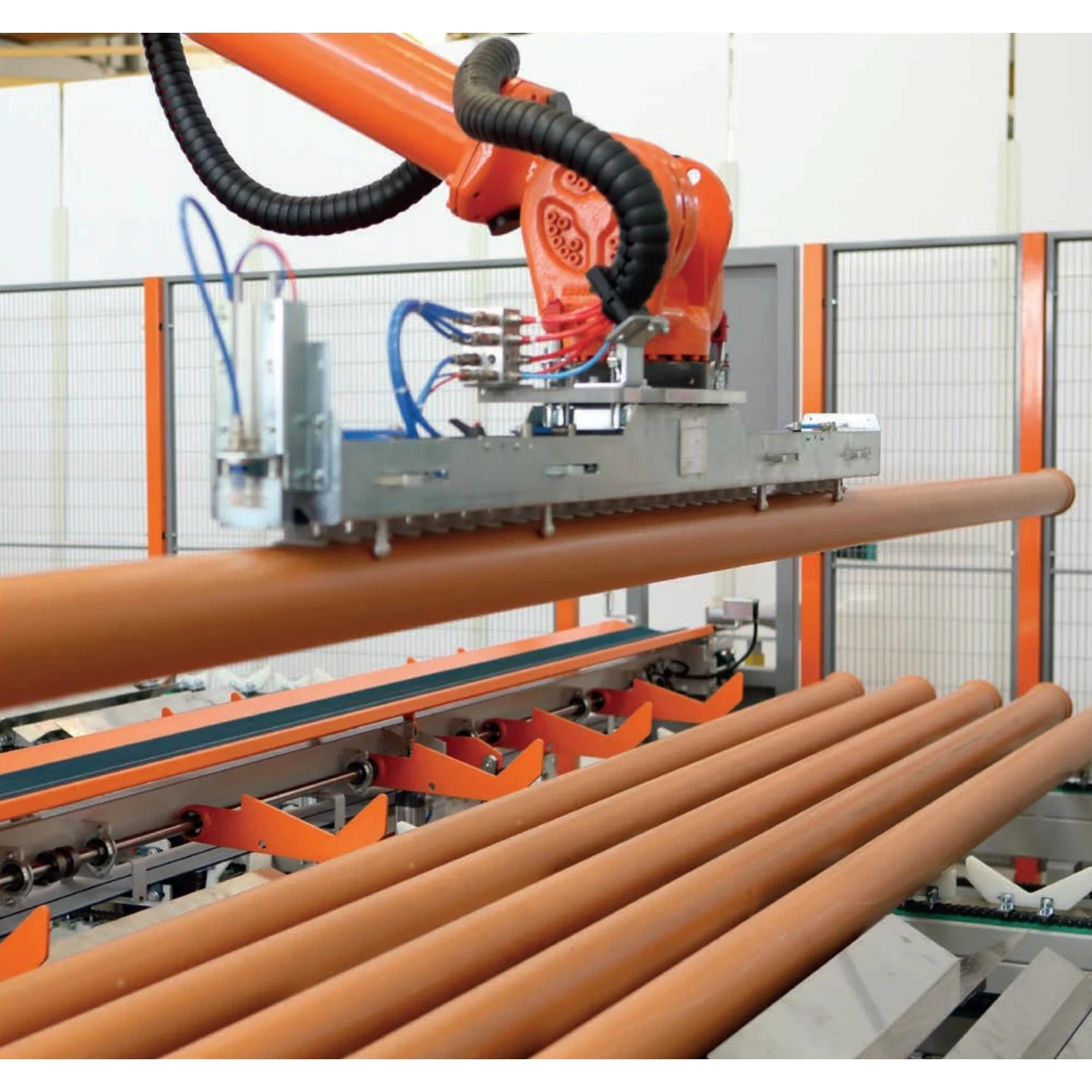
In advanced operations, packaging automation is closely linked to the molding cell itself. Parts may be sorted by cavity, inspected inline, transferred by robot, and placed into orientation-controlled packaging to preserve statistical process control and simplify downstream assembly.
Environmental and Sustainability Aspects
Sustainability in this segment is driven by packaging reduction, recyclability, reuse, and lower transport emissions. The strongest gains usually come from using less material, extending packaging life, and increasing load efficiency rather than from material substitution alone.
Main sustainability strategies
- Returnable packaging: Reusable crates, racks, and totes reduce single-use waste in closed-loop supply chains.
- Lightweighting: Thinner walls, optimized inserts, and denser nesting reduce material use and shipping mass.
- Mono-material design: Simplifies recycling and improves end-of-life handling.
- Molded fiber and pulp alternatives: Useful where cushioning and fiber recovery are priorities.
- Void reduction: Better-fit packages reduce freight volume and the associated emissions footprint.
Trade-offs
Sustainable packaging is not automatically the lowest-impact option in every case. Reusable systems may require washing, tracking, return logistics, and higher upfront investment, while fiber-based alternatives may underperform in moisture resistance or long-life protective use. For high-value molded parts, the best environmental outcome often comes from preventing damage and rework, since rejected parts can carry a higher embodied burden than the packaging itself.
Economic and Global Market Impact
Packaging for molded parts and semi-finished products is a significant cost and efficiency lever in plastics manufacturing because it affects scrap, labor, freight density, warehouse space, and customer satisfaction. It is particularly important in automotive and industrial supply chains, where packaging design is often tied to supplier qualification, assembly-line compatibility, and inventory flow.
Recent market analyses point to continued expansion in parts packaging, especially for automotive and engineered components, as manufacturers seek damage reduction, process standardization, and supply-chain resilience. Demand is also shaped by outsourcing, cross-border logistics, and the shift from simple shipments to managed packaging systems that include design, testing, pooling, and recovery services.
Current Challenges and Innovations
- Balancing protection and cost: More protective packaging often increases material use and freight volume, so engineers must optimize for total landed cost rather than package unit cost alone.
- Handling part diversity: Mixed product portfolios make standardization difficult, especially where a plant produces multiple molded geometries and surface classes.
- Automation compatibility: Packaging must work reliably with robots, conveyors, and warehouse systems, which favors consistent dimensions and stable stacking behavior.
- Regulatory and customer requirements: Recyclability, labeling, ESD compliance, cleanliness, and traceability requirements vary by industry and geography.
- Damage-sensitive cosmetic parts: Glossy, transparent, and decorative parts remain among the most challenging to package because even minor contact can create visible defects.
Current innovation is concentrated in modular packaging systems, digital design tools, and material hybrids that combine protection with better recyclability and lower mass. The most successful solutions are increasingly those that integrate directly with manufacturing execution and logistics software rather than functioning as standalone packaging formats.
Future Outlook
The future of packaging technology for molded parts and semi-finished products will likely be shaped by three converging trends: automation, circularity, and data integration. Packaging will become more tightly linked to upstream part design, with geometry, surface finish, and handling strategy considered together at the development stage rather than after molding is complete.
Expected directions include:
- wider use of reusable transport packaging in closed-loop manufacturing networks;
- more right-sized and demand-driven packaging systems;
- greater use of molded fiber, recyclable polymers, and mono-material formats;
- increased machine vision and sensor-based verification for pack completeness and part orientation;
- more digital traceability linking part identity, packaging unit, and shipment history.
As plastics manufacturers face higher expectations for sustainability and quality assurance, packaging will remain a strategic process stage rather than a purely logistical afterthought. Its role will continue to expand from “protecting parts” to managing quality preservation, assembly readiness, and supply-chain efficiency across the full life cycle of molded and semi-finished products.
References
- •
Plastic injection manufacturing packaging solutions. (2026, June 22). https://gertexsolutions.com/industries-we-serve/manufacturing/plastic-injection-moulding/Link
- •
Packaging & kitting for molded & assembled components. (n.d.). https://www.mingliprecision.com/en/p57-packaging-kittingLink
- •
Our production technologies. (n.d.). https://www.poeppelmann.com/famac/packaging/technologies/production.htmlLink
- •
Resilient and high-quality packaging articles. (n.d.). https://www.arburg.com/en/us/solutions/by-sector/packaging/Link
- •
Packaging machinery designed for the polyurethane industry. (n.d.). https://www.dolphinpack.net/en/what-we-pack/49/polyurethane-productsLink
- •
Automotive packaging solutions - ITB packaging. (2025, March 21). https://itbpackaging.com/automotive-packaging-solutions/Link
- •
Technologies. (n.d.). https://www.greiner-gpi.com/en/Greiner-Packaging/TechnologiesLink
- •
Automated molding packaging - Niverplast B.V. (n.d.). https://niverplast.com/moulding/automated-moulding-packagingLink
- •
Molded foam cushions give printer parts a tailored fit. (2023, October 19). https://www.packagingdigest.com/packaging-design/molded-foam-cushions-give-printer-parts-a-tailored-fitLink
- •
Secondary operations | Advantage plastic products, APP. (2026, March 13). https://nemolding.com/capabilities/secondary-operations/Link
- •
Standards, uses, and advantages of compression molding. (2026, May 14). https://www.iqsdirectory.com/articles/rubber-molding/compression-molding.htmlLink
- •
Automotive parts packaging market size, share, forecast, 2034. (n.d.). https://www.fortunebusinessinsights.com/automotive-parts-packaging-market-106857Link
- •
Forming processes - Fraunhofer IVV. (2025, September 12). https://www.ivv.fraunhofer.de/en/processing-machinery/forming-processes.htmlLink
- •
什么是包装模切?制造商模切纸盒指南. (n.d.). https://gentlever.com/zh-CN/%E5%8C%85%E8%A3%85%E6%A8%A1%E5%88%87/Link
- •
技术. (n.d.). https://www.alpla.com/zh-hans/nengli/jishuLink
- •
Automotive. (2026, March 30). https://www.packsize.com/industries/automotiveLink
- •
包装行业综合知识库:材料·印刷工艺·后道. (2026, September 3). https://zouph.com/packaging-knowledge.htmlLink
- •
泡沫缓冲- 内包装| 耐帆. (2017, March 1). https://www.nefab.com/zh/solutions/packaging-solutions/inner-packaging/cushioning/Link
- •
伊利格IML-T® 模内贴标纸板包装. (n.d.). https://www.illig.de/zh-de/imlt-cardboardLink
- •
注塑成型包装解决方案|耐帆. (n.d.). https://www.nefab.com/zh/solutions/packaging-solutions/materials/plastic-packaging/injection-molding/Link
- •
Packaging glossary. (n.d.). https://www.abapackaging.com/packaging-glossary/Link
- •
Aerospace, aircraft and aviation plastic solutions. (n.d.). https://www.ensingerplastics.com/en/aircraft-aerospaceLink
- •
模块化包装系统. (2005, September 21). https://patents.google.com/patent/CN101022996A/zhLink
- •
评估食品和消费品包装解决方案时,一般会考量的四个问题. (2021, July 4). https://www.spjxz.com/cn/IndustryNews/2021/07.04.htmlLink
- •
[PDF] 第四届全国工业设计职业技能大赛决赛理论试题库包装设计师. (n.d.). http://www.cnlic.org.cn/jnds/202409/6386304332182796537030907.pdfLink
- •
《包装技术与机械设备》绝版PDF. (n.d.). https://mtoou.info/jueban/989556.htmlLink
- •
CPS+ emarketplace | Find your plastics and rubber.... (n.d.). https://www.chinaplasonline.com/eMarketplace/allcategories/eng?level=1&CatId=1Link
- •
制造和填充包装的方法以及这样的包装. (2015, June 4). https://patents.google.com/patent/CN111086743A/zhLink
- •
Plastic coatings and laminates manufacturer/producer. (n.d.). https://www.europages.co.uk/companies/germany/manufacturer%20producer/plastic%20coatings%20and%20laminates.htmlLink
- •
紙漿紙塑包裝Archives. (n.d.). https://www.rtadv.com/category/eco-sustainable-packaging-%E7%92%B0%E4%BF%9D%E5%8C%85%E8%A3%9D%E8%A8%AD%E8%A8%88/%E7%B4%99%E6%BC%BF%E8%88%87%E7%B4%99%E5%A1%91%E5%8C%85%E8%A3%9D/Link
- •
Post-processing of plastic parts. (2019, January 1). https://www.beckhoff.com/en-ph/industries/plastics-machines/post-processing/Link
- •
形成包覆模制制品的方法. (2014, December 19). https://patents.google.com/patent/CN105829056A/zhLink
- •
纸浆模塑包装市场规模、份额|成长[2034]. (2026, August 31). https://www.fortunebusinessinsights.com/zh/molded-pulp-packaging-market-114338Link
- •
一大波包装材料新科技来袭!何必谈“塑”色变. (n.d.). https://www.china-packcon.com/zh-cn/mtzx/news2/_-_-_1.htmlLink
- •
热点话题- 可持续包装技术. (n.d.). https://www.syntegon.com.cn/focus-topics/sustainability/sustainable-packaging-technology/Link
- •
包装、用于制作所述包装的工艺和设备. (2021, March 12). https://patents.google.com/patent/CN115190859A/zhLink
- •
包装技术_第31页. (n.d.). http://news.pack.cn/list-5432-31.htmlLink
- •
054027.pdf. (n.d.). https://ivantsoi.myds.me/web/schoolebook/pdf/054027.pdfLink
- •
▷ Injection molding process for lightweight parts - ENGEL. (2022, August 22). https://www.engelglobal.com/en/us/products/injection-molding-processes/lightweight-parts-plasticLink