
Introduction
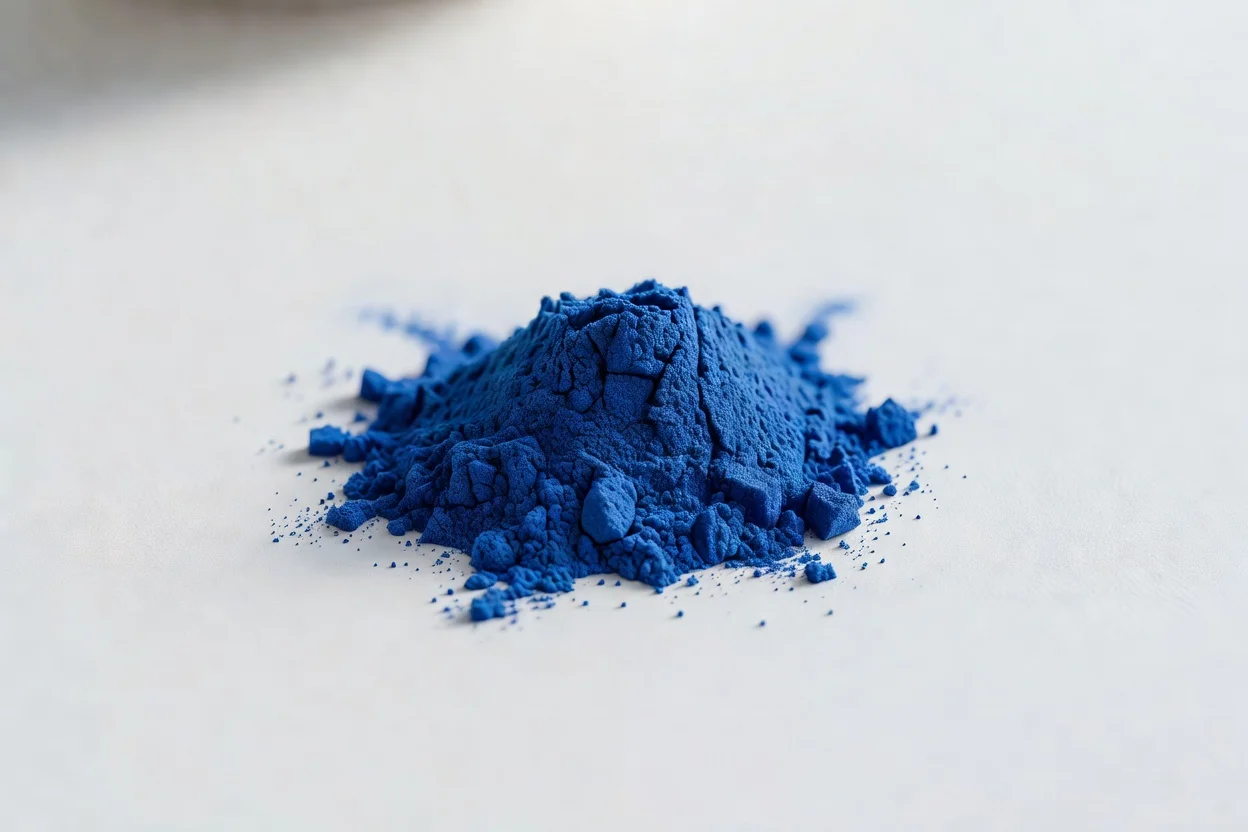
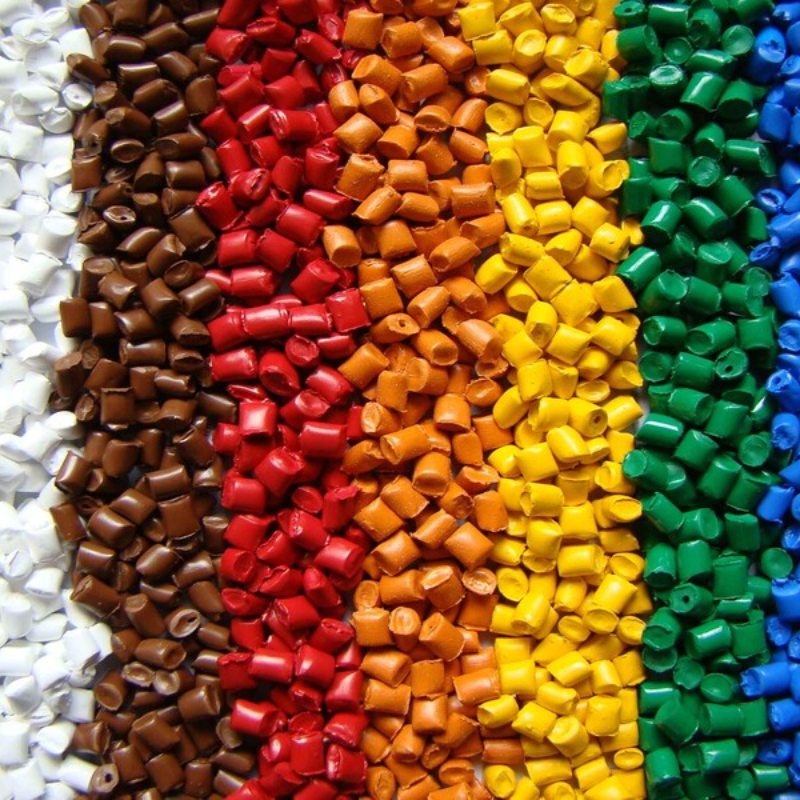
Colour pigments and masterbatches are central colourant systems in plastics manufacturing, used to impart appearance, brand identity, opacity, and sometimes functional performance such as UV resistance, antistatic behavior, or flame retardancy. In industrial practice, pigments provide the colouring principle, while masterbatches are concentrated, pelletized formulations in which pigments or dyes are pre-dispersed in a compatible carrier resin for easier dosing and more consistent processing.
Masterbatches are widely used across packaging, automotive, construction, agriculture, textiles, electronics, healthcare, and consumer goods because they improve colour consistency, reduce dust handling, and support automated processing. Within this field, colour masterbatches are the most familiar subtype, but the broader masterbatch family also includes white, black, additive, and specialty grades tailored to specific polymers and performance targets.
The sector sits at the intersection of polymer compounding, industrial design, and supply-chain efficiency. Its development has been shaped by the shift from direct pigment dosing toward pre-dispersed concentrates, by demand for tighter colour control in mass production, and by sustainability pressures that are encouraging recycled-content carriers, lower-dose formulations, and natural or bio-based colourants.
History and Development
The modern masterbatch concept emerged from the need to solve the practical problems of using dry pigments directly in plastics: dusting, poor dispersion, batch-to-batch colour variability, and operator exposure. Pre-dispersing pigments into a resin carrier and converting them into pellets made colour dosing more reproducible and compatible with extrusion, injection moulding, and film processing.
As plastics production expanded in the second half of the twentieth century, masterbatches became increasingly specialized. White masterbatches based on titanium dioxide became standard for opacity and brightness, while black masterbatches based on carbon black became important for weatherability and UV protection. Later, the market broadened into additive masterbatches for antistatic, flame-retardant, slip, antimicrobial, and processing functions, reflecting the move from simple aesthetics to engineered polymer performance.
More recently, sustainability concerns have influenced development in three directions: higher use of recycled carrier resins, integration with recycled or bio-based polymers, and experimentation with natural pigment systems for selected applications.
Chemical Structure and Key Properties
A masterbatch is not a single chemical substance but a formulated concentrate composed of three main elements: pigment or dye, carrier resin, and processing additives or dispersants. The carrier is chosen for compatibility with the target polymer, so that the concentrate disperses efficiently during downstream processing.
Pigments function by selective absorption and scattering of visible light rather than by dissolving in the plastic matrix. Dyes, by contrast, are more molecularly dissolved or more finely distributed and may be used where transparency or intense coloration is required, although pigment-based systems dominate many durable plastics applications because of better lightfastness and thermal stability.
Typical formulation features include:
- High pigment loading in the concentrate, often far above the final-use dosage, so that only a small let-down ratio is required in the end process.
- Carrier-resin matching to the base polymer, which helps avoid compatibility problems and can improve dispersion quality.
- Dispersants and processing aids that reduce agglomeration and improve wetting of pigment particles inside the melt.
Two practical limits are especially important:
- Poor dispersion uniformity → pigment agglomeration or incompatible carrier selection → use a matched carrier resin, higher-shear compounding, or a more suitable masterbatch grade.
- Colour shift at high processing temperature → pigment thermal sensitivity or residence-time degradation → choose heat-stable pigments and reduce melt exposure time.
For colour masterbatches, dosage is commonly low relative to the base resin, often in the range of about 1 to 5 percent in final processing, although the exact ratio depends on pigment strength, target shade, and polymer type. White masterbatches commonly use titanium dioxide at high loadings, and black masterbatches commonly use carbon black for strong tint strength and outdoor durability.
Production Processes and Raw Feedstocks
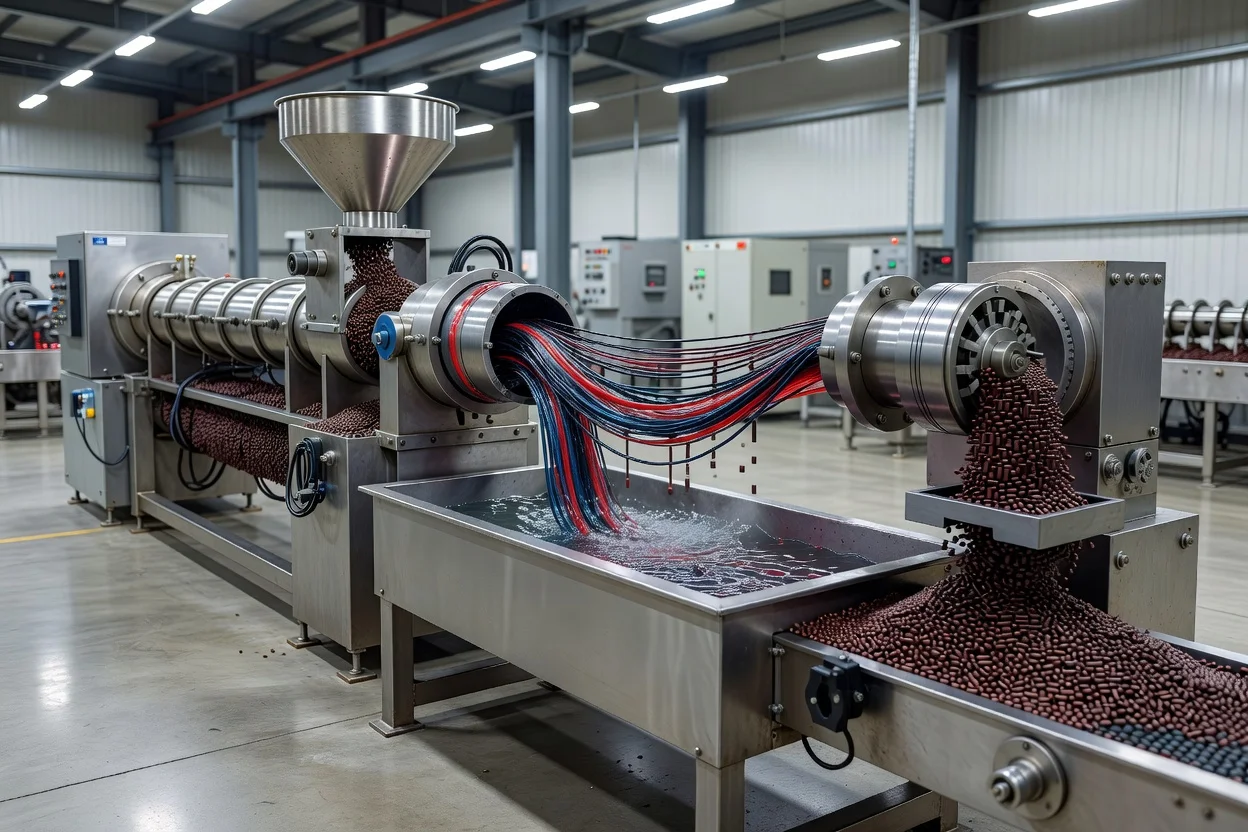
Masterbatch production is a compounding process rather than a polymerization process. The usual sequence is material weighing, high-intensity premixing, melt compounding in an extruder, cooling, pelletizing, screening, and packaging.
Common raw feedstocks include:
- Pigments such as organic chromatic pigments, titanium dioxide for white, and carbon black for black formulations.
- Carrier resins matched to the target polymer family, such as polyethylene, polypropylene, polystyrene, PET, or engineering resins.
- Additives and dispersants such as waxes, lubricants, processing aids, stabilizers, and in some formulations fillers like calcium carbonate.
The key technical objective is uniform dispersion. In practice, this is achieved through high-shear mixing and controlled extrusion so that pigment particles are evenly distributed in the resin pellet and can then be “let down” into the final polymer during production.
A useful industrial example is white masterbatch, where titanium dioxide loading may typically be around 50 to 70 percent and sometimes higher in high-opacity grades; the high pigment concentration permits low final dosing while still delivering strong hiding power. Another example is a black masterbatch formulated with carbon black, where the pigment not only colours the product but also can improve UV resistance in outdoor-use parts.
Applications and End-Use Markets
Colour masterbatches are used wherever plastics must combine appearance with processability and consistency. The best-fit application depends on the polymer, end-use stress, and processing route.
| End-use sector | Typical product examples | Usual masterbatch characteristics | Process considerations |
|---|---|---|---|
| Packaging | Films, bags, bottles, containers, closures | High colour consistency, optical control, food-contact compatibility where applicable | Film extrusion, blow moulding, injection moulding |
| Automotive | Interior trims, dashboards, housings, trims | Lightfastness, thermal stability, tight shade matching | Injection moulding, compounding |
| Construction | Pipes, profiles, sheets, fittings, cable accessories | Weather resistance, UV stability, long service life | Extrusion, profile extrusion, pipe extrusion |
| Agriculture | Greenhouse films, mulch films, irrigation components | UV stabilization, light management, weatherability | Film extrusion, blown film |
| Electronics | Housings, connectors, cable insulation | Colour stability, sometimes antistatic or conductive function | Injection moulding, wire and cable extrusion |
| Textiles and fibres | Polyester and nylon yarns, nonwovens, carpets | High tint strength, washfastness, process stability | Melt spinning, fibre extrusion |
| Healthcare | Medical packaging, device housings, accessories | Clean colour control, traceability, sometimes antimicrobial or radiopaque function | Injection moulding, extrusion |
| Consumer goods | Toys, appliance parts, household products | Visual appeal, repeatability, brand colour matching | Injection moulding, compounding |
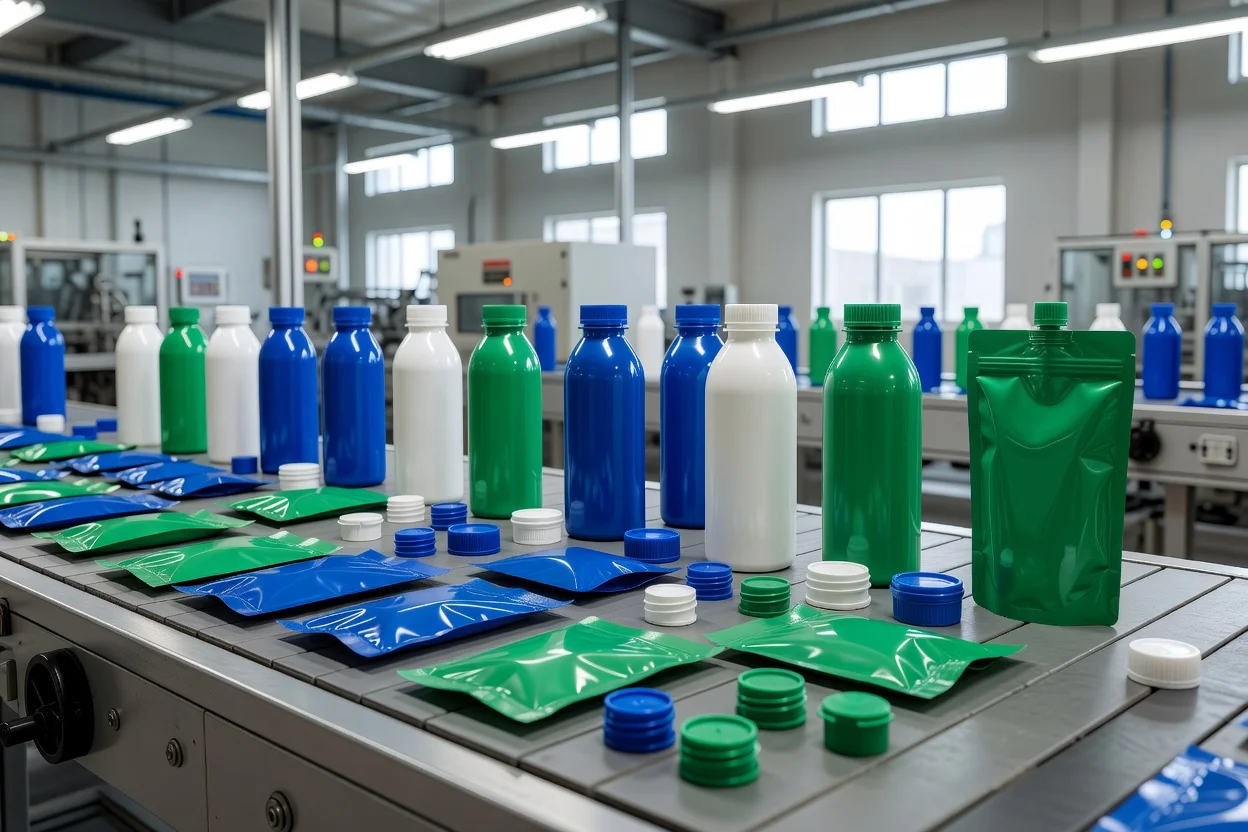
Packaging is the largest and most visible use case because colour is directly tied to branding and shelf appeal. In bottles and containers, colour masterbatches support opaque, translucent, or transparent aesthetics, while white grades are often used for brightness and product protection.
In automotive interiors, colour masterbatches must withstand heat, light, and long service life without visible shade drift. In construction, coloured pipes and profiles often require long-term UV and weather resistance, which makes the selection of both pigment and carrier especially important.
In textiles and fibres, colour masterbatch can be introduced during spinning, which creates intrinsic coloration and reduces some downstream dyeing steps. This is an important process distinction because fibre coloration depends heavily on melt compatibility and thermal stability.
One relatively poor-fit use is applications demanding very high optical purity or ultra-low contamination, where even minor dispersion defects, specks, or carrier incompatibility can be unacceptable; in such cases, liquid colour systems or very specialized compounding routes may be preferred.
Environmental and Sustainability Aspects
The sustainability profile of colour pigments and masterbatches is mixed and strongly application-dependent. On the positive side, masterbatches can improve process control, reduce colour variability, lower scrap rates, and reduce dust exposure relative to direct powder handling. These operational benefits can reduce waste and improve manufacturing efficiency.
However, the sector also faces environmental concerns:
- Pigment and additive production can be energy- and chemistry-intensive.
- Some legacy pigments and auxiliary ingredients raise toxicity or regulatory concerns.
- Compatibility with mechanical recycling can be affected if colourants are not designed for circular streams.
Recyclability is increasingly important. Masterbatches made with recycled-content carriers can support circularity, provided the colour system does not degrade appearance or polymer performance. Black masterbatches based on carbon black can complicate optical sorting in some recycling systems, while very dark pigments may reduce the value of recovered plastics in certain markets; this has motivated development of detectable black formulations and improved sorting technologies, although adoption is uneven.
Bio-based and natural pigment systems are attracting attention, especially for biodegradable packaging and selected agricultural uses. These systems are promising where food-contact safety, lower toxicity, or bio-based branding matter, but they still face technical hurdles such as heat stability, shade reproducibility, and lightfastness compared with conventional inorganic and synthetic organic pigments.
Carbon-footprint reduction strategies include:
- Lower masterbatch let-down ratios through higher pigment efficiency.
- Use of recycled or bio-based carrier resins.
- Process optimization to reduce extrusion energy and scrap.
- Design-for-recycling colour choices that better fit sorting and reprocessing streams.
Economic and Global Market Impact
Masterbatches are an enabling commodity in plastics manufacturing because small dosages can influence product appearance, marketability, and compliance at scale. Their economic value is therefore disproportionately large relative to mass consumption. The market serves both high-volume standard products and premium custom shades, with the latter requiring careful formulation, technical support, and colour matching.
According to recent industry analyses, the largest demand centers remain packaging, construction, automotive, agriculture, and consumer goods. Competition is driven by formulation capability, pigment sourcing, colour consistency, delivery reliability, and the ability to serve local polymer-processing markets quickly.
The global supply base includes both multinational additive companies and many regional compounders. Because the field is highly formulation-specific, local production and customer co-development are especially important in achieving exact colour targets and meeting processing constraints.
Current Challenges and Innovations
Current challenges include:
- Colour consistency across batches in high-volume production.
- Thermal stability under increasingly demanding processing conditions.
- Regulatory compliance for food contact, medical, and consumer products.
- Recycling compatibility and performance in mixed or contaminated waste streams.
Innovation is proceeding in several directions:
- Higher-dispersion masterbatches that lower the required let-down ratio and reduce variability.
- Specialty functional masterbatches that combine colour with UV stabilization, antistatic performance, antimicrobial action, or flame retardancy.
- Natural-pigment masterbatches for selected sustainable packaging and agricultural applications.
- More precise compounding technologies, including improved dosing, twin-screw extrusion control, and lot traceability in manufacturing.
A practical formulation example is an additive-rich colour masterbatch that includes a small level of lubricant or wax dispersant to help wet pigment surfaces and reduce agglomeration during compounding; this improves pellet quality and downstream colour uniformity. Another example is a white masterbatch built around titanium dioxide, where high loading delivers opacity at low final dosage, thereby reducing the amount of foreign material added to the base polymer.
Future Outlook
The future of colour pigments and masterbatches will likely be shaped by three forces: stricter sustainability requirements, more demanding end-use performance, and the need for more automated and traceable manufacturing. Colour systems will increasingly be designed not only for appearance but also for recyclability, regulatory acceptance, and lower environmental impact.
The most likely growth areas are:
- Recycled-content and circular-economy masterbatches.
- Functional colour systems for packaging, electronics, and construction.
- Bio-based or natural pigment platforms in niche sustainable applications.
- Digital colour control and more tightly standardized formulations.
As polymer recycling and material transparency requirements evolve, masterbatches will need to balance vivid colour, processability, and end-of-life compatibility more carefully than in the past. That shift is likely to favour formulation science, polymer-specific carrier design, and closer integration between pigment suppliers, compounders, and final converters.
Summary
Colour pigments and masterbatches are the industrial colour infrastructure of plastics: pigments provide the colour effect, while masterbatches package that effect into a process-friendly, pre-dispersed concentrate. Their value lies in repeatable colour, easier handling, lower dust, and compatibility with high-throughput plastics processing.
They are indispensable in packaging, automotive, construction, agriculture, textiles, electronics, healthcare, and consumer goods, and they are increasingly expected to contribute to sustainability through recyclability, lower scrap, and emerging bio-based or recycled-content formulations.
參考文獻
- •
Understanding Masterbatch: Benefits and types - Distil. (2026, June 30). https://distil.market/feeds/blog/masterbatchLink
- •
Masterbatch manufacturer and suppliers in India - Plasmix. (2025, July 14). https://plasmix.in/blogdetails.aspx?bid=7Link
- •
Colour Masterbatch: Pigment & Masterbatches Solutions. (2025, July 11). https://jieyatwinscrew.com/blog/colour-masterbatch-pigment-masterbatches-solutions/Link
- •
Color Masterbatches and Pigments: Which to Choose. (2024, March 8). https://www.masterbatchcolor.com/color-masterbatches-and-pigments-which-to-choose/Link
- •
Understanding Color Masterbatch: Complete Guide - Distil. (2026, May 8). https://distil.market/feeds/blog/compounding-color-masterbatchLink
- •
Masterbatch. (2011, July 25). Wikipedia. https://en.wikipedia.org/wiki/MasterbatchLink
- •
[PDF] COLORANTS FOR PLASTICS:FROM MASTERBATCH TO .... (n.d.). https://vb.nweurope.eu/media/13602/patrik-rohrer_curcol_april-20-2021.pdfLink
- •
Masterbatch Overview: Colors & Additives in Plastics. (n.d.). https://www.plastics-technology.com/articles/an-overview-masterbatch-plastics-technologyLink
- •
Introduction to basic knowledge of color masterbatch (color species). (2021, May 13). https://gudmould.wordpress.com/2021/05/13/introduction-to-basic-knowledge-of-color-masterbatch-color-species/Link
- •
Resin Drying Requirements. (2025, March 18). https://www.stdpoly.com/knowledge-centre/what-is-masterbatch--the-complete-guide/Link
- •
A Practical Comparison of Pigments and Masterbatches. (2025, July 2). https://www.stdpoly.com/knowledge-centre/pigments-and-masterbatches/Link
- •
Basic Composition, Application And Development Of Color .... (2024, October 23). https://www.polychemer.com/news/basic-composition-application-and-development-81911691.htmlLink
- •
5 surprising uses of Color and filler masterbatches. (2023, July 25). https://chittorpolyfab.com/uses-of-color-and-filler-masterbatches/Link
- •
Colour Masterbatch vs Pigment: Which One Is Better for Plastic .... (2026, April 8). https://nuoxinplastic.com/colour-masterbatch-vs-pigment-which-one-is-better-for-plastic-coloring/Link
- •
How Color Masterbatch is Revolutionizing Modern Manufacturing. (2025, August 28). https://www.dazichem.com/news/11517.htmlLink
- •
Exploring the Diverse Applications of Masterbatches in Various Industries. (2023, October 7). https://www.masterbatchcolor.com/exploring-the-diverse-applications-of-masterbatches-in-various-industries/Link
- •
Color Masterbatch | PDF | Titanium Dioxide | Materials - Scribd. (2026, March 8). https://www.scribd.com/document/995538728/Color-MasterbatchLink
- •
What is Masterbatch? A Comprehensive Guide to Types .... (2026, February 16). https://farhan.trade/en/what-is-masterbatch-a-comprehensive-guide-to-types-applications-and-benefits-in-the-plastics-industry/Link
- •
Understanding Colourants in Masterbatches - Lifocolor. (2026, June 2). https://www.lifocolor.de/en/news-events/understanding-colourants-in-masterbatches/Link
- •
WHAT IS COLOR MASTERBATCH? (2024, December 26). https://www.ispigment.com/blog/what-is-color-masterbatch_b151Link
- •
10 Common Applications of Color Masterbatch in 2026. (2026, June 11). https://www.charmingmb.com/2026/06/11/10-common-applications-of-color-masterbatch-in-2026/Link
- •
Color masterbatches for polyamide 6 fibers. Optimization of .... (n.d.). https://iris.unitn.it/retrieve/handle/11572/368973/609188/PhD_Thesis_-_Eprints_-_Mauro_Buccella.pdfLink
- •
A Brief Overview of Masterbatches and Their Manufacturing Process. (2020, February 11). https://khatabook.com/blog/what-is-masterbatch-and-how-to-manufacture-it/Link
- •
Color Masterbatch: a Brief Guide. (2024, August 26). https://carbokene.com/color-masterbatch/Link
- •
Thermoplastic masterbatches & liquid dispersions. (2024, March 2). https://www.penncolor.com/thermoplastic-masterbatches-liquid-dispersions/Link
- •
Pigments for Masterbatches. (n.d.). https://www.vipulorganics.com/plastic_and_master_batches.htmlLink
- •
Color Masterbatch - VEM Tooling. (2024, May 13). https://www.vem-tooling.com/color-masterbatch/Link
- •
What does color masterbatch... (2024, December 25). https://europlas.com.vn/en-US/blog-1/color-masterbatch-what-to-know-its-main-constituents-and-purposesLink
- •
Plastic Pigments - The complete guide on How Colorants Work | 3devo. (2023, September 4). https://www.3devo.com/blog/complete-guide-plastic-pigments-how-colorants-workLink
- •
Masterbatch. (2010, October 19). https://www.sciencedirect.com/topics/engineering/masterbatchLink
- •
Life Color Pigments & Masterbatches. (n.d.). https://www.linkedin.com/company/life-color-pigments-masterbatchesLink
- •
Sustainability in the Development of Natural Pigment-Based Colour .... (2024, July 25). https://pmc.ncbi.nlm.nih.gov/articles/PMC11314074/Link
- •
Masterbatch Production Decoded: From Formulation to .... (2026, July 29). https://www.nhyscrews.com/blog/masterbatch-productionLink
- •
Masterbatches. (n.d.). http://3nity.in/Masterbatches.htmlLink
- •
Life color pigments & masterbatches: Life Color Master Batches. (2024, August 14). https://www.lifecolormasterbatches.com/Link
- •
Plastic color masterbatch & pigments - Which one is better? (2021, June 11). https://polyfill.com.vn/plastic-color-masterbatch-pigments-which-one-is-better/Link