
简介
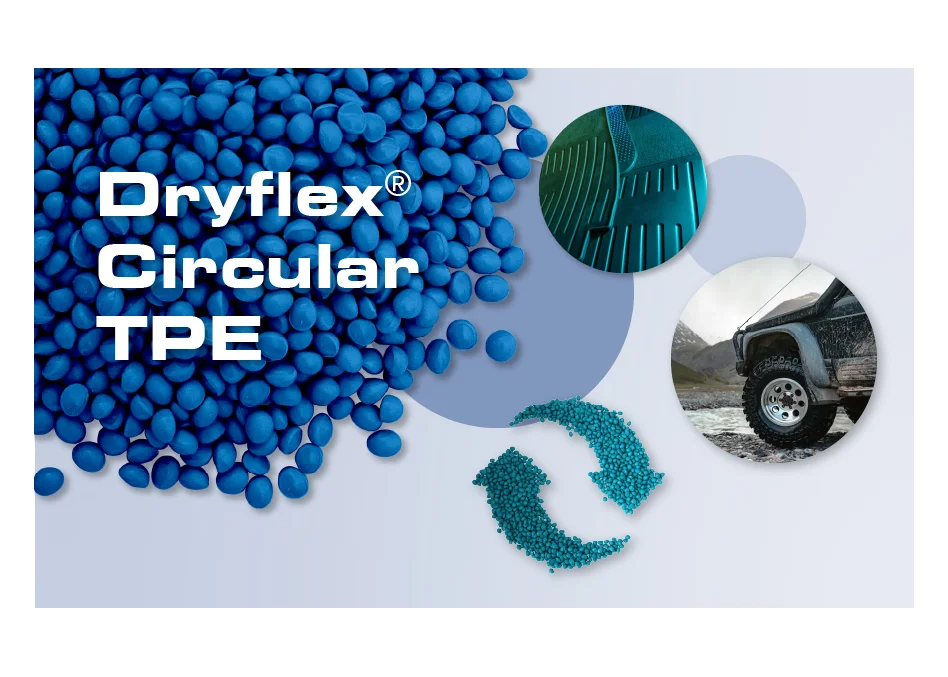
再生热塑性弹性体 (rTPE) 和 再生热塑性橡胶 (rTPR) 是可回收、可再加工的弹性体材料,兼具橡胶般的柔韧性和热塑性熔融加工性。在行业应用中,这些术语通常泛指由消费后回收或工业后回收聚合物、再生橡胶或混合回收原料制成的化合物,经重新配方后适合挤出、注塑或压缩成型等下游工艺。
作为材料家族,rTPE/rTPR 处于橡胶回收、聚合物共混和循环塑料设计的交叉点。它用于将废弃弹性体、塑料以及有时轮胎衍生的原料转化为新产品,降低原生材料需求、减少产品碳足迹,并比传统热固性橡胶系统更易机械回收。近期研究和商业产品线也显示,从“降级回收”再生橡胶共混物向更工程化的 rTPE 系统转变的趋势日益明显,这些系统具有更好的一致性、可调硬度以及更清晰的认证路径(如 GRS 可追溯性)。
历史与发展
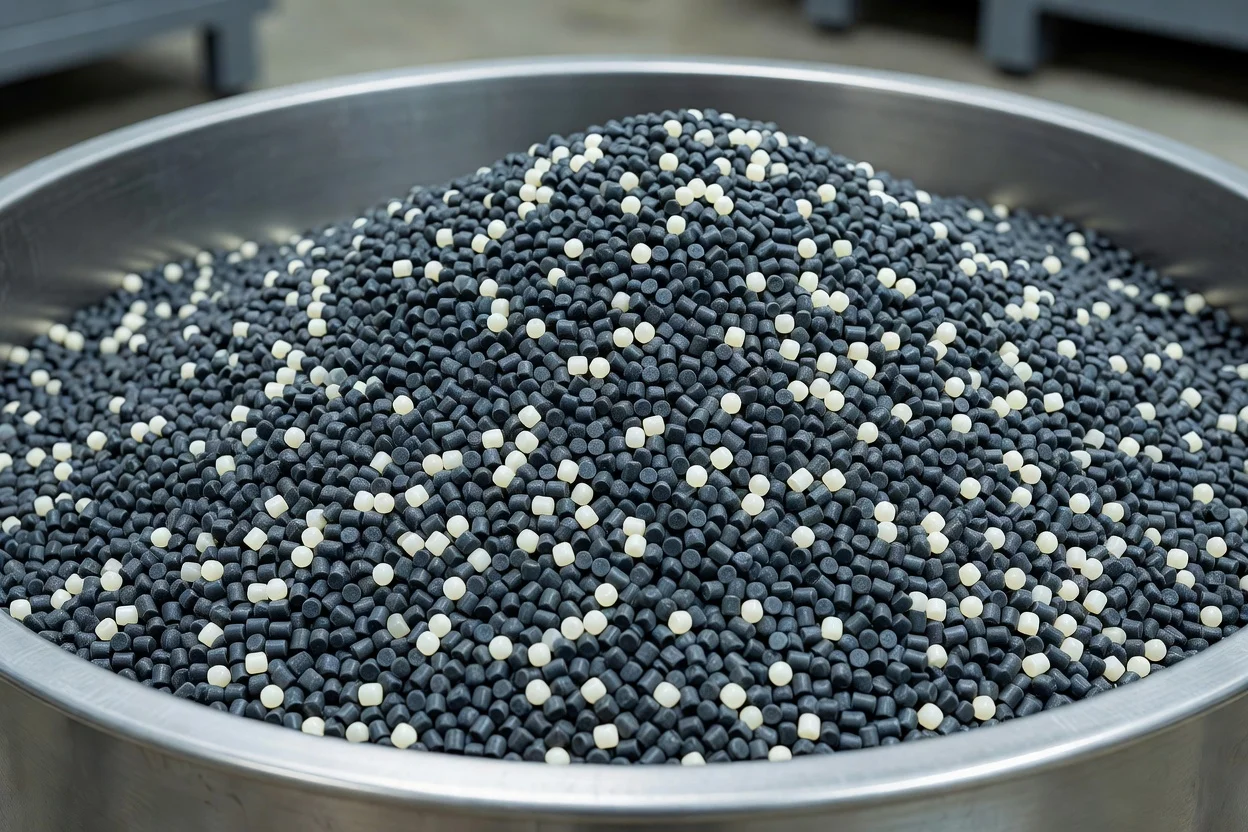
热塑性弹性体 之所以成为重要材料类别,是因为它们弥合了两个原本相互冲突的性能目标:橡胶的弹性回复与塑料的熔融加工性。其再生变体出现较晚,最初是作为橡胶废料和消费后塑料流的共混解决方案,尤其适用于不需要完全达到原生性能的应用。
主要历史驱动力之一是轮胎和橡胶废料的增值利用。研究和专利描述了将轮胎橡胶粉或脱硫橡胶与热塑性塑料(通常为聚丙烯或聚乙烯)共混,以制备新型热塑性弹性体材料。一种值得注意的技术路线是先对EPDM废料进行脱硫,再与聚丙烯共混并进行动态硫化,在连续工艺中生产基于再生橡胶的TPE。这类方法为现代 rTPR 和基于再生橡胶的TPV 类材料奠定了技术基础。
与此同时,商用含回收成分的 TPE 产品扩展到消费品和工业品领域。TSRC 已推出获得全球回收标准认证的 rTPE 产品,并可作为抗冲改性剂,将消费后回收塑料的硬度降至 80 Shore A 或更低。Freudenberg 也推出了基于 100% 再生TPE基材的服装衬布,表明再生弹性体 正从大宗共混物走向高附加值的纺织和软性制品市场。
化学结构与关键性能
rTPE/rTPR 并非单一聚合物,而是再生弹性体化合物家族。最终结构取决于基础树脂、再生橡胶比例、相容剂、填料、油品、稳定剂 以及加工历史。实际再生配方可能基于聚烯烃弹性体、苯乙烯嵌段共聚物、聚氨酯衍生回收料、再生 HDPE 或PP 共混物,或由轮胎衍生材料制成的橡胶/塑料混合物。
关键性能概况
- 弹性回复:橡胶般的变形与回弹,尤其当配方保留软相或分散橡胶域时。
- 热塑性加工性:熔融加工允许研磨、重熔和再挤出,与交联热固性橡胶不同。
- 性能可调性:硬度、柔韧性、压缩永久变形、撕裂强度和耐磨性可通过共混比例和相容化进行调节。
- 密度低于许多工程塑料:常用于轻量化柔性部件。
技术局限与应对措施
- 再生原料一致性差 → 组成和污染变异 → 采用分选、清洗、熔体过滤和相容剂 来稳定性能。
- 部分牌号的热学和力学性能低于原生弹性体 → 链断裂、氧化或脱硫不完全 → 添加抗氧剂、偶联剂、弹性体改性剂或纤维与矿物填料等增强材料。
- 部分 TPR 类牌号的耐化学性和耐高温性有限 → 软质聚烯烃富集形态或交联密度较低 → 采用TPV 式动态硫化、高性能基础聚合物或与更耐受的弹性体 共混。
- 部分再生软质 TPE 的粘接和表面相容性问题 → 表面能低且油/蜡 迁移 → 采用电晕/等离子处理、底漆或配方控制。
典型配方示例
- 轮胎橡胶粉 + 再生 HDPE + EVA:研究表明,再生 HDPE 可与再生轮胎橡胶和EVA 共混,在适当相容化后形成形态和力学性能改善的热塑性弹性体材料。
- 再生橡胶 + 聚丙烯:基于再生橡胶的TPE 的常见路线,包括经动态硫化的脱硫EPDM/PP 体系。
生产工艺与原料
rTPE/rTPR 的生产始于回收原料,通常包括:
主要生产路线
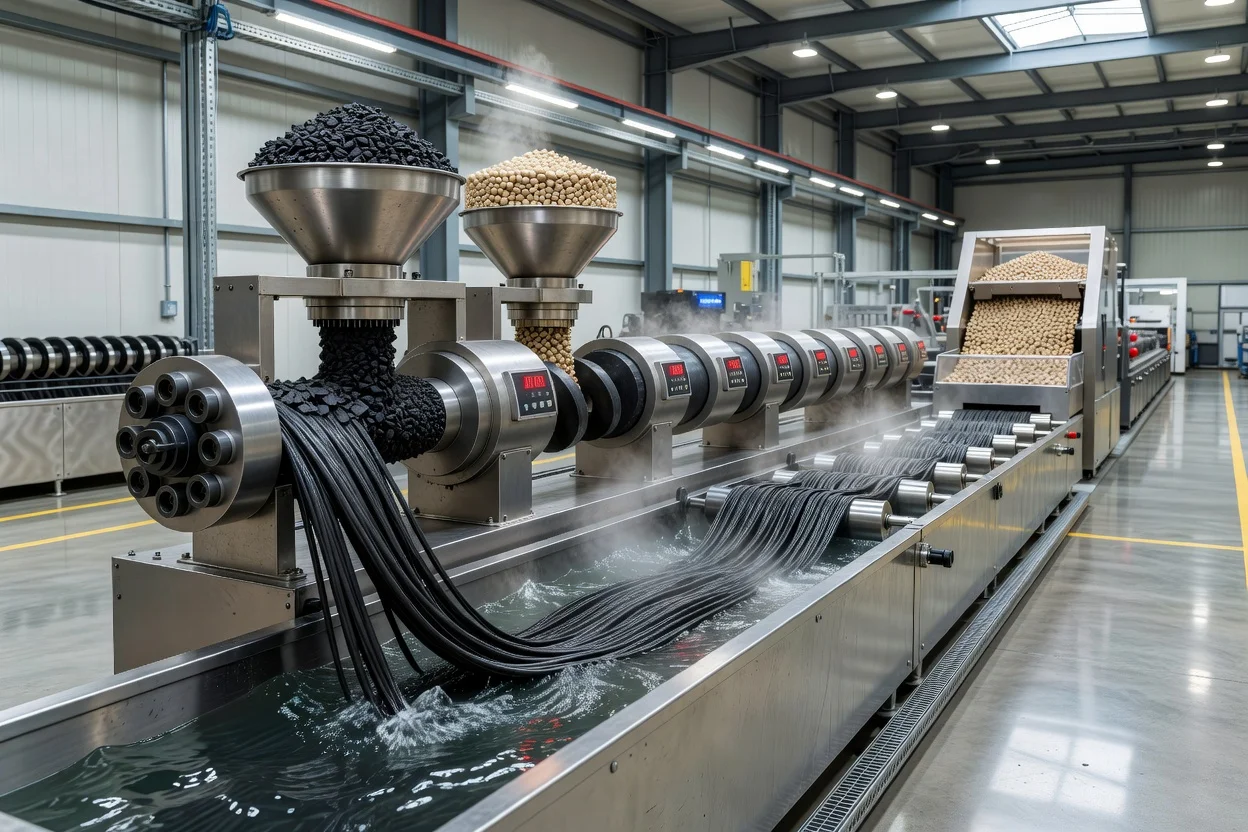
- 机械回收与再共混 将分选后的再生粒料或再生碎料 熔融、共混、过滤并造粒成新的TPE 化合物。
- 橡胶-塑料共混 将废橡胶粉与热塑性塑料 熔融共混,制备加工性更好、成本更低的弹性体化合物。
- 脱硫加动态硫化 将橡胶废料部分解聚,与热塑性树脂共混,再进行动态硫化,以获得更细的橡胶形态和更好的弹性回复。
- 相容化复合共混 使用马来酸酐接枝聚合物、偶联剂 或表面改性剂 等助剂 改善界面结合和力学性能。
典型助剂及其功能
- 相容剂(通常 1–5 wt%) → 改善再生橡胶与聚烯烃基体之间的相界面粘接 → 降低界面滑移并提高拉伸强度。
- 抗氧剂 和稳定剂(通常低比例添加) → 限制再加工过程中的热氧化降解 → 保持熔体流动性和断裂伸长率。
- 填料与增强材料 → 提高刚度、耐磨性或尺寸稳定性 → 适用于鞋类、垫材和工业部件。
- 加工油或增塑剂 → 软化硬质再生共混物并调节邵氏硬度。
应用与终端市场
rTPE/rTPR 用于弹性、柔软性、抓握、阻尼和可回收性 比绝对高端力学性能更重要的场合。
主要应用
| 行业 | 典型产品形式 | 常用牌号/工艺 | 备注 |
|---|---|---|---|
| 鞋类 | 鞋底、中底、饰片 | 软质再生 TPR/TPE,注塑 | 因抓地力、缓冲和低成本而常见。 |
| 汽车 | 密封件、垫圈、防尘罩、脚垫、饰条 | 再生TPE 和TPV 类化合物,挤出与注塑 | 用于对柔软性和加工性有要求的场合。 |
| 线缆与电子 | 线缆护套、手柄、软触感部件 | 柔性再生TPE,挤出 | 价值取决于一致性和电气性能。 |
| 消费品 | 手柄、玩具、手机壳、家电手柄 | 软质再生TPE/TPR,注塑 | 因触感和回收成分而受欢迎。 |
| 纺织与服装 | 衬布、弹性嵌件 | 细旦再生TPE 部件 | 新兴市场,采用认证回收成分。 |
| 工业部件 | 衬套、减振器、密封件 | 较高硬度再生TPE,注塑 | 常需增强和相容化处理。 |
| 建筑与基础设施 | 密封件、垫材、隔音屏障、地板 | 橡胶含量高的再生TPE 化合物 | 可吸收振动并降低成本。 |

显著使用差异
- 软质、低硬度 rTPE 更适合舒适用品、手柄和鞋类。
- 较硬的 rTPR 类牌号 更常见于耐用部件,如衬套、密封件和防护罩。
- 高性能或安全关键用途(如医用管路或严苛的汽车发动机舱部件)仅在经过严格控制、符合验证的配方中才可行。
不适合的用途
- 高精度医疗、食品接触或航空航天部件 通常不适合商品级再生弹性体牌号,因为原料变异性、可提取物、气味和可追溯性限制难以控制。
环境与可持续性方面
rTPE/rTPR 的主要价值在于其循环性优势:可减少对原生石化原料的依赖,并将可用材料从填埋或焚烧中转移。
可持续性益处
- 通过 PCR 和 PIR 含量降低原生聚合物需求。
- 通过再加工废料和使用后弹性体材料减少废物产生。
- 当回收成分替代化石基树脂时,可能降低碳足迹。
- 支持循环设计,尤其当部件设计为可重熔和再共混时。
局限与权衡
- 机械回收并不能消除所有环境影响;反复热历史会降解性能,可能需要额外助剂 或共混。
- 再生橡胶流可能含有污染物、混合聚合物和气味问题,限制高价值再利用。
- 并非所有“再生”弹性体 都同样循环;有些共混物技术上可回收,但使用后难以分选回纯净流。
生物基与先进循环替代品
近期研究已展示由生物来源单体制备的完全可回收且韧性优异的 TPE,以及具有闭环化学可回收性的生物可再生聚烯烃类TPE 系统。这些发展之所以相关,是因为它们可能最终在性能与循环性必须兼顾的应用中与含回收成分的化合物竞争。
经济与全球市场影响
rTPE/rTPR 的经济吸引力建立在三个因素上:
全球市场发展正受到以下因素影响:
- 汽车、服装、消费品和包装相关软性材料对含回收成分产品的需求上升。
- 品牌商对可追溯性和认证回收原料的压力。
- 机械回收化合物与新型化学可回收或生物基弹性体平台之间的竞争。
行业领导者
- TSRC 已将其 rTPE 产品线定位为认证含回收成分平台,强调可追溯性和抗冲改性性能。
- Kraiburg TPE 已推出可降低产品碳足迹同时保持加工性的含回收成分TPE 化合物。
- Teknor Apex 已突出基于 PCR 和 PIR 成分的可持续TPE 解决方案。
- Freudenberg Performance Materials 已推出基于再生TPE 的纺织衬布,将市场延伸至服装和技术纺织品领域。
当前挑战与创新
当前挑战
- 原料异质性仍是实现一致力学性能的主要障碍。
- 气味、颜色变异和可提取物可能限制在面向消费者或受监管应用中的使用。
- 再生共混物在未仔细配方的情况下可能表现出较差的疲劳性能、压缩永久变形或耐热性。
创新方向
- 脱硫与动态硫化,用于制备更具橡胶特性的再生化合物。
- 相容化策略,改善多聚合物共混物中的界面结合。
- 生物基与闭环可回收TPE 化学体系,可与含回收成分材料互补。
- 认证含回收成分平台,实现从原料到成品化合物的可追溯性。
- 智能与功能性再生TPE 复合材料,用于自愈、形状记忆和先进包装概念。
未来展望
rTPE/rTPR 很可能作为实用的循环材料类别而非单一标准化树脂家族得到扩展。在回收含量、柔软性和加工便利性比最大性能更重要的领域,增长将最为强劲,特别是鞋类、消费品、纺织品、垫材、密封件和通用工业部件。
长期来看,市场可能分化为三大方向:
- 面向成本敏感型应用的大众市场再生化合物。
- 面向高端消费和工业用途的认证高一致性再生弹性体。
- 基于生物来源或化学可回收架构的先进循环 TPE,可在性能和生命周期设计上与含回收成分材料竞争。
总结
rTPE/rTPR 指保留 TPE 核心优势的再生热塑性弹性体材料:橡胶般的柔韧性与熔融再加工性。其价值在于将再生塑料 和橡胶废料转化为鞋类、汽车部件、消费品、纺织品和工业部件的有用化合物,同时降低原生材料需求并支持循环性。其主要限制在于原料变异性、再加工过程中的性能保持,以及在高度监管或安全关键应用中的适用性有限,因此相容化、脱硫、认证和先进可回收化学体系的创新仍是该领域的核心。
参考文献
- •
Thermoplastic elastomers. (2025, July 31). Gianeco. https://gianeco.com/en/products/thermoplastic-elastomers/Link
- •
rTPE. (2025, September 10). TSRC. https://www.tsrc.com.tw/tw/products-services/rtpe/Link
- •
Devulcanization of EPDM waste and dynamic vulcanization of the rubber component. (n.d.). Toyoda Gosei. https://www.toyoda-gosei.co.jp/seihin/technology/report/vol45_2/pdf/vol45_2_002.pdfLink
- •
Recent developments in synthesis, properties, applications and recyclability of thermoplastic elastomers. (2024, January 12). PMC. https://pmc.ncbi.nlm.nih.gov/articles/PMC10819226/Link
- •
From the sector. (2023, March 29). Textination. https://textination.de/en/news/archive?;newstype=205&;page=,1&newstype=211&page=,25Link
- •
Valorization of waste tires, recycled HDPE, and recycled EVA. (2022, June 27). Frontiers in Sustainability. https://www.frontiersin.org/journals/sustainability/articles/10.3389/frsus.2025.1638375/fullLink
- •
Thermoplastic elastomers based on recycled high-density polyethylene/ground tire rubber/ethylene vinyl acetate: Effect of ground tire rubber regeneration on morphological and mechanical properties. (2022, April 25). PMC. https://pmc.ncbi.nlm.nih.gov/articles/PMC10235528/Link
- •
Recycling content TPE. (n.d.). Kraiburg TPE. https://www.kraiburg-tpe.com/en/recycling-content-tpeLink
- •
Waste rubber recycling: A review on the evolution and properties of thermoplastic elastomers. (2020, February 8). PubMed. https://pubmed.ncbi.nlm.nih.gov/32046356/Link
- •
Ribonucleoside triphosphate: An overview. (n.d.). ScienceDirect. https://www.sciencedirect.com/topics/chemistry/ribonucleoside-triphosphateLink
- •
rTPE. (2025, August 12). TSRC. https://www.tsrc.com.tw/products-services/rtpe/Link
- •
Production and characterization of thermoplastic elastomers based on recycled rubber. (n.d.). Collectionscanada. https://www.collectionscanada.gc.ca/obj/thesescanada/vol2/QQLA/TC-QQLA-30327.pdfLink
- •
An overview of TPE recycling: Standards, grades, and mechanical properties. (2026, March 5). Alibaba. https://www.alibaba.com/product-insights/tpe-recycling.htmlLink
- •
Thermoplastic elastomers based on waste rubber and plastics. (2004, July 1). Rubber Chemistry and Technology. https://rct.kglmeridian.com/view/journals/rcat/77/3/article-p569.xmlLink
- •
Thermoplastic elastomers in modern rubber. (n.d.). International Journal of Materials Science and Technology. https://internationaljournalssrp.org/index.php/ijmst/article/download/171/123Link
- •
Sustainable TPE solutions & TPE recycling. (2024, June 12). Teknor Apex. https://www.teknorapex.com/en-us/teknor-apexs-extensive-product-portfolio-of-vinyl-thermoplastic-elastomers-nylon-and-colorants/sustainable-solutions/sustainable-tpe-solutionsLink
- •
The fundamentals of recyclable thermoplastic rubber. (2026, March 14). Alibaba. https://www.alibaba.com/product-insights/recyclable-thermoplastic-rubber.htmlLink
- •
Smart TPE materials based on recycled rubber shred. (2021, October 20). Materials. https://www.mdpi.com/1996-1944/14/21/6237Link
- •
Applied. (n.d.). Semantic Scholar. https://pdfs.semanticscholar.org/aa2c/a5decca3a57d8f6e97756a2a3099599e0d11.pdfLink
- •
Phase morphology, mechanical, and thermal properties of fiber-reinforced thermoplastic elastomer: Effects of blend composition and compatibilization. (2021, October 22). PMC. https://pmc.ncbi.nlm.nih.gov/articles/PMC9028046/Link
- •
Biorenewable and circular polyolefin thermoplastic elastomers. (2024, October 1). Nature Communications. https://www.nature.com/articles/s41467-024-52850-0Link
- •
Recycled polypropylene improved with thermoplastic elastomers. (n.d.). Wiley. https://onlinelibrary.wiley.com/doi/10.1155/2017/7525923Link
- •
Fully recyclable and tough thermoplastic elastomers from simple bio-sourced δ-valerolactones. (2024, September 10). Nature Communications. https://www.nature.com/articles/s41467-024-52229-1Link
- •
Thermoplastic elastomers and polymers derived from recycled rubber and plastics. (2001, September 21). Google Patents. https://patents.google.com/patent/US20020113333A1/enLink
- •
Enhanced recyclability of thermoplastic elastomer. (2024, October 30). PMC. https://pmc.ncbi.nlm.nih.gov/articles/PMC11561595/Link
- •
Thermoplastic elastomer. (2006, February 15). Wikipedia. https://en.wikipedia.org/wiki/Thermoplastic_elastomerLink
- •
Understanding thermoplastic elastomers: Versatile and recyclable. (2024, June 15). Plastics Engineering. https://www.plasticsengineering.org/2024/06/understanding-thermoplastic-elastomers-versatile-and-recyclable-005255/Link
- •
A guide to thermoplastic elastomers. (n.d.). Vanden Recycling. https://blog.vandenrecycling.com/a-guide-to-thermoplastic-elastomersLink
- •
Emerging trends and developments in thermoplastic elastomers. (2020, November 10). SpecialChem. https://www.specialchem.com/plastics/guide/emerging-trends-and-developments-in-thermoplastic-elastomersLink
- •
The differences between TPE and TPR. (2024, January 14). Essentra Components. https://www.essentracomponents.com/en-us/news/manufacturing/injection-molding/the-differences-between-tpe-and-tpr-a-handy-guideLink
- •
Thermoplastic elastomer (TPE) recycling. (2023, May 5). Reclaim Plastics. https://reclaimplastics.com/materials-we-recycle/tpe-recycling/Link
- •
Class II ribonucleotide reductases catalyze carbon−cobalt bond reformation on every turnover. (1999, August 6). ACS Publications. https://pubs.acs.org/doi/10.1021/ja9913840Link
- •
Thermoplastic elastomers TPE, TPR. (n.d.). BPF. https://www.bpf.co.uk/plastipedia/polymers/Thermoplastic_Elastomers.aspxLink
- •
Understanding TPE materials: Characteristics, differences with TPR. (2024, September 14). TPE-SP. https://en.tpe-sp.com/news/340.htmlLink
- •
Developing recyclable TPE materials (thermoplastic elastomers). (2024, July 31). Eureka. https://eureka.patsnap.com/blog/material-tech-resources/developing-biodegradable-and-recyclable-tpe/Link
- •
Thermoplastic elastomer: An overview. (n.d.). ScienceDirect. https://www.sciencedirect.com/topics/materials-science/thermoplastic-elastomerLink
- •
TPR vs TPE: What is the difference between them. (n.d.). ECHEMI. https://www.echemi.com/cms/1418036.htmlLink
- •
TPR vs. TPE: Material differences and comparisons. (2023, January 20). Xometry. https://www.xometry.com/resources/materials/tpr-vs-tpe/Link
- •
Thermoplastic rubber (TPR): Materials and properties. (2022, August 15). Xometry. https://www.xometry.com/resources/materials/thermoplastic-rubber-tpr/Link
- •
Thermoplastic rubber (TPR) & thermoplastic elastomers (TPEs). (n.d.). Molding Dynamics. https://www.moldingdynamics.net/materials/tpr-tpes/Link
- •
TPR vs. TPE: Similarities and differences. (2023, March 21). Fictiv. https://www.fictiv.com/articles/tpr-vs-tpe-similarities-and-differencesLink
- •
TPR vs. TPE: Which material is right for your project? (2025, June 11). VMT. https://vmtcnc.com/tpr-vs-tpe/Link
- •
Thermoplastic elastomer (TPE): An ultimate guide. (2026, April 1). SpecialChem. https://www.specialchem.com/plastics/guide/thermoplastic-elastomerLink
- •
Thermoplastic rubber (TPR): Meaning, properties, uses. (2025, November 26). Farr. https://farr.ae/thermoplastic-rubber-meaning-properties-benefits-real-world-applicationsLink
- •
Structural. (2024, April 26). RTP Company. https://www.rtpcompany.com/products/structural/Link