
Introduction
Bag & sack making equipment refers to the industrial machinery used to convert paper, plastic film, woven fabric, or laminates into finished bags and sacks for packaging, shipping, retail, agriculture, and bulk goods handling. In plastics processing, the category is dominated by machines for polyethylene bags, PP woven sacks, and related converting lines, but it also overlaps with paper bag, nonwoven bag, and industrial sack production.
At the technical level, these systems perform combinations of feeding, folding, sealing, cutting, punching, stitching, gluing, printing, stacking, and rewinding, with machine architecture determined by the substrate and the final bag geometry. The segment includes high-speed plastic bag makers, woven-sack conversion lines, sack sewing machines, bottom-seal and side-seal platforms, and specialized equipment such as wicket bag machines, zipper-bag machines, valve bag bottomers, and handle-applying systems.
Historically, the sector evolved from manual and semi-manual sack making toward servo-driven, multi-station automated lines, driven by growth in packaged consumer goods, logistics, and bulk industrial packaging. More recent development has focused on higher throughput, better seal consistency, lower waste, format flexibility, and compatibility with recycled and bio-based polymers, alongside rising demand for digital control and inline inspection.
The main machine families are typically grouped by bag construction: bottom-seal, side-seal, t-shirt/vest bag, wicket bag, paper sack, PP woven sack, jumbo bag, and valve bag equipment. These variants differ not only in product style, but also in sealing technology, material handling, and productivity targets, which makes the field highly application-specific rather than universal.
History and Development
Early bag and sack production relied on manual cutting, sewing, and gluing, especially for paper industrial sacks and woven sacks. As packaging volumes expanded, dedicated converting machines replaced hand labor and introduced repeatable dimensions, stronger closures, and higher output consistency.
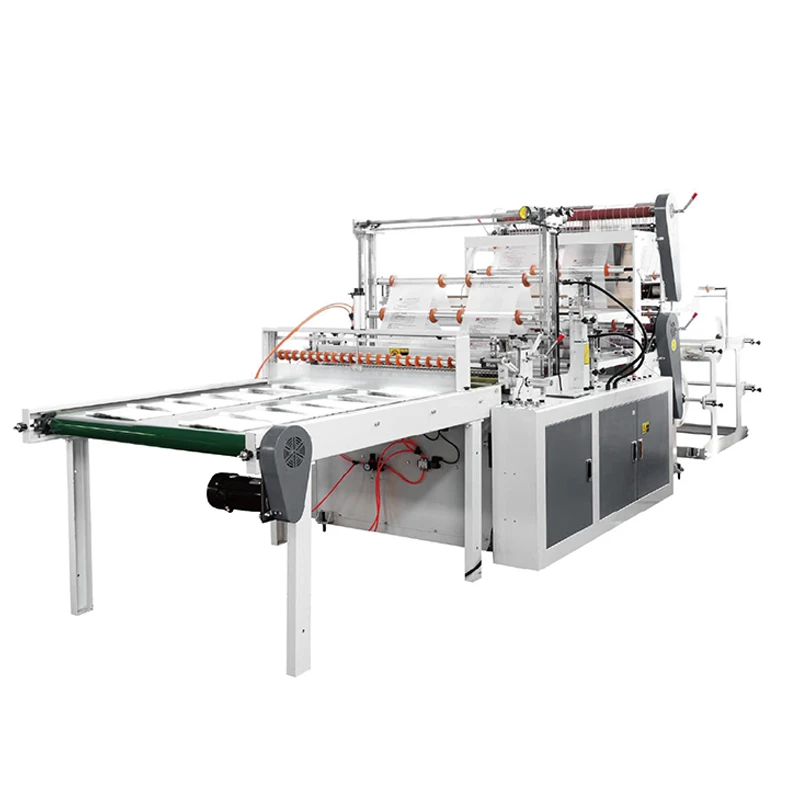
A major milestone was the development of continuous-roll plastic bag making machines, which enabled high-volume production from film reels by integrating sealing and cutting into one automated sequence. This shift made common retail and commodity formats, such as flat bags, courier bags, and garbage bags, economically scalable.
Another important step was the rise of servo-controlled multi-format lines for side-seal and zipper bags, as well as specialized woven-sack conversion systems that combine cutting, sewing, liner insertion, punching, handle attachment, and stacking. These platforms improved precision and allowed manufacturers to serve more demanding end markets such as food, e-commerce, fertilizer, and premium retail packaging.
Technical Overview
Bag and sack making equipment is engineered around the interaction between material form, seal formation, and downstream handling. The process usually begins with a web or sheet feed, followed by folding or gusseting, then sealing or stitching, then transverse cutting, and finally stacking or rewinding. For woven sacks and industrial bags, the line may instead rely on sewing heads, hot-cutting tools, or bottom-forming and tube-forming stations rather than heat sealing alone.
Core machine classes
- Bottom-seal bag machines produce bags by sealing the film at the lower edge, often used for garbage bags, produce bags, and T-shirt-style carriers.
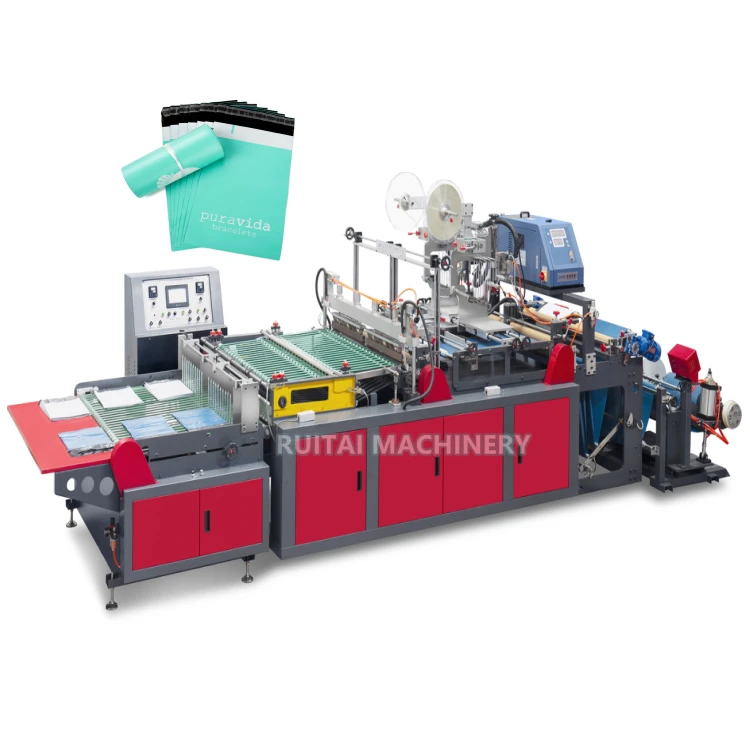
- Side-seal bag machines create bags from folded film with side seams, widely used for courier bags, stationery bags, zipper bags, and many retail pouches.
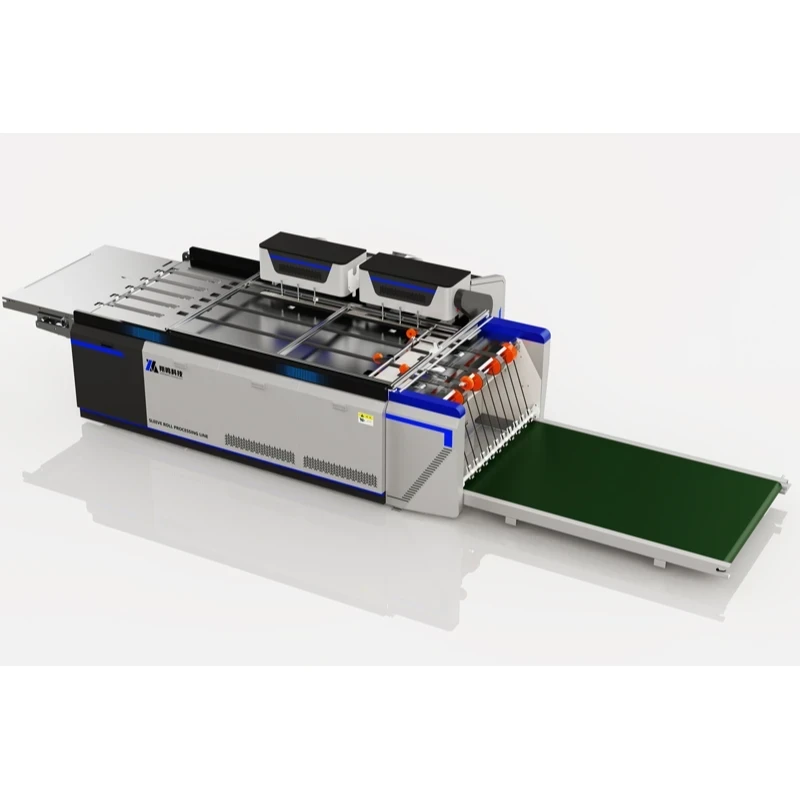
- Woven sack conversion lines cut, sew, hem, print, laminate, or insert liners into PP/HDPE woven fabric for cement, fertilizer, grain, and feed packaging.
- Paper bag and sack machines form tubes and bottoms from roll-fed or sheet-fed paper; roll-fed systems suit higher-volume runs, while sheet-fed systems are more flexible for short or variable campaigns.
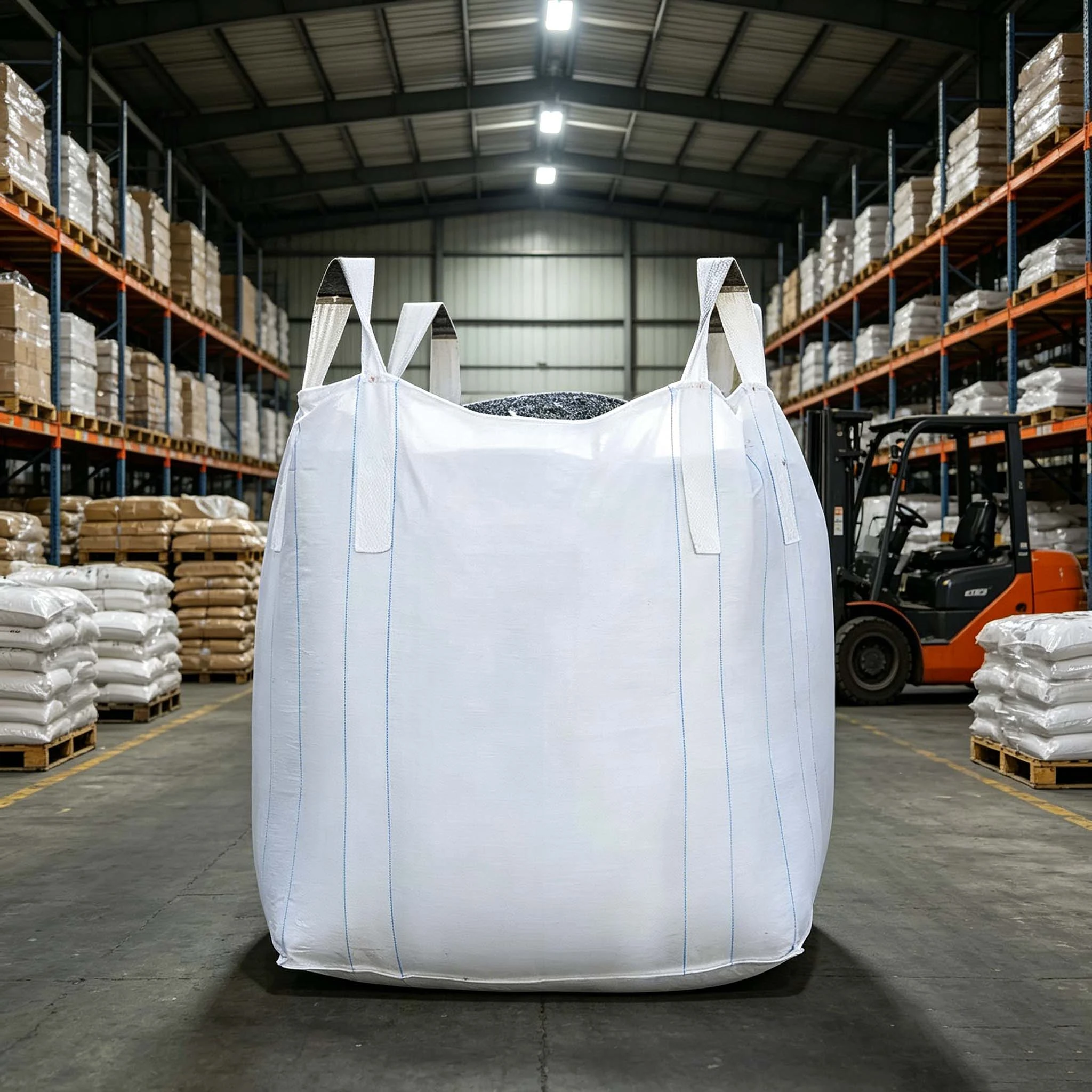
- Jumbo bag equipment handles large-format bulk bags with cutting, sewing, inspection, slitting, and related operations.
- Sack sewing and closing machines are used for open-mouth bags made from paper, plastic, poly-woven, or BOPP materials.
Typical technical benchmarks
- Woven bag production commonly falls in the range of roughly 800–1,500 bags/hour for semi-automatic flat-bottom systems and 2,000–4,000 bags/hour for fully automatic U-bottom machines, depending on format and line layout.
- Some industrial sack making equipment is listed at around 60–80 pieces per hour in smaller semi-automatic configurations, while larger automated systems may reach much higher outputs depending on bag size and closure method.
- Woven-bag platforms often integrate cutting, stitching, liner pasting, punching, and handle attaching in one line, which reduces manual transfer steps and improves dimensional repeatability.
- For plastic bags, production speed, seal quality, and scrap rate depend strongly on film gauge, seal jaw design, cooling time, and servo synchronization rather than on nominal machine rating alone. This is especially important for thin-gauge PE films and for printed or laminated structures.
Engineering considerations
- Seal integrity is central for plastic bags and depends on temperature, dwell time, pressure, and polymer compatibility.
- Stitch quality dominates performance in woven sacks and jumbo bags, where seam strength and thread selection affect load-bearing capacity.
- Registration accuracy matters in printed bags, especially for retail branding and laminated woven sacks.
- Web tension control is critical to avoid wrinkling, drift, and misregistration in high-speed lines.
- Automation level ranges from manual feeding and semi-automatic closing to fully integrated lines with inline printing, stacking, and inspection.
Types and Variations
| Machine type | Typical substrate | Main output | Common use cases |
|---|---|---|---|
| Bottom-seal bag machine | PE, PP, compostable film | Flat bags, garbage bags, T-shirt bags | Retail, waste, food service |
| Side-seal bag machine | PE, PP, BOPP, laminated film | Courier bags, zipper bags, gusseted bags | E-commerce, office supplies, consumer goods |
| Wicket bag machine | Film | High-speed bag stacks on wickets | Bakery, food, healthcare |
| PP woven sack machine | PP woven fabric | Open-mouth or valve sacks | Cement, fertilizer, grain |
| Paper sack machine | Kraft paper, multilayer paper | Industrial paper sacks | Cement, dry powders, building materials |
| Jumbo bag machine | Woven PP, heavy-duty fabrics | FIBCs and big bags | Bulk chemicals, minerals, agriculture |
| Sack sewing machine | Paper, woven, plastic, BOPP | Closed open-mouth bags | Bulk packaging and logistics |
Woven sack machinery is especially diverse. Standard conversion units may produce open-mouth or bottom-sealed bags, while more specialized lines handle side-gusset bags, laminated woven bags, valved sacks, block-bottom sacks, and back-seam sacks.
Paper bag systems are similarly segmented. Roll-fed lines favor throughput and continuous production, while sheet-fed platforms support frequent format changes and printed retail bags. Square-bottom and SOS structures require different forming sequences from flat or V-bottom bags, so machine selection is driven primarily by the final geometry.
Applications and Uses
Bag and sack making equipment serves nearly every packaging sector, but the machine class varies by product and duty cycle.
- Retail and grocery: bottom-seal plastic bag machines, paper bag machines, and handle-applying systems for shopping bags.
- E-commerce and logistics: side-seal machines for courier bags and tamper-evident mailing bags.
- Food packaging: wicket bag machines, paper bags, and certain laminated pouch systems where hygiene, speed, and repeatability matter.
- Agriculture: woven sack and PP bag conversion lines for fertilizer, grain, feed, and seed packaging.
- Construction and minerals: heavy-duty paper sacks, woven sacks, and jumbo bags for cement, sand, and dry bulk materials.
- Chemicals and industrial powders: valve bags and multwall paper sacks designed for dust control and efficient filling.
- Waste management: heavy-gauge bag machines for liners and refuse bags.
A less suitable application is very small-batch, highly customized luxury packaging. While technically possible, large-format industrial bag machinery is often uneconomic for tiny runs because changeover time, material waste, and tooling cost can outweigh the benefit of automation.
Technological Innovations and Automation
Modern bag and sack making equipment increasingly incorporates servo drives, PLC-based control, touchscreen recipe management, automatic tension regulation, and inline quality monitoring. These features improve repeatability, reduce operator dependence, and allow faster changeovers between formats.
In woven sack manufacturing, integration has advanced from isolated sewing stations to complete conversion lines that may include circular looms, slitting, lamination, flexographic printing, liner insertion, cutting, folding, and stitching. This modularity supports different product families without replacing the whole line.
For plastic bag equipment, innovation centers on multi-function platforms that can produce multiple bag styles from the same line by changing sealing modules, perforation systems, handle units, and rewinding configurations. Some suppliers explicitly market complete production solutions from film making to bag forming, reflecting a broader move toward line integration.
Environmental and Sustainability Aspects
Bag making machinery is closely tied to sustainability because bag design directly affects material use, recyclability, and energy demand. Machines that improve seal accuracy and cutting precision reduce scrap, while servo-driven systems and optimized heating control can lower specific energy consumption per bag, especially in high-volume plants.
Sustainability is also linked to material compatibility. Equipment must increasingly process recycled PE/PP, downgauged films, and, in some cases, bio-based or compostable substrates without sacrificing seal quality. This raises demands on thermal control, film handling, and process stability.
For woven sacks, reuse and durability can support a circular-economy model, especially in industrial logistics and agriculture. At the same time, laminated structures, liners, and mixed-material closures can complicate recycling, which places pressure on converters to simplify material stacks where possible.
Economic and Global Market Impact
Bag and sack making equipment is a global capital goods segment serving both high-volume commodity packaging and specialized industrial packaging. Demand is shaped by consumer-packaged goods growth, fertilizer and grain logistics, e-commerce parcel flows, and infrastructure-related consumption of cement and construction materials.
The market is also geographically broad, with strong manufacturing and export activity in Asia, Europe, and North America. Some firms are notable for specific niches such as woven sacks, industrial bag sewing, paper sack systems, or integrated plastic bag lines, rather than for the entire category.
Because bag production is often cost-sensitive, buyers typically evaluate equipment on a combination of throughput, labor savings, energy use, changeover time, seal or seam reliability, and maintenance intensity. In many facilities, the machine purchase decision is therefore as much about operating economics as about nominal speed.
Current Challenges and Innovations
One major challenge is the tension between high productivity and format flexibility. Lines optimized for one bag type may not adapt efficiently to shorter runs, specialty shapes, or frequent SKU changes. Manufacturers respond with modular tooling, recipe-based controls, and quicker web-threading systems.
Another challenge is processing thinner films and mixed recycled content without increasing reject rates. This requires tighter control of heat input, tension, and cut quality, particularly on high-speed plastic bag machines.
Woven sack producers face a different set of issues: seam durability, liner handling, print registration, and the complexity of combining lamination with sewing and cutting. In this segment, innovation is often incremental but highly practical, focused on reducing downtime and handling more bag variants on one line.
Future Outlook
The sector is likely to move toward greater automation, data-enabled process control, and material flexibility. Digital monitoring of seal quality, seam consistency, and downtime patterns should become more common as converters seek better yield and traceability.
A second trend is the growth of specialized lines for sustainable substrates, including downgauged plastics, recyclable mono-materials, and paper-based alternatives. This is likely to reshape machine design around lower-temperature windows, gentler handling, and improved process diagnostics.
A third trend is the expansion of integrated converting ecosystems, where extrusion, printing, lamination, bag formation, sewing, and inspection are treated as connected process steps rather than separate machines. This favors suppliers that can offer line-level engineering rather than single-machine sales.
Summary
Bag & sack making equipment is a broad converting machinery category that turns films, papers, and woven fabrics into packaging used across retail, agriculture, construction, food, and logistics. Its main technical distinctions lie in bag geometry, substrate, sealing or sewing method, and degree of automation, with current development centered on higher efficiency, lower waste, modular flexibility, and compatibility with more sustainable materials.
參考文獻
- •
Plastic Bag Making Machines. (n.d.). https://www.parkins-machinery.com/en/productsLink
- •
Bag making machinery | Process Machinery Ltd. (2025, November 25). https://www.processmachinery.co.uk/Link
- •
Plastic Bag Making Machine Exporter | Chovyting. (2016, September 18). https://www.cwbagmachinery.com/Link
- •
Paper Bag Making Machines | Roll-Fed & Sheet-Fed | Newlong. (2023, June 26). https://www.newlong.nl/products/bag-making/Link
- •
Packaging machinery | Process Machinery Ltd. (n.d.). https://www.processmachinery.co.uk/bag-machinesLink
- •
Integrated Solutions Plastic Extrusion Machinery. (2008). https://www.thomasnet.com/suppliers/usa/plastic-bag-making-machinery-96162581Link
- •
Industrial Woven Sack Machines Manufacturer. (n.d.). https://www.armstrongex.com/public/category/woven-sackLink
- •
Packaging Machines | Manufacturer & Suppiler Tinva. (2016, September 7). https://www.tinvagroup.com/Link
- •
Industrial bagging equipment | Concetti. (n.d.). https://www.concetti.com/en-us/industrial-bagging-equipmentLink
- •
Straw Industry - Fully Automatic High Speed Single Cutter .... (n.d.). https://www.5fingers.in/products-and-services.htmlLink
- •
Bag Making Machinery Manufacturers and Suppliers in the .... (2019). https://www.thomasnet.com/suppliers/usa/bag-making-machinery-96162573Link
- •
Bag making machine - All industrial manufacturers. (2025). https://www.directindustry.com/industrial-manufacturer/bag-making-machine-223404.htmlLink
- •
Side Sealing & Cutting Bag Making Machine | S-DAI. (n.d.). https://www.s-dai.com.tw/en/machines/Link
- •
Starlinger & Co Gesellschaft mbH. (2019, December 19). https://www.metalltechnischeindustrie.at/en/firms-products/details/starlinger-co-gesellschaft-mbh/Link
- •
Bag Making Machine Manufacturers & Suppliers - Tradeindia. (n.d.). https://www.tradeindia.com/seller/machinery/bag-making-machine/Link
- •
Bag filling machinery and equipment Distributors in India. (n.d.). https://in.kompass.com/x/distributor/a/bag-filling-machinery-and-equipment/63130/Link
- •
Polythene & Plastic Bag Making Machine| S-DAI Industrial. (2026, August 11). https://www.s-dai.com.tw/Link
- •
Woven Sack / Plastic Bags Making Machine - Hao Yu Bag Machinery. (n.d.). https://www.hao-yu.com.tw/productLink
- •
Bag filling machinery and equipment Companies in India | Find Bag filling machinery and equipment Suppliers. (n.d.). https://in.kompass.com/a/bag-filling-machinery-and-equipment/63130/Link
- •
Woven Bag making Machines. (2026, August 12). https://www.bub-group.com/en/bag-making-machines/pp-woven-bagsLink
- •
Jumbo Bag Making Equipment. (2024, October). https://www.fordah.com/en/category/Jumbo_Bag_Making_Equipment.htmlLink
- •
Paper Sack Making Machines | Bag Machinery Manufacturer .... (n.d.). https://papersackmachine.com/Link
- •
Bag Making Machine Suppliers with Latest Prices. (n.d.). https://www.exportersindia.com/indian-suppliers/bag-making-machine.htmLink
- •
Bag Converting Equipment - CMD Corporation. (n.d.). https://cmd-corp.com/equipment-category/bag-converting/Link
- •
16 Bag Making Machinery Manufacturers in 2026 - Metoree. (n.d.). https://us.metoree.com/categories/5146/Link
- •
Lanzhou Jianxing Commercial and Trading Co.,Ltd.. (2019). https://www.paperindex.com/profile/lanzhou-jianxing-commercial-and-trading-co-ltd/29111910/31373Link
- •
Woven Bag Making Machines. (n.d.). https://www.prm-taiwan.com/category/Woven-Bag-Making-Machines.phpLink
- •
Sack Making Machine at Best Price in India. (2019, December 17). https://dir.indiamart.com/impcat/sack-making-machine.htmlLink
- •
Bagger Machine - Top Manufacturers, Suppliers & Exporters - Tradeindia. (2026, August 30). https://www.tradeindia.com/manufacturers/bagging-machine.htmlLink
- •
Woven Sack Making Machine at Best Price in India. (2025, December). https://m.indiamart.com/impcat/woven-sack-making-machine.htmlLink
- •
Woven Sack Machinery - Plastic Tape Stretching Line .... (2021, May 14). https://www.extrusionplants.com/woven-sack-machinery.htmlLink
- •
Automatic Woven Bag Cutting And Stitching Machine. (2000). https://www.wovensackmachinery.com/wovensack-bag-conversion-line.htmlLink
- •
Best Plastic & Polythene Bag Making Machines by Industry .... (2025, June 16). https://www.parkins-machinery.com/en/news/Best_Plastic_and_Polythene_Bag_Making_Machines_by_Industry_2025_GuideLink
- •
Supplier of Bag Closing Machine & Bag Sewing Machines Ahmedabad - RT Wovensack Machinery Solutions. (2025). https://www.aajjo.com/store/rt-wovensack-machinery-solutions/catalogueLink
- •
Paper Sack Making Machines for Industrial Bag Production. (2019). http://papersackmachine.com/products.htmlLink
- •
Bag Sewing Machines - Tinsley Equipment Company. (2026, March 26). https://www.tinsleycompany.com/equipment-systems/bag-sewing-machines/Link
- •
Sack bag production machine. (2025, January 20). https://www.alibaba.com/countrysearch/CN/sack-bag-production-machine.htmlLink
- •
B&B Verpackungstechnik - Bag making and Packaging Machines. (n.d.). https://www.wh.group/cee/en/partner_products/converting__lamination___metallization/b_b___bag_making_and_packaging_machines/Link
- •
Inside Bag Making Machine Production Line. (2025, November 23). https://www.alibaba.com/product-insights/bag-making-machine-production-line.htmlLink
- •
Plastic Bag Making Machines: Complete Guide to Bag Types .... (2025, December 19). https://www.pal-plas.com/en/news_i_Plastic-Bag-Making-Machines-Complete-Guide.htmlLink
- •
Sack Making Loom - Made-in-China.com. (2026, June 17). https://www.made-in-china.com/products-search/hot-china-products/Sack_Making_Loom.htmlLink
- •
Bag Making Machine Guide 2026 | Types, Prices & Applications. (2026, February 3). https://www.juangju.com/bag-making-machine-guide/Link
- •
A Guide to Bag Making Machines: Types, Features, and Uses. (2024, October 4). https://fairprintindia.com/guide-to-bag-making-machines-types-features/Link
- •
Bag Conversion Machines for Woven Sacks - Lohia Corp. (n.d.). https://www.lohiagroup.com/products/conversionLink
- •
Bags and Materials. (2021, May). https://www.pacmachinery.com/bags-and-materials/Link
- •
Plastic Bag Making Machine. (2025, April 15). https://www.zonesun.com/collections/plastic-bag-making-machineLink
- •
How to Choose the Best PP Woven Bag Making Machine: A .... (2025, December 3). https://smartbuy.alibaba.com/buyingguides/pp-woven-bag-making-machineLink
- •
Bag Making Machine - OUNUO. (2026, August 30). https://www.ounuo-group.com/products/bag-making-machine/Link
- •
Which Machine Is Used to Make Paper Bags?. (2026, July 29). https://www.mtdpack.com/which-machine-is-used-to-make-paper-bags/Link
- •
SOS Paper Bag Making Machine. (n.d.). https://paperbags-machinery.com/1-3-sos-paper-bag-making-machine.htmlLink
- •
Poly sack making machine. (2025, January 20). https://www.alibaba.com/showroom/poly-sack-making-machine.htmlLink
- •
[PDF] A - ARMSTRONG WOVENSACK Machines -2. (n.d.). https://5.imimg.com/data5/SELLER/Doc/2024/6/427459303/IK/IC/PB/191758597/high-speed-liner-insertion-machine-bcs.pdfLink
- •
Woven Sack Manufacturing Machinery Overview - WS Series. (2022, June 2). https://www.studocu.com/row/document/university-of-gondar/strategiec-management/automatic-pp-woven-bag-making-machine/28354596Link
- •
Used Bag Making machines Film Converting. (n.d.). https://www.machinepoint.com/machinepoint/inventory.nsf/web2utreetype?openform&catarbol=fconverting&subgr=ctfilm0140&ln=enLink